Search

GEOGRAPHY EDUCATION

Supporting geography educators everywhere with current digital resources.

The less Americans know about Ukraine’s location, the more they want U.S. to intervene

See on Scoop.it – Geography Education
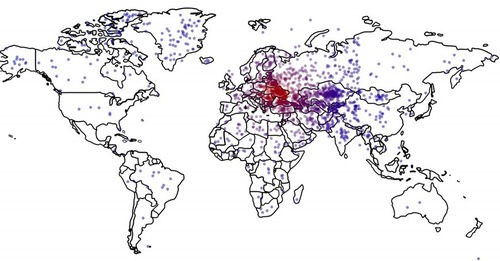
84% of Americans are unable to locate Ukraine on a world map; those that can’t are more likely to support military intervention.

Seth Dixon‘s insight:

As I’ve said before, a more informed, geo-literate citizenry helps to strengthen U.S. foreign policy and diplomatic efforts because they have a spatial framework within which to organize political, environmental, cultural and economic information.  National Geographic recently also produced a video showing how geo-education is important for business professionals as a part of their geo-education community (if you haven’t already, join!).

See on www.washingtonpost.com
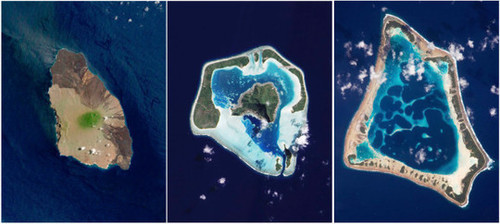
Aerial Photographs Catalogue the Life and Death of Volcanic Islands

See on Scoop.it – Geography Education

Volcanic islands can seem to appear out of nowhere, emerging from the ocean like breaching monsters of the deep. Below, Mika McKinnon explains how these odd geological formations are born, how they evolve, and how they eventually vanish back beneath the waves.

Seth Dixon‘s insight:

Where an island is along this developmental continuum says much about the human populations that may inhabit said island.  If the island is tall and young with rich volcanic soil, the mountain will attract rainfall and the soil could support agriculture, making the island able to sustain a higher population density.  On the other hand, an old, eroding island with little rainfall and depleted soils will need human inhabitants to rely on the ocean’s resources for food and would thus support a more minimal population.  These islands are changing, even if the time scale is slow–but just recently two disconnected islands ‘merged’ as growing volcanic island has expanded in the Pacific.

Tags: Oceania, physical, geomorphology, landforms.

See on space.io9.com

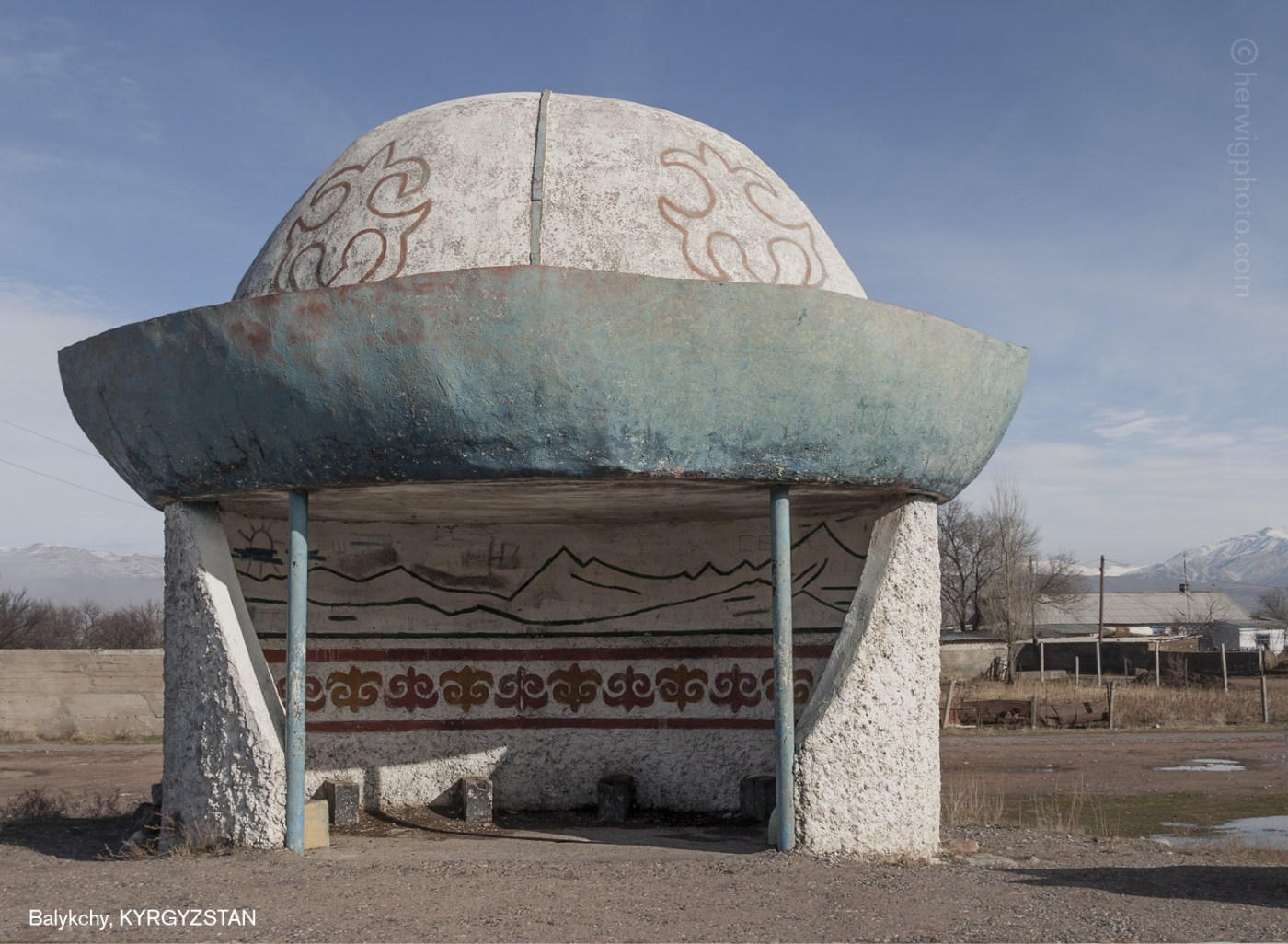
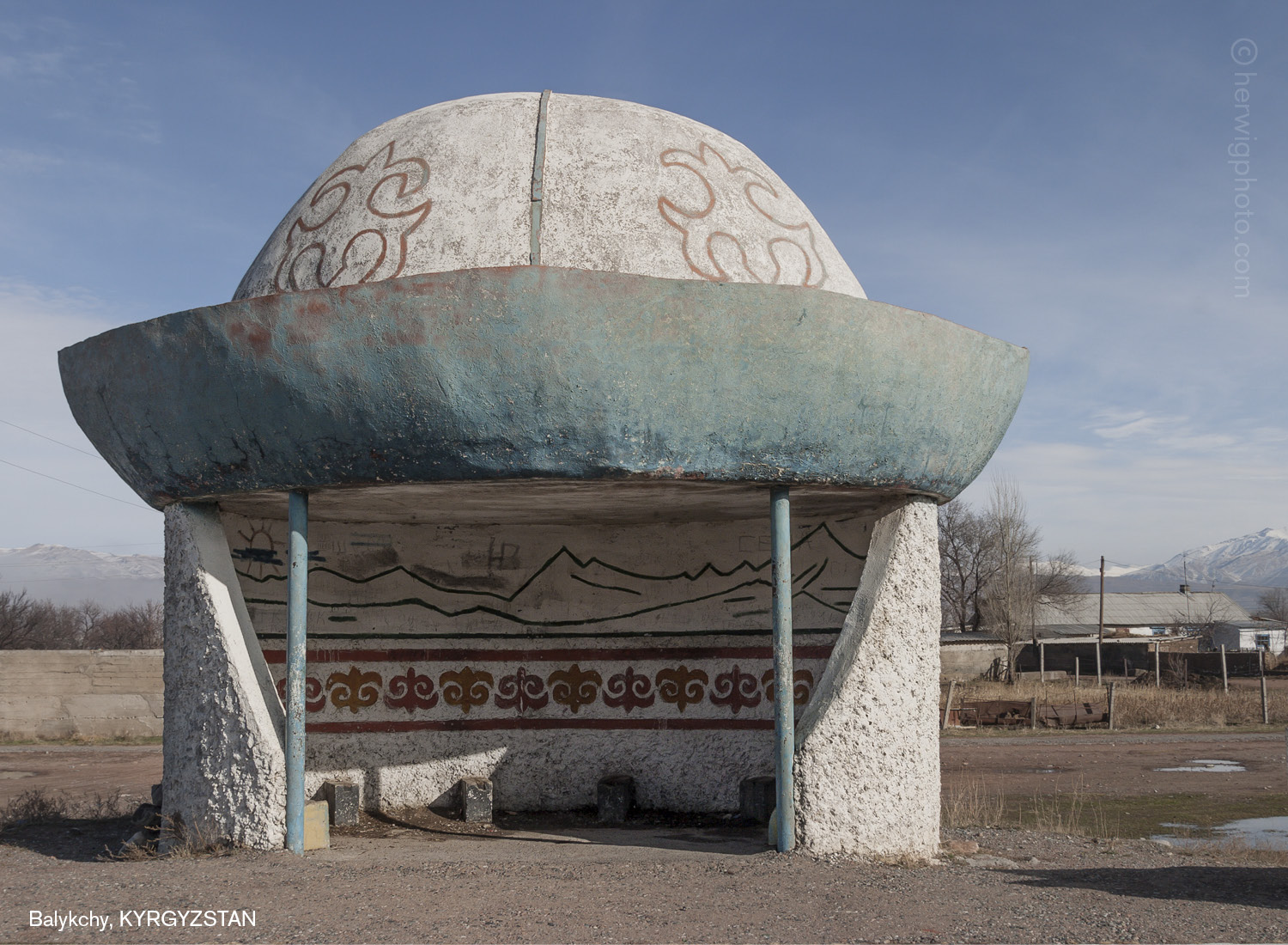
Soviet Bus Stops

An obsession – brutal, beautiful bus stop design of the former Soviet states from Bushtaxi on Vimeo.

“Photographer Christopher Herwig has covered more than 30,000 km by car, bike, bus and taxi in 13 countries discovering and documenting these unexpected treasures of modern art. From the shores of the Black Sea to the endless Kazakh steppe, the bus stops show the range of public art from the Soviet era and give a rare glimpse into the creative minds of the time.”

Seth Dixon‘s insight:

This is a delightful glimpse into a time gone by, and what makes it even more surprising is that few would expect such creative architecture to dot the cultural landscape of the old Soviet Union.  I was recently looking at a photo gallery of old Russian Orthodox churches and just like these Soviet bus stops, they are perfect subjects for classic cultural landscape studies.  Geography students can analyze and interpret the cultural, political and economic material landscape as this photographer has.  What do these elements of the landscape mean?  How does it make us re-evaluate the society that created them?   

Tags: Russia, culture, landscape.

See on herwigphoto.com

Hat

Bye-Bye, Baby

See on Scoop.it – Geography Education

Birthrates are falling around the world. And that’s O.K.


Why do commentators, like Chicken Little, treat this worldwide trend as a disaster, even collective suicide? It could be because declines in fertility rates stir anxieties about power: national, military and economic, as well as sexual. In reality, slower population growth creates enormous possibilities for human flourishing. In an era of irreversible climate change and the lingering threat from nuclear weapons, it is simply not the case that population equals power, as so many leaders have believed throughout history. Lower fertility isn’t entirely a function of rising prosperity and secularism; it is nearly universal.

Seth Dixon‘s insight:

This op-ed from the New York Times provides excellent material for discussing demographic issues, especially regarding declining populations.  Many countries do fear the demographic uncertainty and are actively encouraging pro-natalist policies (with salacious ads such as Singapore’s National Night and a Travel agency’s ‘Do it for Denmark‘ campaign).  The author of this article though, seeks to quell those fears.    

Tag: declining populations, population, demographic transition model.

See on www.nytimes.com

A tour of the British Isles in accents

See on Scoop.it – Geography Education

Got the audio here – http://www.bbc.co.uk/programmes/p01slnp5 The person doing the voice is Andrew Jack who is a dialect coach.

Tags: language, culture, English, UK.

See on www.youtube.com

European word translator

See on Scoop.it – Geography Education

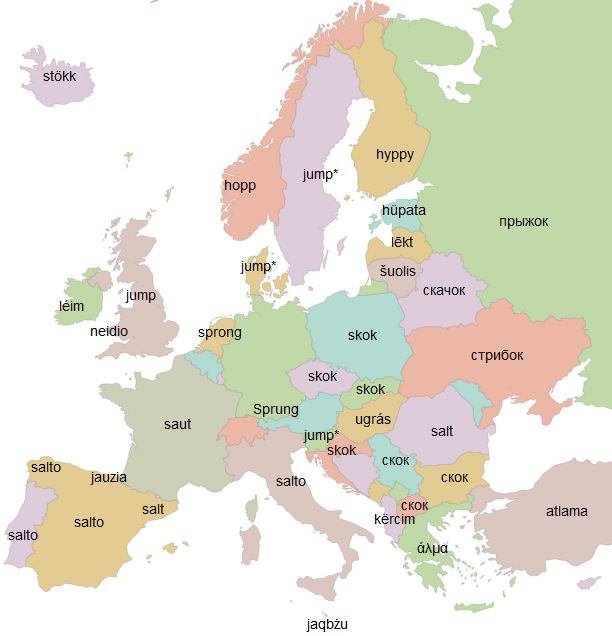
Translate any word from English to more than 30 other European languages, on a map

Seth Dixon‘s insight:

This is an incredible resource to visualize the linguistic similarities between European languages all on one interactive map.  Just type in a word or phrase as it will translate it for you and place the results on the map.  I just found this, but I think it still belongs on my list of favorite resources.   

Questions to Ponder: Do you see any regions forming?  How does language impact the diffusion of people, ideas and goods?  Hoe do you think these languages diffused?   

Tags: language, culture, English,  diffusion.

See on ukdataexplorer.com

EuropeLanguage

Aerospace manufacturing takes off in South

See on Scoop.it – Geography Education

Region attracting some of the biggest names in aviation, including Boeing and Airbus.

The South is home to auto giants Mercedes-Benz, Volkswagen and Nissan Motor Co. It is increasingly attracting some of the biggest names in aviation, including Boeing Co. in South Carolina, Airbus in Alabama, Gulfstream Aerospace Corp. in Georgia and GE Aviation in North Carolina.

Aerospace companies are taking a cue from the auto industry and moving their manufacturing operations to Southern states. The region’s lower costs, generous state incentive packages and right-to-work laws that make it hard for unions to organize are motivating these companies to choose the South.

See on www.usatoday.com

If the Earth Stood Still

See on Scoop.it – Geography Education

“The following is not a futuristic scenario. It is not science fiction. It is a demonstration of the results of an extremely unlikely, yet intellectually fascinating query: What would happen if the earth stopped spinning?  ArcGIS was used to perform complex raster analysis and volumetric computations and generate maps that visualize these results.

Seth Dixon‘s insight:

I love a good “what if?” question and this one (including the GIS model-based analysis) is fascinating. 

See on www.esri.com

American Makeover: SPRAWLANTA

See on Scoop.it – Geography Education

“American Makeover is a web series on new urbanism, the antidote to sprawl.”

Seth Dixon‘s insight:

American Makeover only produced two segments in the series, but they are excellent examples that show the planning ethos of new urbanism.  In this episode, they lay out the argument against urban sprawl.  In Episode 2, they show the ideas that guided the planning of Seaside, Florida.  For a map of some of my favorite place based videos, which will include these, click here.     

tags: suburbs, transportation, planning, sprawl, urban, land use, unit 7 cities. 

See on www.youtube.com

Create a free website or blog at WordPress.com.

Up ↑