Search

GEOGRAPHY EDUCATION

Supporting geography educators everywhere with current digital resources.

Gastrodiplomacy: Cooking Up A Tasty Lesson On War And Peace

An international relations scholar is using her students’ love of food to teach them about global conflicts. It’s a form of winning hearts and minds that’s gaining traction among world governments.

Seth Dixon‘s insight:

International relations and global politics are what people often think are critical for foreign policy and diplomacy.  A geographic and historically nuanced understanding of various cultures can be invaluable–and what more enjoyable way to learn that over an amazing meal?   

Tags: food, political, culture.

See on www.npr.org

What the loss of Crimea really means for Ukraine

“In symbolic terms, it’s a huge loss. The Crimean Peninsula holds an important place in the region’s history, and the inability to prevent the region from joining Russia is a serious test of leadership for the new Ukrainian government in Kiev.

In practical terms, however, what Crimea means for Ukraine is less clear. In an article last week, The Post’s Will Englund noted that Crimea may end up costing Russia more than it might like. And what does Ukraine really lose?”

Seth Dixon‘s insight:

We often view global affairs through our own little prism, considering how it affects us.  So much of the discussion has revolved around Russia and the West in general (and the U.S. specifically), that Ukraine almost gets lost in the shuffle.  All this amid news that the acting Ukrainian Foreign Minister has said that the possibility of war “is growing.”

Tag: Ukraine, political, conflict, devolution.

See on www.washingtonpost.com

Using Scale in Elementary School

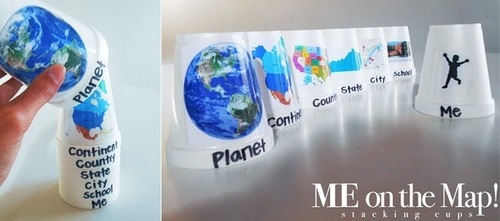
Great idea to help early years learners understand their ‘place’…

Seth Dixon‘s insight:

This is would be a nice craft to help younger students understand the concept of scale.  This adapts some of the ideas from the classic picture book “Me on the Map” by Joan Sweeney.  

Tags: scale, K12, location.

See on eisforexplore.blogspot.com.au

Angels Landing

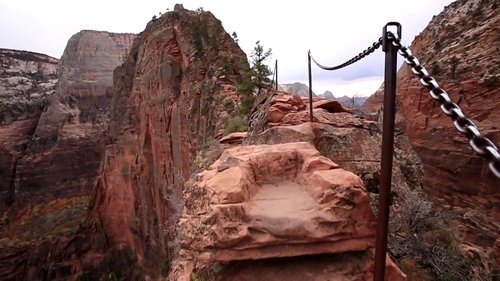
“Since 2004, six people have died falling from the cliffs on this route.” is what the sign says. Only one step from a 1400 foot fall.

Angels Landing from David Perry on Vimeo.

Seth Dixon‘s insight:

Angel’s Landing in Utah’s Zion National Park (map) is one of my favorite hikes with an amazing view.The geomorphology of ‘red rock’ country is stunning and it’s sheer cliffs are bound to captivate the imagination.  If you want something like this but with a more European flavor, watch National Geographic’s Andrew Evans climb Preikestolen in Norway.   

Tags: physical, geomorphology, erosion, landforms.

See on vimeo.com


Countries Divided on Future of Ancient Buddhas

Thirteen years after the Bamian Buddhas were blasted into rubble, opinion is split on whether to leave them as is, rebuild them, or make copies of them.

Seth Dixon‘s insight:

This video and article work together to show a ‘behind-the-scenes’ glimpse of this heritage site, or the remnants of the old memorial which is an iconic part of the cultural landscape in their own right but for very different reasons.  This is a great example of sequent occupance and some of the difficulties in preserving heritage.  Some argue that by restoring the Buddha it will undo some of the damage done by the Taliban and create a tourist destination; others think that the damaged Buddha is a poignant reminder of problems with ‘topocide’ and religious intolerance. 

Questions to Ponder: What do you think should become of this place?  How come?    

Tags: Afghanistan, political, culture, Central Asia, landscape, perspective.

See on www.nytimes.com

GeoFest


Strengthening Geographic Content in the Classroom South Carolina GeoFest

Seth Dixon‘s insight:

I’m very pleased to be in South Carolina, presenting at their GeoFest on the importance of strengthening geographic content in the classroom and some practical examples of how to do so. 

See on www.slideshare.net

Take Me Home, Mother Russia

10 places that would welcome a Putin landgrab, and 10 parts of Russia that want the hell out.

Seth Dixon‘s insight:

One of the ideological weaknesses in the idea that Russia should annex Crimea because of the large number of ethnic Russians that want to join the Russian Federation, is that there are many places within the Russian Federation without a majority of ethnic Russians that would want out of the Russian Federation.  This list from Foreign Policy is pretty intriguing and they provide insight about the geographic context for each place on the list.

Top 10 looking for a way into Russia (abbreviated)

  1. Transnistria
  2. Donbass
  3. New Russia
  4. Abkhazia
  5. South Ossetia
  6. Belarus
  7. Northern Kazakhstan
  8. Russians in the Baltic
  9. Nagorno Karabakh
  10. Brighton Reach, Brooklyn

Top 10 look for a way out of Russia:

  1. Chechnya
  2. Tatarstan
  3. Idel-Ural
  4. Kalmykia
  5. Kaliningrad
  6. Karelia
  7. Komi Republic
  8. Circassia
  9. Karachay-Balkaria
  10. Birobizhan

See on www.foreignpolicy.com

Not dead yet: The American shopping mall is changing, not going away

J.C. Penny in peril, Sears is sinking. Is this the end of the American shopping mall?

Last Friday sandwich chain Quiznos filed for bankruptcy protection citing high debt loads and heavy completion. Coming just days after a similar filing from pizza chain Sbarro, Quiznos’ bankruptcy was the second half of a one-two gut punch for shopping malls at a time when they’ve never been more vulnerable. A decade ago there were more than 1,100 enclosed shopping malls in the U.S. Since then more than 400 have  either been “re-purposed” or closed outright. No new malls have been completed since at least 2009.

See on finance.yahoo.com

The World’s Most Densely Populated Cities

The growth of these cities will create a host of environmental and health problems.

By 2210, the global population is expected to grow from just more than 7 billion to 11.3 billion — with 87 percent of the population living in urban areas, according to a new working paper by researchers from NYU’s Marron Institute.

Most of these individuals will be in what’s now the developing world — creating a host of environmental and health problems.

If projections are correct, these new urban dwellers will require the world’s existing cities to expand six-fold to accommodate triple the residents, Richard Florida wrote in The Atlantic. Plus, the world will need 500 new “megacities” of 10 million or more, he wrote.

Seth Dixon‘s insight:

See on www.weather.com

Blog at WordPress.com.

Up ↑