Search

GEOGRAPHY EDUCATION

Supporting geography educators everywhere with current digital resources.

‘I was 14 when I was sold’

Laxmi’s story of being kidnapped and trafficked in Nepal is not an isolated case but, as this graphical account shows, things are not always what they seem.

Seth Dixon, Ph.D.‘s insight:

Teaching about human trafficking and child slavery can be very disconcerting and uncomfortable.  How much of the details regarding these horrific situations is age-appropriate and suitable for the classroom?  The BBC is reporting on events with sensitive stories to both give a human face to the story, while protecting the identity of under-aged victims (to read about the production of this comic, read Drawing the News.) 

I encourage you to use your own discretion, but I find this comicbook format an accessible, informative and tasteful way to teach about human trafficking in South Asia to minors.  It is a powerful way to teach about some hard (but important) aspects of globalization and economics. 

As geographer Shaunna Barnhart says concerning this comic, “It moves from trafficking to child labor to pressures for migration for wage labor and the resulting injustices that occur. There’s differential access to education, gender inequality, land, jobs, and monetary resources that leads to inter- and intra-country trafficking of the vulnerable. In the search for improved quality of life, individuals become part of a global flow of indentured servitude which serves to exploit their vulnerabilities and exacerbate inequalities and injustice. Nepali children ‘paid’ in food and cell phones that play Hindi music in ‘exchange’ for work in textile factories – cell phones that are themselves a nexus of global resource chains and textiles which in turn enter a global market – colliding at the site of child labor which remains largely hidden and ignored by those in the Global North who may benefit from such labor.”

Tags: Nepal, labor, industry, economic, poverty, globalization, India.

See on www.bbc.co.uk

Sold

More Risk, but Less Fear, in Cities

“This week’s Boston Marathon bombing fit with the norm of U.S. terrorist events and threats in one important way: it occurred in a major city. American concerns about terrorism, however, seem to ignore that pattern…There’s a divide on people’s thoughts about terrorism. People that live in places most likely to be hit by terrorism seem the most sunny about the country’s anti-terror prospects and efforts. And those in rural places,  are more concerned and pessimistic.”

Seth Dixon, Ph.D.‘s insight:

This article cites data from the PEW Reseach Center that implies that city dwellers seem to feel less dread about terror threats than their suburban and rural counterparts, despite the fact they live in the primary target zone (see full size infographic here).  

Question to Ponder: Why are the Americans most vulnerable to terrorist attacks the least concerned with terrorism? 


Tags: terrorism, statistics, USA, infographic, urban.

See on online.wsj.com

For Chinese Women, Marriage Depends On Right ‘Bride Price’

“China’s one-child only policy and historic preference for boys has led to a surplus of marriageable Chinese men. Young women are holding out for better apartments, cars and the like from potential spouses…30 to 48 percent of the real estate appreciation in 35 major Chinese cities is directly linked to a man’s need to acquire wealth — in the form of property — to attract a wife.”

Tags: gender,  folk culture, China, culture, population.

See on www.npr.org

The Geography of Chechnya

The Caucasus region, dominated by the imposing Great Caucasus mountain range and stretching between the Black Sea and the Caspian Sea, has long been known as one of the world’s ethnically and linguistically most diverse areas.

Seth Dixon, Ph.D.‘s insight:

After this weekend it has become glaringly obvious that many are painfully ignorant of the geography of Chechnya and the surrounding Caucasus Mountain region.  This article from GeoCurrents discusses the linguistic diversity of the region and this Geography in the News article outlines the contentious geopolitical situation of Chechnya within the Russian Federation. Also, the Washington Post published an article entitled, 9 questions about Chechnya and Dagestan you were too embarassed to ask.

I do not post these materials to lay blame to an entire ethnic group, religion or region for the terrorists acts of two individuals.  On the contrary, I post these articles because I find this to be a teaching moment where we as educators can clarify the geographic context of an unknown part of the world to our students.  As we teach this context, quick labels and lazy narratives become harder to maintain and our students can become less prejudiced and critically think about the situation with greater depth and clarity.

See on geocurrents.info

Czech Republic’s Ambassador

“The Czech Republic and Chechnya are two very different entities – the Czech Republic is a Central European country; Chechnya is a part of the Russian Federation.”

Seth Dixon, Ph.D.‘s insight:

The fact that this official statement is even made by the Ambassador of the Czech Republic is an indictment of the state of geo-literacy in the United States. 

See on www.mzv.cz

Social Studies Praxis Exam: Geographic Content

“Preparing to Teach Social Studies: Geographic Content for the Praxis Exam.”

Seth Dixon, Ph.D.‘s insight:

I know that most of my readers are in-service teachers as opposed to pre-service teachers, but I thought it was still worth sharing.  Several schools have noticed that without geography classes, social studies teachers have difficulty becoming certified without some core geographic content.  As a part of job at the Alliance coordinator for the Rhode Island Geography Education Alliance, I’m giving a workshop tonight at Salve Regina University designed to strengthen pre-service teachers geographic content as outlined on the Praxis Exam.  I have  prepared these materials with that audience in mind, but if there is anything you find useful, please use it or share it with those that could use it (local School of Education, Alliance, etc).  Most of the images in the presentation are hyperlinked to articles, videos and infographics that I have posted here in the past. 

Tags:  Rhode Island, training, geography education.

See on www.slideshare.net

Boston and Syria

LANDFILL HARMONIC: Inspiring dreams one note at a time!

A heartfelt & moving story of how instruments made from recycled trash bring hope to children whose future is otherwise spiritless.

Seth Dixon, Ph.D.‘s insight:

I’ve shared this video before, but this worthy project is now asking for assistance on kickstarter and I feel it merits reposting.  This video shows that the human spirit of beauty and joy can come shining through from the poorest of places.  Slums are not new, but rapid population growth coupled with rural-to-urban migration patterns have led to an increasing amount of slums.  Despite all the stereotypical images of destitute poverty, slums can also be places with a strong vibrant communities with residents filled with innovation, hope and ambition.  For more on this organization, see their Facebook page.   

Tags: urban, squatter, poverty, South America, community, Paraguay.


See on www.kickstarter.com

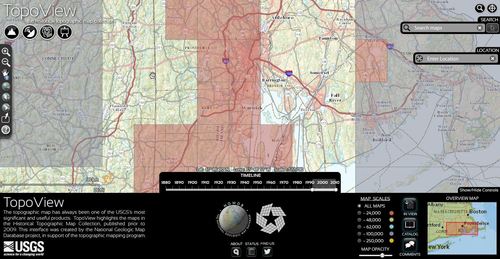
Topographic Maps

USGS National Geologic Database- TopoView

Seth Dixon, Ph.D.‘s insight:

The National Geologic Map Database is a simple interactive tool to find USGS topographic maps to you can dowload.  Users can search for current or historic maps.  


Tags: geospatial, GIS, mapping, cartography.

See on ngmdb.usgs.gov

Create a free website or blog at WordPress.com.

Up ↑