Search

GEOGRAPHY EDUCATION

Supporting geography educators everywhere with current digital resources.

SimCity EDU

SimCityEDU – Create & Share SimCity Learning Tools

Seth Dixon, Ph.D.‘s insight:

I will confess that I have personally never played SimCity, but I do know educators that have tapped into that gaming experience to teach spatial thinking and some principles of urban planning.  This link is designed with those teachers in mind.  

Tags: urban, planning, spatial, unit 7 cities, edtech.

See on www.simcityedu.org
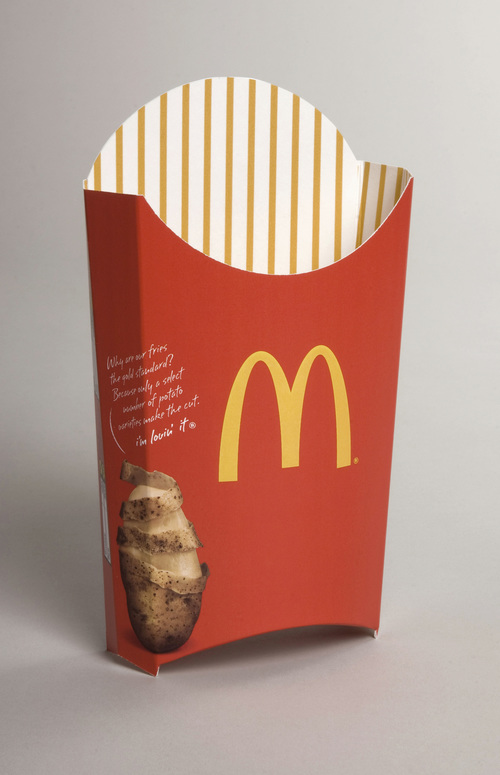
McDonald’s® Packaging

Seth Dixon, Ph.D.‘s insight:

The packaging on the McDonald’s fry box states, “Why are our fries the gold standard? Because only a select number of potato varieties make the cut. I’m lovin’ it®”  This is a message is primarily aimed at millions of individual consumers.  As geographers who analyze systems, we can look at this message for meaning beyond taste and quality control in how it affect both urban and rural places.  Given that McDonald’s is the United States’ largest purchaser of potatoes, what are the economic and agricultural implications for their fry selection on the market(s)?  How does this impact farmers, consumers, competitors and other groups?   

See on mcdepk.com

In A Grain Of Golden Rice, A World Of Controversy Over GMO Foods

A rice enriched with beta-carotene promises to boost the health of poor children around the world. But critics say golden rice is also a clever PR move for a biotech industry driven by profits, not humanitarianism.

Seth Dixon, Ph.D.‘s insight:

This is a great podcast that emphasizes various geographic themes including agriculture, development and economics.  This new genetically-modified rice was designed to provide vitamin A (something no natural rice provides) to impoverished diets.  Skeptics point out that the history of the industry shows that the goal is to enrich a select number of corporations while some are hailing this as a major advancement that will benefit the poor.  Where people side on this is often ideological, so those that are firmly against genetically modified foods find the flaw in the plan and vice versa.  What do you think?  How might this change food production and consumption worldwide and at a local scale?  

Tags: GMOs, development, NGOs, Food, agriculture, agribusiness, unit 5 agriculture.

See on www.npr.org

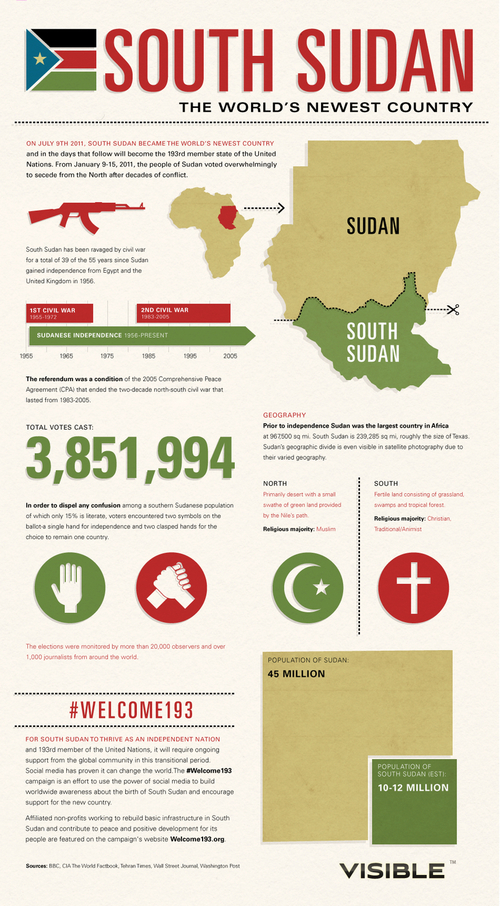
South Sudan: The World’s Newest Country

Seth Dixon, Ph.D.‘s insight:

This infographic is a great introduction to the historical genesis of South Sudan and the political uncertainty and difficulties that it now faces as an independent country. 


Tags: South Sudanpolitical, sovereignty, Africa, territoriality, states, unit 4 political.

See on latestinfographics.com

Where the Hell is Matt?

Seth Dixon, Ph.D.‘s insight:

I’ve seen other “Where the Hell is Matt” videos and this recent one is building on that tradition.  These videos show some fantastic international icons and people around the world.  Simultaneously, this video show the unique cultural elements seen around the world while showing the essential beauty of our common humanity.  Who wouldn’t want to go to all the places that Matt has been? 

Tags: geo-inspiration, worldwide, folk culture.

See on www.youtube.com


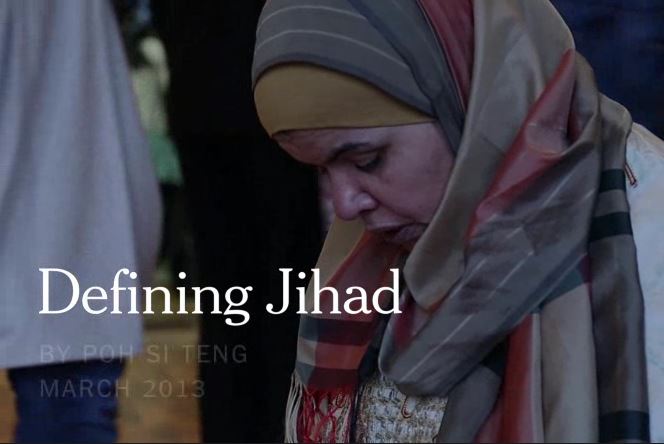
The Struggle for Jihad

Two opposing groups battle to define the word jihad on public buses and subways.

Seth Dixon, Ph.D.‘s insight:

This New York Times video highlights two current media campaigns that are in their own struggle to shape the meaning(s) of the word jihad for the American public.  While the definition of “Holy War” is often quoted, it also means a struggle.  When you hear the word jihad, who’s jihad do you think of first?  The cultural context within which a word is used might not be the same context in which the message is received and interpreted.  This disconnect can be a part of cultural conflicts and misunderstandings.   


Tags: Islam, perspective, religion, culture, USA.

See on www.nytimes.com

Jihad

Geography Quiz Tournament

Challenge your knowledge of Geography from around the world in our ‘Where in the World?’ Quiz Tournament. It’s just £0.49 ($0.75) to enter with a cash prize of £30 ($45) up for grabs. Enter now if you think you know your stuff!

Seth Dixon, Ph.D.‘s insight:

Just an FYI for you trivia buffs who love online gamesThis is an opportunity to see how you compare to others.  This tournament is open until March 14th.   

See on www.quizfortune.com

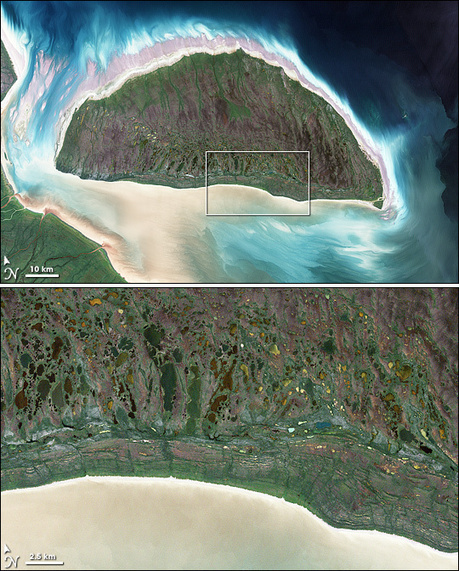
Akimiski Island, Canada

Scraped clean and weighted down for thousands of years by Pleistocene ice sheets, Akimiski Island in James Bay provides a case study of how Earth’s land surfaces evolve following glaciation.

Tags: remote sensing, geospatial,Canada.

See on earthobservatory.nasa.gov

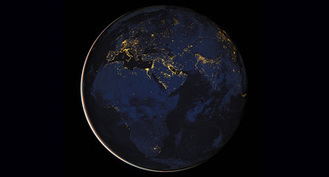
A New Way to Illuminate Inequality Around the World

Want to know where the poor live? Look at where the light isn’t

“Satellite photos of Earth’s artificial lights at night form a luminescent landscape. But researcher Chris Elvidge of NOAA and colleagues from the University of Colorado and the University of Denver realized that they could also illuminate something much darker: the magnitude of human poverty. By comparing the amount of light in a particular area and its known population, they realized that they could infer the percentage of people who are able to afford electricity and the level of government spending on infrastructure development. This allowed them to extrapolate levels of human development—a measure of well-being that includes such factors as income, life expectancy and literacy.”

See on www.smithsonianmag.com

Create a free website or blog at WordPress.com.

Up ↑