Search

GEOGRAPHY EDUCATION

Supporting geography educators everywhere with current digital resources.

Super Bowl rooting interests

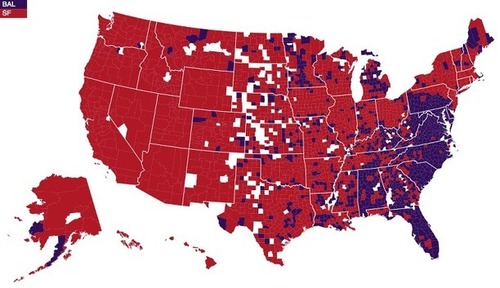
Facebook Data Science wrote a note titled NFL Fans on Facebook. Read the full text here.

Seth Dixon, Ph.D.‘s insight:

Who is rooting for which team in the Super Bowl?  How does regional geography play a role in this distribution of the data captured in this map? 

See on www.facebook.com

NFL fans by U.S. county, according to Facebook

On the surface Facebook is a social network, but those in the know recognize that it’s actually one of the largest datasets of human trends, preferences and activity ever catalogued.

Seth Dixon, Ph.D.‘s insight:

This is a crowd-sourced map of NFL fans very different from this more stylized version

See on io9.com

Britain’s New Slogan: Don’t Come to the U.K.!

An advertising campaign designed to illustrate the drawbacks of living in the U.K. is being planned to deter an expected surge of immigrants, according to reports

Seth Dixon, Ph.D.‘s insight:

Immigration is a sensitive topic so I’ll tread lightly.  There appears to be some support for a campaign that would target would-be migrants specifically from Romania and Bulgaria that life in the U.K. isn’t as as grand as it may seem (ironic coming of the heels of the Olympics).  This obviously isn’t something that is universally supported by the British, but it does highlight the fact that more and more European countries are seeking ways to deter migrants from crossing their borders as economic struggles continue. 

Tags: migration, UK, immigration, Europe, unit 2 population

See on newsfeed.time.com

15 foods you can regrow from scraps

The interest in urban gardening and organic foods has grown as a reaction against a mechanized, commercialization agricultural industry with genetically-modified produce.  Modern consumers are seek…

Seth Dixon, Ph.D.‘s insight:

Modern consumers are increasingly seeking diverse options and don’t want to passively accept the most economically efficient method of food production.  City-dwellers sometimes feel disconnected from the land and their food and some are trying to culturally re-establish that connection in the 21st century.  So how can you engage in some urban agriculture using your food scraps?  This could be a way to make an agricultural unit more hands-on with a fun project

Tags: agriculture, food, urban, unit 5 agriculture, unit 7 cities

See on geographyeducation.org

The Geography of Evolution Education

Seth Dixon, Ph.D.‘s insight:

What is taught in biology classes varies considerably in the United States for a host of political and religious reasons that are particular to each state.  What influences the educational decisions being made in your state?

See on biologos.org

Housing Patterns

See the big picture of how suburban developments are changing the country’s landscape, with aerial photos and ideas for the future

Seth Dixon, Ph.D.‘s insight:

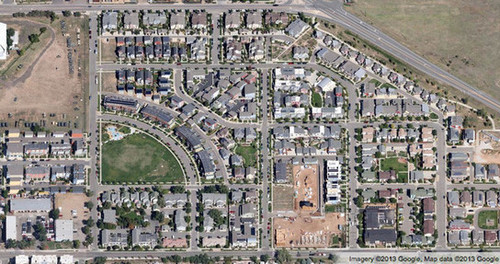
There are many types of housing development patterns throughout the world.  This article provides a summary of approximately 20 different housing patterns with a visual example demonstrate the impact on the urban footprint (Pictured above is an example of new urbanism in Boulder, CO).  Each neighborhood has distinct cultural amenities and attracts particular socioeconomic market segments. 

Questions to Ponder: What housing patterns are you drawn to?  How come?  What are the advantages for the residents to live in that type of community?  What are the impacts that the housing pattern has on the physical environment and the urban system?  What systems are most profitable for developers?  How does the layout of the neighborhood alter the sense of place?  


Tagshousing, urban, planning, density, urbanism, unit 7 cities.

See on www.houzz.com

Transportation and Population

Seth Dixon, Ph.D.‘s insight:

The highway system (and the widespread usage of air conditioning) in the later half of the 20th century dramatically changed the population settlement patterns of the United States and reshaping our cities.


Tags: transportation, urban, planning, density, unit 7 cities.

See on twitter.com

Adaptive Roots in the Concrete Jungle

In this fantastic sighting by photographer Horst Kiechle, we see the roots of a tree in Bangkok, Thailand (Lat Yao, Chatuchak to be exact) growing into the grooves and cracks of an interlocking sidewalk. Even the colour of the roots gradually fade into the pavement.

Seth Dixon, Ph.D.‘s insight:

This startling image is a powerful testament to the adaptive nature of many species to the urban environment.  Some species will adapt in beautiful ways such as this tree, while other will adapt is ways that go against our plan for that urban space (think rats, pigeons and cockroaches).  We adapt to our environment and the environment adapts to us as well; but that relationship is not always peaceful and symbiotic.  We can also destroy ecosystems that are fragile and not as resilient to change as this tree is.  See this same tree’s root network one year later


Tags: urban ecology, environment adapt, sustainability, biogeography.

See on twistedsifter.com
A Layman’s Geography Guide to the Most Confusing Region Of the World: Iran

Iran’s geography plays heavily in the foreign affairs issues it is a part of, and the policies it makes.


Seth Dixon, Ph.D.‘s insight:

“Iran sits smack in the middle of one of the most important geopolitical regions on Earth. Much of its western flank is bordered by either Iraq or the Persian Gulf, and it has considerable control over one of the world’s most important waterways for oil shipping and trade, the Strait of Hormuz.” 


Given it’s context, Iran is a country that students should know beyond the three main facts that that most Americans are aware of (Iran has an Islamic-based government, an emerging nuclear program and a ton of oil).  This article is a good starting point. 


Tags: Iran, political, Middle East.

See on www.policymic.com

Blog at WordPress.com.

Up ↑