Search

GEOGRAPHY EDUCATION

Supporting geography educators everywhere with current digital resources.

Refugees as a Part of World Migration Patterns

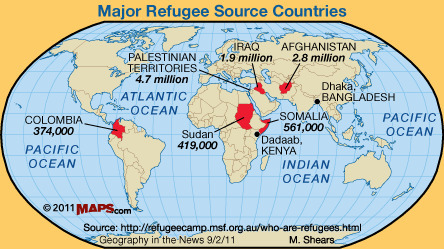
A refugee is a person who has been pushed away from their homeland and seeks refuge in another place. The United Nations High Commissioner on Refugees (UNHCR) provides a more narrow definition of a refugee as someone who flees their home country due to a “well-founded fear of being persecuted for reasons of race, religion, nationality, membership of a particular social group or political opinion.”


As Neal Lineback notes in this Geography in the News post, not all refugees are covered by this definition.  Environmental refugees have been forced to leave their homes beause of soil degradation, deserticfication, flooding, drought, climate change and other environmental factors. 


Tags: environment, environment depend, migration, unit 2 population.

See on www.linebackworldview.com
Where Does Your Water Come From?

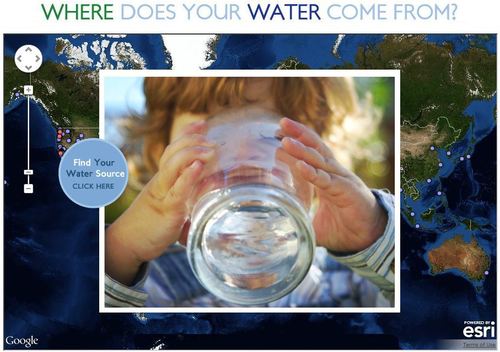
This interactive map documents where 443 million people around the world get there water (although the United States data is by far the most extensive).  Most people can’t answer this question.  A recent poll by The Nature Conservancy discoverd that 77% of Americans (not on private well water) don’t know where their water comes from, they just drink it.  This link has videos, infographics and suggestions to promote cleaner water.  This is also a fabulous example of an embedded map using ArcGIS Online to share your geospatial data with a wider audience.  


Tags: GIS, water, fluvial, environment, ESRI, pollution, development, consumption, resources, mapping, environment depend, cartography, geospatial

See on www.nature.org

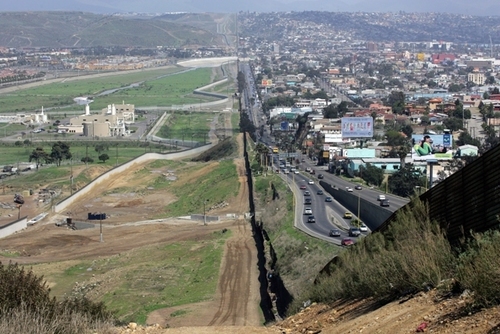
Changing Face of the US/Mexico Border

This lesson plan was specifically designed with Arizona examples and aligned to the Arizona state standards, but it be easily adapted.  I saw a presentation based on this lesson at the NCGE conference as was incredibly impressed.  Also, you’ll note that like this one, there are many other lesson plans freely available on the Arizona Geographic Alliance website.  

Tags: K12, borders, political, landscape, migration, unit 4 political.

See on geoalliance.asu.edu

Remind 101

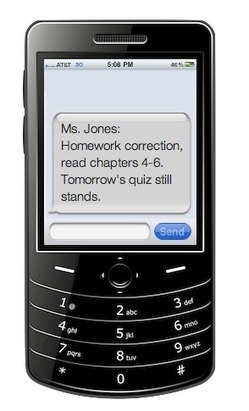
A safe way for teachers to text message students and keep in touch with parents.

I’ve tried numerous methods including Facebook groups and Twitter hashtags as ways to digitally connect with my students through emerging social media platforms.  Every method seems to have a few privacy or accessibility issues and this is no expection.  However, for this one, I think that the benefits outweigh the negatives and it has much greater privacy control than most.  I haven’t tried this out yet, but next semester I hope to use this free way to text message all my students (and/or parents) without the privacy issues of sharing cell phone numbers or getting them to sign up for a new social media platform.

Tags: training, edtech, socialmedia, GeographyEducation.

See on www.remind101.com

Geo-Literacy

The Rhode Island Geography Education Alliance seeks to promote geo-literacy here in the Ocean State.  So what is geo-literacy? The National Geographic Society’s Educational team…


As the Alliance Coordinator for the state of Rhode Island, I organized  these three videos (two from National Geographic) and some pictures to provide a basis for understanding what geo-literacy is and why it is important for society and within the workforce.  In the spirit of sharing, I thought I’d share these links beyond the borders of Rhode Island. 


Tags: GeographyEducation, NationalGeographic, geo-inspiration, RhodeIsland.

See on rigea.org

Obama’s Secret Weapon In The South

States in the Deep South traditionally vote Republican in every presidential election. However, a string of “blue” counties curve through Mississippi, Alabama and Georgia.

Question to ponder: How does the physical geography of a region impact the human geography of a place?  Using this example, does the environment completely determine the cultural outcomes of the region?  To what extent does one impact the other?

Tags: physical, political, environment, unit 4 political.

See on www.npr.org

Map as Art

There are many amazing examples of artists who turn to cartography and geography for inspiration. Whether through the lens of a camera, paint, …

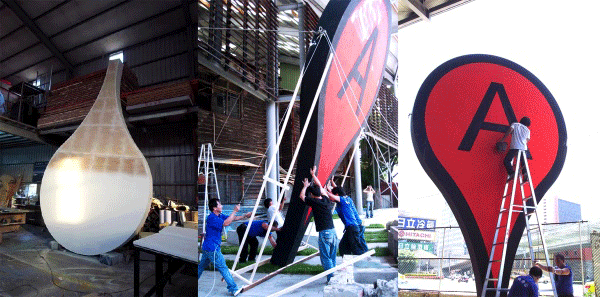
This series of cartographically-inspired art works changes how we look at maps.  Some of these artists also make us think of places that are on the Earth as explicitly “mappable” features.  I think the Google Maps push-pin in the city center is my favorite.  Which do you prefer?

Tags: art, mapping, place, cartography.

See on gislounge.com

Tunneling through Andes to speed global trade

BUENOS AIRES, Argentina (AP) — South American engineers are trying to tackle one of the continent’s greatest natural challenges: the towering Andes mountain chain that creates a costly physical barrier for…

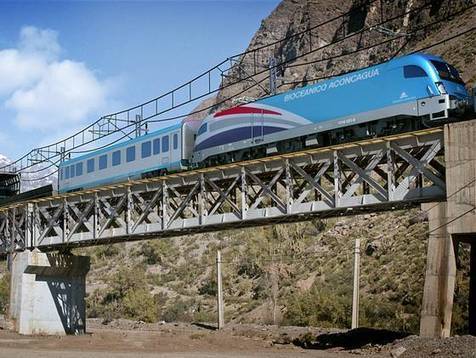
At the NCGE conference, noted author Harm De Blij mentioned a daring project that would link Eastern South America with the Pacific as engineers were planning to tunnel under the Andes mountains.  Here is a link to an article on this intermodal transportation project that would lower the shipping costs from East Asia to the Southern Atlantic.  Government officials in both Argentina and Brazil have described the  project as a matter of “national interest.”  

Tags: transportation, LatinAmerica, globalization, industry, economic, development, unit 6 industry.

See on www.usatoday.com

Russians are leaving the country in droves

Over a bottle of vodka and a traditional Russian salad of pickles, sausage and potatoes tossed in mayonnaise, a group of friends raised their glasses and wished Igor Irtenyev and his family a happy journey to Israel.

My regional class has been learning about Russia this week and when I first started teaching a few years ago, I would teach that Russia had a population of 145 million.  Today it is 141 million and part of that is due to migrants leaving a country that they see as lacking in economic opportunities and political freedoms (another part of the story is that birth rates plummeted after the collapse of the Soviet Union in what demographers have called the “Russian Cross“).  In the last few years the population appears to have stabilized, but there are still many who do not see a vibrant future from themselves within Russia.  

Tags: Russia, migration, Demographics, immigration, unit 2 population.

See on www.latimes.com

Create a free website or blog at WordPress.com.

Up ↑