Search

GEOGRAPHY EDUCATION

Supporting geography educators everywhere with current digital resources.

Troubles on Russia’s Lake Baikal

Workers at an ailing paper mill in Siberia are clinging to their jobs in the face of financial pressure and criticism from environmentalists.

The environment, industry and politics play key roles in this story of an old style Soviet mono-town on Lake Baikal.  Monotowns had planned economies that revolved around one industry and today many of these are struggling in the post-Soviet era.  While the particulars of the political situation are a bit dated, the overall issue is still quite relevant to understanding Russia today.   

Tags: Russia, industry, labor, environment, economic, water, pollution, environment modify, unit 6 industry.

See on www.nytimes.com
Selecting a Map Projection

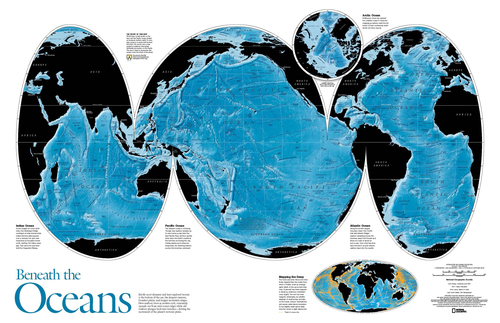
Video. Cartographers at National Geographic discuss how they select an appropriate map projection for the September 2012 magazine map supplement.

There is no one perfect map projection that fits all circumstances and situations. Think a situation in which this map projection would be an ideal way to represent the Earth and another situation where it is an incredibly limited perspective. 

Tags: cartography, K12, geospatial, NationalGeographic, water. 

See on education.nationalgeographic.com

Documentary: Last Train Home

Watch Last Train Home on PBS. See more from POV.

Every spring, China’s cities are plunged into chaos as 130 million migrant workers journey to their home villages for the New Year in the world’s largest human migration.

I’ve posted in the past about this documentary which portrays the The cultural importance of New Year’s in China and the massive corresponding migratory shifts that take place.  What is new is that the 85 minute documentary is now available online.  “Last Train Home takes viewers on a heart-stopping journey with the Zhangs, a couple who left infant children behind for factory jobs 16 years ago, hoping their wages would lift their children to a better life. They return to a family growing distant and a daughter longing to leave school for unskilled work. As the Zhangs navigate their new world, Last Train Home paints a rich, human portrait of China’s rush to economic development.”

Tags: China, EastAsia, migration, development, labor, development, transportation, unit 2 population.

The Hidden Cost of Counting the Homeless

A professor criticizes the “culture of quantification,” (in the journal cultural geographies) arguing that we don’t do enough with the data we collect.  If all we do is count (or attempt to count the homeless), does that help them in any way or change the realities that lead to homelessness?  Are we counting them just to give us the numbers to receive credit that may help other programs but not help the homeless?  Is data for data’s sake of any value?

Tags: statistics, class, census, socioeconomic, housing, poverty.

See on www.theatlanticcities.com

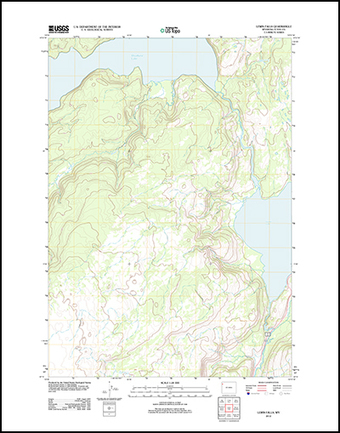
Digital Topographic Maps

Home page of USGS Topographic Maps…

The last paper editions of USGS topographic masp came out in 1973 and 1992.  If you are waiting for the next print edition, you’ll be waiting a long time.  Like so many other agencies with information distribution, the USGS topo maps have gone digital.  In 2001 the USGS announced the production of a current, seamless digital National Map.  You can still quadrangle chunks of the National map and download them for free as PDFs (with geospatial extensions for measuring). 

Tags: mapping, cartography, geospatial.

See on nationalmap.gov

Thomas Malthus and Population Growth

Learn more: http://www.khanacademy.org/video?v=r1ywppAJ1xs Thomas Malthus’s views on population. Malthusian limits.

This is a succinct (but not perfect) summary of Malthusian ideas on population.  What do you think of his ideas?  Any specific parts of his theory that you agree with?  Do you disagree with some of his ideas?  What did history have to say about it?

Tags: Demographics, population, models, APHG,  unit 2 population.

See on www.youtube.com

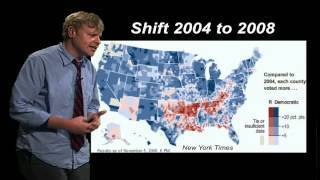
Geographic Analysis of 2012 Presidential Election


Geographer Andy Baker provides an excellent spatial analysis of the key voting patterns that will shape the 2012 presidential election in the United States.

Tags: political, statistics, spatial, regions, USA.

See on www.youtube.com

U.S. Protestants Lose Majority Status

For the first time in its history, the United States does not have a Protestant majority, according to a new study.

Interestingly, this is not due to the rise of a new religious group, but the rise of secularism in the United States. The fastest growing group in the United States is the religiously unaffliliated. Click here for a simplified AP news story on the report. 

Questions to ponder: What are some causal factors that might explain why there is an increase in the non-religious population in the United States today? How does this impact American culture and politics?

Tags: religion, USA, culture, unit 3 culture.

See on www.pewforum.org

Geographic Ignorance

Chelsie Hightower is confused on DWTS. Helio Castroneves does his best to educate her. Does he succeed? LET’S FIND OUT.

This is painful, but highlights once again why everyone should learn some basic geography.

Tags: GeographyEducation, video.

See on www.youtube.com

Blog at WordPress.com.

Up ↑