Search

GEOGRAPHY EDUCATION

Supporting geography educators everywhere with current digital resources.

Spain crisis: ‘stop this radicalism and disobedience,’ PM tells Catalan leaders

“Spain’s prime minister has called on Catalan separatist leaders to end their ‘escalation’ as several thousand people took to the streets of Barcelona to protest at Madrid’s attempts to stop a banned referendum on independence. ‘Stop this escalation of radicalism and disobedience once and for all.’ Catalonia’s president earlier accused the Spanish government of suspending the region’s autonomy after police intensified efforts to stop a vote on independence that has sparked one of the worst political crises since Spain’s return to democracy four decades ago. Spanish Guardia Civil officers raided a dozen Catalan regional government offices and arrested 14 senior officials on Wednesday as part of an operation to stop the referendum from taking place on 1 October.”

Source: www.theguardian.com

If you are looking for an example of devolution today, this is it.  This situation has escalated as Spain and Catalonia’s governments cannot work together.  The referendum was (according to the Spanish government) outlawed but keep an eye on Catalonia over the next few weeks.

Tags: Catalonia, Spain, political, devolution, autonomyEurope.

The last globemakers

Peter Bellerby is one of the last artisan globemakers on earth. But now, he’s teaching an entirely new generation of artists the secrets of crafting entire worlds by hand.

Source: www.youtube.com

Yes, these globes are precise archives filled with geospatial data and locational information–however, that pales in comparison to the artistic brilliance of the globes. These hand-crafted globes are truly works of art.  Marvel at the merger of mathematical precision and artistic design that makes a globe such as these a cartographic gem.  If anybody want to get me a Christmas present, you know that I love cartographic gifts.  FUTURE WATCHING: Here is the longer video of the Bellerby Globes being produced.     


Tags: cartography, visualization, mapping, artgeo-inspiration.

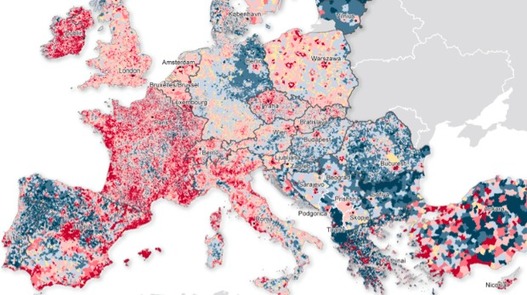
Europe’s Population Change (2001 to 2011)

The map provides a level of detail previously unavailable. It is the first ever to collect data published by all of Europe’s municipalities.

Source: www.citylab.com

Questions to Ponder: What regions can you identify as a part of a trend?  What possible factors have led to these patterns?  What are the long-term implications of this data? 


Tags: Europe, declining populations, population, demographic transition model, models, migration. 


The World Bank is eliminating the term “developing country” from its data vocabulary

“In the 2016 edition of its World Development Indicators, the World Bank has made a big choice: It’s no longer distinguishing between ‘developed’ countries and “developing” ones in the presentation of its data. The change marks an evolution in thinking about the geographic distribution of poverty and prosperity. But it sounds less radical when you consider that nobody has ever agreed on a definition for these terms in the first place. The International Monetary Fund says its own distinction between advanced and emerging market economies “is not based on strict criteria, economic or otherwise.” The United Nations doesn’t have an official definition of a developing country, despite slapping the label on 159 nations. And the World Bank itself had previously simply lumped countries in the bottom two-thirds of gross national income (GNI) into the category, but even that comparatively strict cut-off wasn’t very useful.”

Source: qz.com

Labels and categories are so often problematic, but they are also necessary to make sense of the vast amount of information.  Regional geography is inherently about lumping places together that have commonalities, but acknowledging that many differences from place to place makes the world infinitely varied and complex.  Since we can’t process an infinite amount of complexity, we categorize, for better or for worse.  In education, we are continually trying to show how some categorizations fail, hoping that our students will categorize the information they receive in better ways (non-racist ways for example).  The regional terms we use–Latin America, the Middle East, Europe, etc.—impacts how we think about the world.  Each of those terms highlights a few similarities and ignores some important differences.  The terms More Developed Countries (MDCs), Newly Industrialized Countries (NICs), and Less Developed (LDCs) is how many people have socioeconomically categorized the world’s countries, some preferring developing countries instead of LDCs because it less stigmatizing.  In 2015, many at the World Bank have thought that the term “Developing Countries” obscures more than it reveals.  In 2016, the World Bank removed the term from its database since there are more differences than similarities in the economic structures and trajectories of developing countries.         


Questions to Ponder: What are some of the major problems that you see with the term developing country?  Even with its problems, what utility is there in the term?  Will you keep using the term or will you abandon it?  How come? 


Tagsdevelopment, statistics, economicindustry.

Why is Bulgaria’s population falling off a cliff?

What is life like in the country projected to have the world’s fastest-shrinking population?

Source: www.bbc.com

This is a good case-study to show how demographic decline coupled with economic decline, with exacerbate problems with a  consistent out-migration flow.   


Tags: Bulgaria, declining populationpopulationmigration.

Why Don’t We All Speak the Same Language?

There are 7,000 languages spoken on Earth. What are the costs — and benefits — of our modern-day Tower of Babel?

Source: freakonomics.com

These two podcasts are great mainstream looks at issues that filled with cultural geography content.  So many languages on Earth is clearly inefficient (the EU spends $1 billion per year on translation), and yet, linguistic diversity is such a rich part of humanity’s cultural heritage.  Listen to the first episode, Why Don’t We All Speak the Same Language? as well as the follow-up episode, What Would Be the Best Universal Language?


Tags: languagecultureworldwide, English, regions, diffusiontechnology.

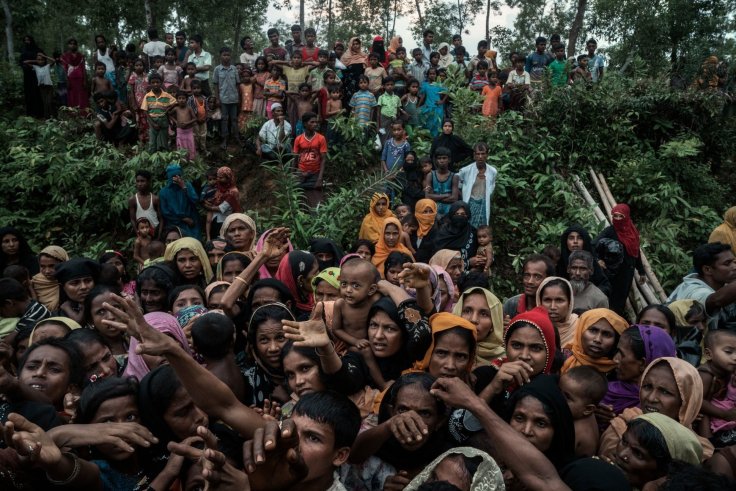
The Rohingya in Myanmar: How Years of Strife Grew Into a Crisis

Life has long been fraught for a Muslim minority in mainly Buddhist Myanmar, but the recent “ethnic cleansing” has sent Rohingya fleeing en masse.

Source: www.nytimes.com

Many students have asked the question “Who are the Rohingya?” The Muslim minority group, concentrated near the Bangladeshi has a long history of marginalization. Its members lack full citizenship in Myanmar (Burma), and many in Myanmar deny that the Rohingya are a native ethnic group, claiming that they are recent Bengali immigrants. Now, fierce clashes between security forces and Rohingya militants left hundreds dead and entire villages torched to the ground. Hundreds of thousands of Rohingya have fled over the border into Bangladesh.


Tags: migration, politicalconflict, refugeesBurma, Southeast Asia.

Pakistan’s traditional third gender isn’t happy with the trans movement

For centuries, South Asia has had its own Khawaja Sira or third gender culture. Now, some third gender people in Pakistan say the modern transgender identity is threatening their ancient culture.

Source: www.pri.org

Sometimes our assumptions about a society, and how they might react to cultural issues are just that…assumptions.  I for one was very surprised to learn that Pakistan had a a traditional third gender. 


Tags: culture, developmentpodcast, genderPakistansexuality, South Asia, religion.

Homeland of tea

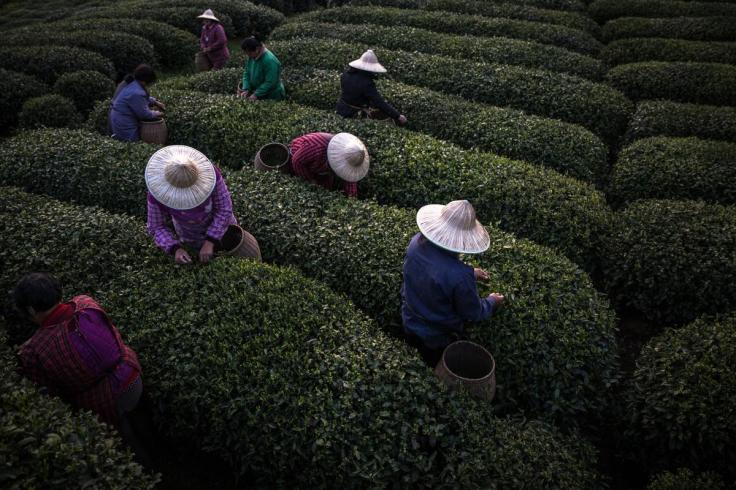
“China is the world’s biggest tea producer, selling many varieties of tea leaves such as green tea, black tea, oolong tea, white tea and yellow tea. Different regions are famous for growing different types of tea. Hangzhou is famous for producing a type of green tea called Longjing or the Dragon Well tea. Tea tastes also vary regionally. Drinkers in Beijing tend to prefer jasmine tea while in Shanghai prefer green tea. Processing raw tea leaves for consumption is a time and labor-intensive activity and still done by hand in many areas in China. The Chinese tea industry employs around 80 million people as farmers, pickers and sales people. Tea pickers tend to be seasonal workers who migrate from all parts of the country during harvest time. In 2016, China produced 2.43 million tons of tea.”

Source: www.bostonglobe.com

Tea, the world’s most popular beverage, doesn’t just magically appear on kitchen tables–it’s production and consumption is shaped by geographic forces, cultural preferences, and regional variations.  These 21 images show the cultural, region, and environmental, economic, and agricultural context of tea.


Tagsimages, foodChina, East Asia, economic, labor, food production, agriculture.

Blog at WordPress.com.

Up ↑