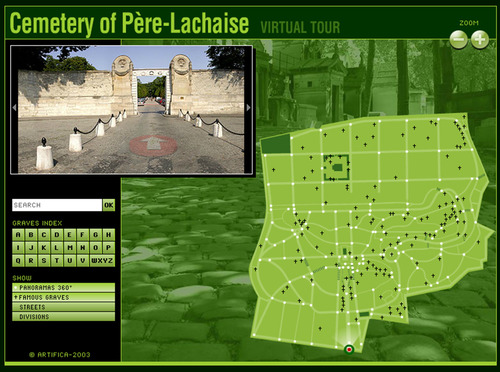
Looking for Jim Morrison’s grave? There are countless famous people buried in Paris’ most famous cemetery. This virtual tour is as close as most of us will get to exploring it this school year.
Despite the country’s claims to be a sleek 21st-century meritocracy, the habits of centuries of discrimination and social exclusion are not so easily shaken.
India is modernizing at a rapid pace, but some old class problems rooted in the caste system are still visible. This is part of a large series called “Breaking Caste” with some excellent videos, articles and personal vignettes to humanize the struggles of those at the bottom of the social hierarchy.
This infographic shows the main causes of death in 1900 in the United States and compares that with the 2010 figures. The United States, during that time underwent what many call the epidemiological transition (in essence, in developed societies we now die for different reason and generally live longer) What are the geographic factors that influence these shifts in the mortality rates? What is better about society? Has anything worsened? How come?
As Mumbai booms, the poor of its notorious Dharavi slum find themselves living in some of India’s hottest real estate.
What do you think the future will hold for this slum neighborhood? What will happen to the people that live there? What will this place look like in 20 years? What forces will create this change?
The new Blackfriars station, which is being built on a bridge spanning the River Thames, is on its way to becoming the world’s largest solar bridge after Solarcentury begun the installation of over 4,400 solar photovoltaic panels…
“The solar panels will generate an estimated 900,000kWh of electricity every year, providing 50% of the station’s energy and reducing CO2 emissions by an estimated 511 tonnes per year. In addition to solar panels, other energy saving measures at the new station will include rain harvesting systems and sun pipes for natural lighting.”
“Dogtown and Z-Boys: A documentary about the pioneering 1970s Zephyr skating team.”
Popular culture is shaped by taste-makers, counter-cultural movements, and the blending of cultural practices in new ways creating a distinct aesthetic. Often, the physical geography of a region plays a crucial role in shaping the cultural practices particular to their environment. All of that can be seen quite vividly in the colorful skating revolution of the 1970s that took shape in the Southern California. Kids who grew up idolizing surfers branched out their recreational habits into the modern form of skating that we see today at the X Games. Made legendary through a series of Skateboarder magazine articles, these kids shaped the cultural ethos of skateboarding for over a generation. With the coastal influence of surfing, the socioeconomics of a seaside slum, it’s abandoned piers, the ubiquity of cement and asphalt in the urban landscape, the run-down neighborhood of “Dogtown” was home to cultural movement. The fierce droughts of the 1970 meant abandoned swimming pools; that drought led surfers to the technological infrastructure for modern skating ramps and half pipes as they skated in emptied swimming pools. As stated in those Skaterboarder articles, “two hundred years of American technology has unwittingly created a massive cement playground of unlimited potential. But it was the minds of 11 year olds that could see that potential.” The documentary “Dogtown and Z-Boys” and the fictionalized “Lords of Dogtown,” both produced by skater turned filmmaker Stacy Peralta, chronicle the age (“Lords of Dogtown” is probably not appropriate for the classroom).











 GEOGRAPHY EDUCATION