See on Scoop.it – Geography Education

Many consumers don’t know much about the production of their food. Is your food Genetically modified? Organically produced? Learn how to know.
See on www.plucodes.com
See on Scoop.it – Geography Education
Many consumers don’t know much about the production of their food. Is your food Genetically modified? Organically produced? Learn how to know.
See on www.plucodes.com
See on Scoop.it – History and Social Studies Education
The Mapping History Project has been designed to provide interactive and animated representations of fundamental historical problems and/or illustrations of historical events, developments and dynamics. The material is copyrighted, but is open and available to academic users.
See on mappinghistory.uoregon.edu
See on Scoop.it – Geography Education
Metro is debuting its “Rush Plus” service today. In honor of this, the latest step in Metro’s 34-year growth and evolution, here is an updated version of our popular animation showing the history of Metrorail service.
This is a nice, simple interactive feature showing the expansion of the transportation network in the Washington D.C. area.
See on greatergreaterwashington.org
See on Scoop.it – Geography Education
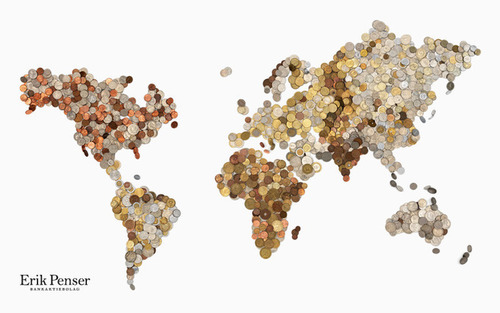
“A world map used by Erik Penser Bankaktiebolag to visualize economic markets. The map contains approximately 3,000 coins and every continent is built out of its countries’ currencies. Used in various medias during 2009.” If you look closely you will notice that the coins are from the region that they are cartographically representing. To see more by this artist, visit: http://www.penser.se/
See on www.bedow.se
See on Scoop.it – Geography Education
David Roberts is staff writer at Grist.org. In “Climate Change is Simple” he describes the causes and effects of climate change in blunt, plain terms. On Apr…
This is video is designed to explain climate change in 15 minutes. If you would like see the slides presented, you can see them at: http://grist.org/climate-change/climate-change-is-simple-we-do-something-or-were-screwed/
See on www.youtube.com
See on Scoop.it – Geography Education
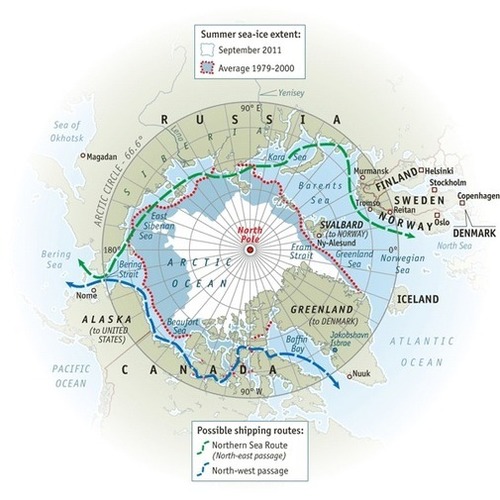
Climate change has numerous casualities: the melting of the Arctic Sea ice is one such environment nightmare that’s a result of global warming (don’t worry Texans, you can just call it a “freak heat wave” or an “inexplicable anomaly”). But like all global processes, not all places are impacted equally. Even in an economic recession, some find fortune while the majority flounder. Same is true with the melting of the Artic; the melting might potentially open up the fabled Northwest Passage and create new, seasonal shipping lanes. Who would benefit from this? Who would suffer? To see a short video on this, see: http://www.economist.com/blogs/dailychart/2011/09/melting-arctic-sea-ice-and-shipping-routes
See on www.economist.com
See on Scoop.it – Geography Education
The social-science evidence is in: though it may benefit the adults
involved,
the dissolution of intact two-parent families is harmful to large numbers
of children.
On this Father’s Day, I’m thinking about the sociological importance of fathers and my gratitude for my father (an educator who instilled in me the desire to teach). Although this article is politically charged with an intentionally controversial title, “Dan Quayle was Right,” it points to solid social science evidence as to the importance of fathers within society. Conversely, fatherlessness also has major (negative) impacts society as well.
See on www.theatlantic.com
See on Scoop.it – Geography Education
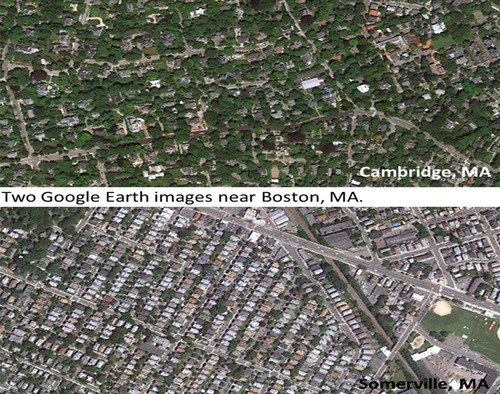
Wealthy cities seem to have it all. Expansive, well-manicured parks. Fine dining. Renowned orchestras and theaters. More trees. Wait, trees?
I certainly wouldn’t argue that trees create economic inequality, but there appears to be a strong correlation in between high income neighborhoods and large mature trees in cities throughout the world (for a scholarly reference from the Journal, Landscape and Urban Planning, see: http://www.sciencedirect.com/science/article/pii/S0169204607002174 ). Why is there such a connection? In terms of landscape analysis, what does this say about those who have created these environments? Why do societies value trees in cities? How does the presence of trees change the sense of place of a particular neighborhood? For more Google images that show the correlation between income and trees (and to share your own), see: http://persquaremile.com/2012/05/24/income-inequality-seen-from-space/
See on persquaremile.com
See on Scoop.it – Geography Education
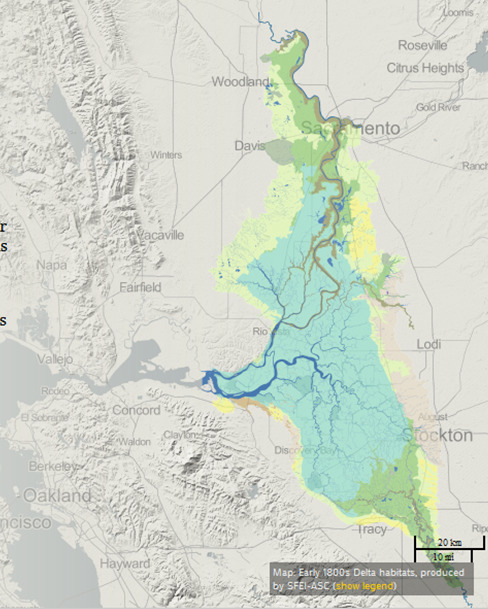
What did the Delta look like 200 years ago? See an interactive map of the historical habitat and present day landscape, as well as the old photos, maps and journals used by historical ecologists to answer that question.
This interactive module has over 20 different maps and perspectives to show both the physical and human geography of a particular environment. As the delta’s ecosystem has been failing, the importance of understanding the interconnections between people, places and our environment becomes all the more critical.
See on science.kqed.org