Search

GEOGRAPHY EDUCATION

Supporting geography educators everywhere with current digital resources.

Real World Math

See on Scoop.it – Geography Education
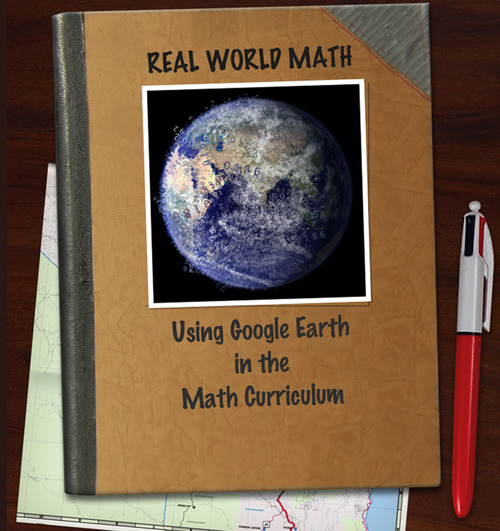
“Real World Math: Using Google Earth in the Math Curriculum.”   Back to my interdisciplinary approach to strengthening geographic education, image hearing that there is a Math teacher at your school using this, wouldn’t you want to be a part of it?  Too often knowledge is taught within disciplinary silos; students need opportunities to make real world connections between the disciplines to breath life into how they are taught.  This site reminds me of http://www.googlelittrips.org/ which allows real world geography to be a part of literature/English classes.    

See on www.realworldmath.org

Coca-Cola Returning To Myanmar; Now It Sells In All But 2 Nations

See on Scoop.it – Geography Education

With the country also known as Burma taking steps toward democracy and respect for human rights, Coke is returning after a 60-year absence. What are the two nations where it still won’t be doing business?

Globalization has made many companies and products ubiquitious throughout the world.  We take their presence as a matter of course, a sign that the largest brands are in essentially every country in the world–but not all.  Until recently Coca Cola was not in three markets, all for political reasons.  Now that Burma is becoming more democratic, Coca-Cola will bring their product to all countries of South East Asia.  Any guesses on the 2 countries that still don’t have Coke?

UPDATED CORRECTION: Thanks to the great people at About.com ‘s geography page, I was informed that there are more than just the initially listed two countries (North Korea and Cuba) not within the Coke universe (such as Somalia and East Timor to name a few).  For more on this see: http://geography.about.com/b/2012/06/15/coca-cola-in-every-country-but-three-no.htm

See on www.npr.org

The Politics of Culture

See on Scoop.it – Geography Education

An NPR team begins a series of reports from North Africa, where last year’s revolutions have Tunisia, Libya and Egypt writing new rules for their changing societies.


The Arab Spring has reworked the political landscape in Tunisia; this podcast looks at the cultural changes that have also taken place because of the political shifts.  How are culture and politics interconnected?

See on www.npr.org

Scientists Tackle The Geography Of Nature Vs. Nurture In Maps Of U.K. : NPR

See on Scoop.it – Geography Education

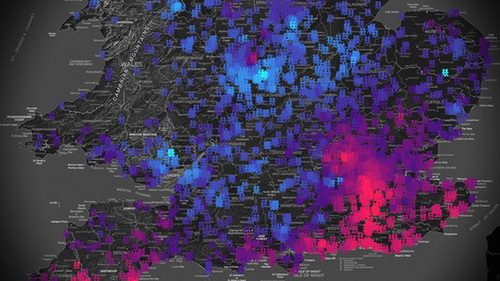
Genes and the environment both shape health and development. But their effects are not always equal. Researchers in the U.K. say they’ve mapped hotspots where nature has a stronger influence, and others where nurture dominates.


All people are a combination of their genes as well as the environment (a mix of ‘nature’ and ‘nurture’).  A recent study of over 5,000 twins throughout the UK saw regional concentrations where it appears that environmental factors had a greater than normal influence (centered around London).  I’m still scratching my head wondering what to make of this data, but this is a compelling project.     

See on www.npr.org

Africa Takes Off

See on Scoop.it – Geography Education

Ask this question: Which region of the world currently is the home to 6 of the 10 fastest growing economies?  Most people (myself included) would be surprised to hear that the region is sub-Saharan Africa.  While Sub-Saharan Africa is still the least economically developed region with some very significant challenges, too often Africa is only taught as a region of problems and negative patterns.  


Trade between Africa and the rest of the world has tripled in the last decade.  Since 2005, Africa is officially receiving more private foreign investment than official aid.  With many counties “skipping the landline phase” and going straight to cell phone technologies, the rapid acceleration of technology means that they Africa’s economic infrastructure has the potential to increase quickly.      

See on www.foreignpolicy.com

The Best Countries to Be a Woman — and the Worst

See on Scoop.it – Geography Education

Hint: India is last among the G20 and the United States didn’t crack the top five in the latest survey to reflect poorly on the situation of American women.


A poll of 370 gender experts yielded some interesting results that reflect the local cultural, economic and political geographies.  Beyond using the lists of best and worst countries (since the rankings are still based on rather subjective criteria), students can come up with their most important factors in evaluating gender equity and evaluate the countries based on their own evaluations. 

See on rendezvous.blogs.nytimes.com

Landscapes of Oil

See on Scoop.it – Geography Education

Socks is a online magazine about Media, Art, Architecture, Cities, Design, Technology.

Our society is obviously heavily dependent on oil.  Yet we often don’t see the environmental impacts of our collective oil consumption on the landscape because the negative impacts have been spatially separated away from oil consumers.  This is an excellent compilation of photos by Edward Burtynsky that makes the connection between oil consumption and changes to both the physical and cultural landscapes explicit.  For more images by this artist, see: http://www.edwardburtynsky.com

See on socks-studio.com

Hiking Preikestolen in Norway

See on Scoop.it – Regional Geography

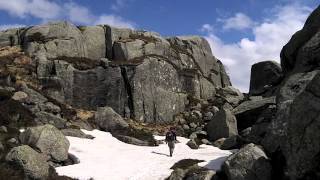
Hiking to the top of Preikestolen (the Pulpit Rock) near Stavanger, Norway. An amazing and wondrous hike.


For the inner explorer in all of us, this is a geographic dream.  To read more about this fantastic climb, see: http://digitalnomad.nationalgeographic.com/2012/05/24/hiking-preikestolen/

See on www.youtube.com

Container City

See on Scoop.it – Geography Education

Channel 5 – Behind closed Doors Series on Container City at Trinity Buoy Wharf…

On my daily commute, I drive by a colorful container building in Providence, RI.  In terms of it’s spatial configuration and aesthetic statement within the urban landscape, I found it fascinating.  After doing some more research, I began to appreciate this as a form of sustainable housing that 1) costs less than traditional structures, 2) can be built MUCH quicker that standard buildings and 3) has the potential to be an effective recycling method.  For more on ‘Container Cities,’ see: http://sustainablecitiescollective.com/kaidbenfield/40875/shipping-container-cities-bring-creative-funky-approach-green-construction

See on www.youtube.com

Create a free website or blog at WordPress.com.

Up ↑