Search

GEOGRAPHY EDUCATION

Supporting geography educators everywhere with current digital resources.

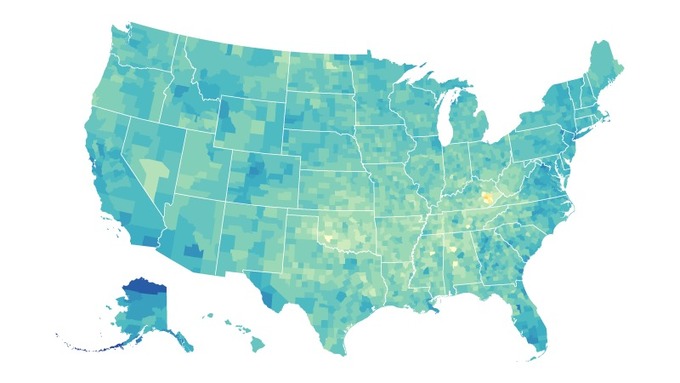
As U.S. Life Expectancies Climb, People In A Few Places Are Dying Younger

“The wealthiest country, which spends the most money on care for the sick, has far from the best health outcomes. Babies born in eastern Kentucky, along the Mississippi Delta and on Native American reservations in the Dakotas have the lowest life expectancies in the country. If current health trends continue, they aren’t expected to live much beyond an average of 70 years. Meanwhile, a baby born along the wealthy coast of California can be expected to live as long as 85 years, the authors found.

Source: fivethirtyeight.com

Questions to Ponder: What geographic and socioeconomic factors shape mortality rates?  What is better about society today then before?  Has anything worsened?  How come?


Tagsmortality, medical, developmentregions, USA, population, statistics.

Five gentrification myths debunked

‘Gentrification’ is a messy bogeyman of a term deserving more critical analysis. If ‘gentrification’ is ‘exclusive economic development’, what we want is INCLUSIVE economic development.

Source: www.youtube.com

This post will need many disclaimers, but I think that it is a valuable addition to our gentrification materials since the key take-home point is that gentrification doesn’t happen the same way in all places (geographic context matters!). Some of the generalizations about gentrification around the country might not apply to some specific examples.  Are these generalizations true in some (and possibly most) contexts?  Sure, but unfortunately once people hear the word gentrification, they assume a base set of assumptions about the situation which may or may not be true.  The 5 myths outlined in this video (more detail in this Washington Post article) are:

  1. Gentrification leads to lower crime.
  2. Gentrification causes widespread displacement.
  3. Longtime residents hate gentrification.
  4. Gentrifiers are white.
  5. Gentrification happens naturally.

Tags: neighborhood, gentrificationurban, place, culture, economic   

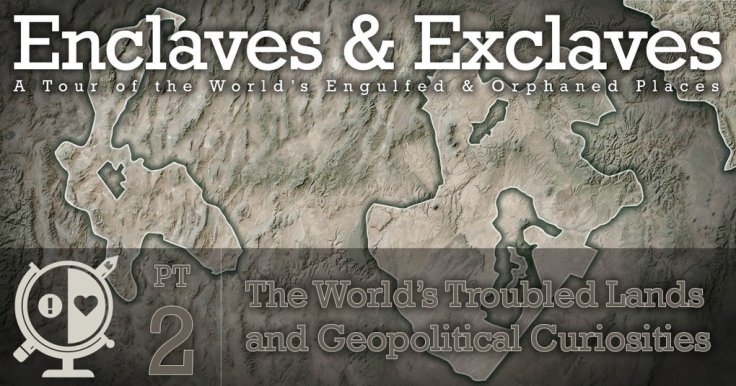
Enclaves & Exclaves

A tour of the world’s engulfed and orphaned places.

Source: storymaps.esri.com

This storymap is a full length article about all the intricacies about enclaves and exclaves, but the interactive format, visuals and maps really make this much more than another article on the topic.    


Tags: borders, political, mappingESRIStoryMap.

Pro Wrestling and Economic Restructuring

“For decades, professional wrestling in North America operated under a system of informally defined ‘territories.’ Each territory represented an individual promotion with its own stable of talent that drew crowds to local arenas and broadcast the product on regional television stations. In 1982, Vince McMahon purchased his father’s company, the World Wrestling Federation. For almost two decades, he endured an epic conquest of the pro wrestling world that led to where he is today: standing tall as the undisputed king of the industry.”

Source: www.youtube.com

This may seem like a strange video for geography educators and students.  In one sense, the history of a wrestling entertainment business is trivial, but this provides a great example of how using economies of scale can overcome regional advantages as new technologies enter the market.  Maybe is not a ‘real’ sport, but the example of wrestling might pique a few students’ interest as the economic principles are made manifest. 


Questions to Ponder: How do emerging technologies lead to economic disruption?  Why was regional systems so prevalent in the 1950s and1960s?  If Vince McMahon didn’t pursue this plan, would there still be smaller, regional wrestling organizations?  Why or why not? 


Tags: regions, economic, diffusiontechnologysport, industry

How the 1967 war changed the shape of Israel

THE SIX-DAY WAR increased Israel’s territory threefold. The “borders of Auschwitz” were gone; the vulnerable nine-mile narrow waist acquired a thick cuirass with the mountains of the West Bank. Israel soon annexed East Jerusalem with some surrounding land; it did the same with the Golan Heights in 1981.


Tags: Israel, Palestine, borders, political, Middle East.

Source: www.economist.com

The real reason Amazon buying Whole Foods terrifies the competition

Amazon’s zero-profit strategy is a disaster for anyone who goes up against it.

Source: www.vox.com

I have more questions than definitive answers, so let’s get right to it. 


Questions to Ponder: How have technological and logistical shifts in various industries made this once unthinkable union workable?  How will a retailer like Amazon change the food industry on the production side of the equation? What are the advantages and disadvantages of creative destruction (eliminating old jobs by creating new ones)?  Who stands to benefit the most, and who are the most negatively impacted?    


Tagsindustry, economic, scale, agriculture, food production, agribusiness, food

A History Of Sudan’s Civil Wars & Conflict

This is the story of how Sudan became two nations, and of an ongoing conflict in the Nuba Mountains that has changed the lives of millions of people. In parts 2–5 of our VR series, We Who Remain, follow the lives of four people living through the war: http://ajplus.co/nuba360. Produced in partnership with Nuba Reports and Emblematic Group.

Source: www.youtube.com

The first video in this 5-part video is a bit slow, but provides the historical and geographic context needed to understand the developmental, ethnic, and political issues that remain so difficult to resolve.  The Subsequent four videos provide a more human, personal glimpse into facets of the conflict. 


Tags: Sudan, politicalethnicity, Africa, war.

‘This is death to the family’: Japan’s fertility crisis is creating economic and social woes never seen before

Shrinking GDP and a falling population are poised to turn Japan into what economists call a “demographic time bomb,” and other countries could be next.

Source: www.businessinsider.com

The article headline is quite click-baity, but there is some real substance to this article.  The graphs are especially useful to teach concepts such as population momentum and the age-dependency ratio. These were the key parts of the article that caught my eye:

  • An aging population will mean higher costs for the government, a shortage of pension and social security-type funds, a shortage of people to care for the very aged, slow economic growth, and a shortage of young workers.
  • Following feminism’s slow build in Japan since the 1970s, today’s workers strive for equality between the sexes, something Japan’s pyramid-style corporate structure just isn’t built for. That’s because institutional knowledge is viewed as a big deal in Japan.
  • The elderly now make up 27% of Japan’s population. In the US, the rate is only 15%. Experts predict the ratio in Japan could rise to 40% by 2050. With that comes rising social-security costs, which the shrinking younger generations are expected to bear.
  • To make up for an aging population and aversion toward immigrant work, Japan’s tech sector has stepped up its efforts in robotics and artificial intelligence.

Tags: culture, genderlabor, populationmigration, JapanEast Asia.

2017 APHG Test Debrief

“All the tweets regarding the 2017 APHG exam2017 APHG exam from the official social media outlet of College Board, Trevor Packer, Vice President of Advanced Placement.”

Source: storify.com

Blog at WordPress.com.

Up ↑