Search

GEOGRAPHY EDUCATION

Supporting geography educators everywhere with current digital resources.

Why do people and nations trade?

//cdn.embedly.com/widgets/media.html?src=https%3A%2F%2Fplayer.vimeo.com%2Fvideo%2F164108675&wmode=opaque&url=https%3A%2F%2Fvimeo.com%2F164108675&image=https%3A%2F%2Fi.vimeocdn.com%2Fvideo%2F587047534_1280.jpg&key=359ed8ab27db4f02a128049b1f89d6a1&type=text%2Fhtml&schema=vimeo

“Mark Blyth of Brown University explains international trade.” 

Source: vimeo.com

To understand international trade, you need to understand how the factors of production vary from place to place, resulting in different locations having a comparative advantage on a global market.  This video nicely explains that with the example of Scotland’s comparative advantage raising sheep with southern Europe’s comparative advantage in producing wine.   Does the size of a country matter in trade?  You betcha.


Tags: regions, economic, diffusion, industry

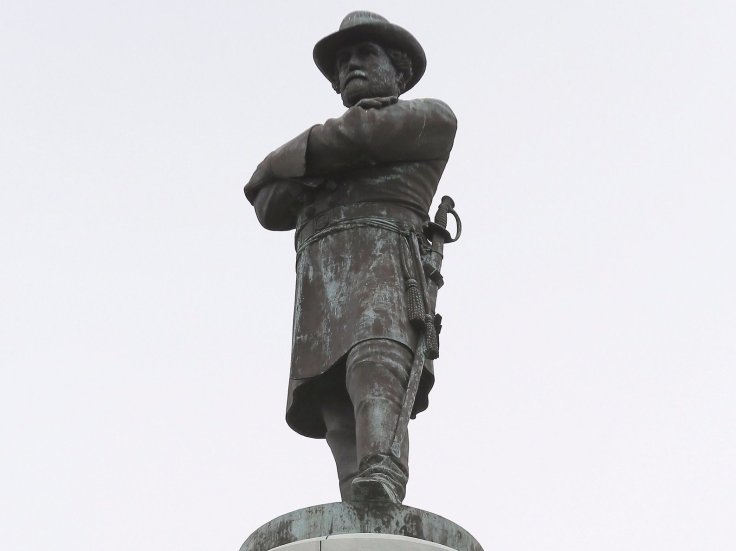
New Orleans to remove prominent Confederate statues and monuments

Statues to Confederate Generals Robert E. Lee and P.G.T. Beauregard and Confederate States of America President Jefferson Davis will be removed.

Source: www.businessinsider.com

I find issues such as these endlessly fascinating because it the cultural politics behind the shaping of the landscape are so evident. The cultural landscape clearly isn’t just an innocent reflection of the society, but is actively constructed and contested.  Some, including the NOLA mayor, claim that it isn’t political, but preserving or reconfiguring a place’s public cultural heritage is always political.


Tags: monuments, New Orleansthe Southurban, architecture, landscape.

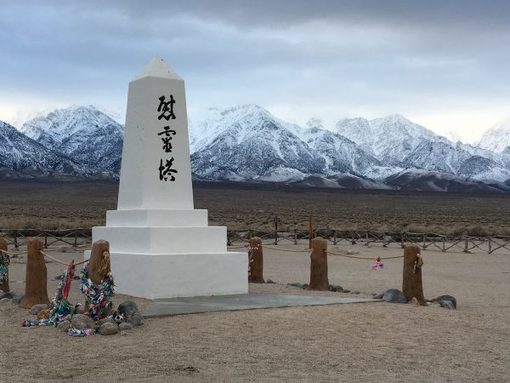
Memorializing Manzanar

“During World War II the US government incarcerated over 110,000 Japanese Americans, in ten different detention centers throughout the United States.  One of these sites was Manzanar; in 1992, Manzanar was declared a National Historic Site. But apart from the cemetery, there was little there. The committee did not want to settle for a staid, sterile museum and so they worked with the National Park Service to rebuild portions of the camp exactly as they had been during the war. The most powerful symbol might be the site’s newest addition, a replica of the women’s latrine with a trough sink and row of five toilets with no dividers between them. It’s a stark reminder of the humiliation felt by many Japanese Americans during their incarceration.  The annual pilgrimage of Japanese-Americans and others will take place on April 29th, 2017.”

Source: 99percentinvisible.org

How we collectively remember history in the landscape?  Do you erase national embarrassments that open wounds of the past or is the act of memorialization cathartic and part of becoming a better country?  After Pearl Harbor, the U.S. listened to the fears of the public and military officials and interned U.S. citizens of Japanese ancestry.  Today, how this history is remembered is deeply important to many groups in the United States.  There are some great images, videos and primary sources in this episode of the 99 Percent Invisible podcast. 


Tagspodcast, culture, California, historical, monumentsplace, landscape.

Investing in Monumental Architecture

City Hall in Philadelphia is a fantastic example of using architecture to create civic pride by investing in iconic, public buildings. Monumental architecture helps to create a sense of place and communal identity. This building has open air access, making the public feel that this is more their building.”

Source: www.instagram.com

Question to Ponder: Is it “worth it” for government’s to invest taxpayer dollars on ornate architecture? 


Tags: space, monumentsurban, architecture, place, landscape.

How Cookiecutter Sharks Eat Is Terrifying

Do not be fooled by its adorable name—the cookiecutter shark attacks by suctioning its lips to the flesh of its victims, spins, and ejects a cylindrical plug of flesh from its prey!

Source: www.youtube.com

This is the most delightfully fun video about one of the creepiest critters of the deep. 


Tags: water, biogeography, environment, physical, National Geographic.

Why do women live longer than men?

Despite the social inequality women experience, they live longer than men. This is the case without a single exception, in all countries.

Source: www.weforum.org

The question “why do women live longer than men?” is both biological and cultural.  This means that 1) gender as a cultural construct that influences behavior is a mitigating factor and 2) sex, as a biochemical issue, is a separate set of determining factors.  Estrogen benefits women because it lowers “bad” cholesterol) and “good” cholesterol, but testosterone does the opposite.  Women are more likely to have chronic diseases, but non-fatal chronic disease, but men are more prone to the more fatal chronic illnesses.  For the cultural reasons, men are less likely to seek treatment, adhere to the prescribed treatment, commit suicide, and engage in more risky behavior.  While these may read like a list of gendered stereotypes that don’t apply to all, when looking at the global data sets, these trends hold  and are more likely to be true.  How masculinity and femininity is constructed certainly shapes many of these factors and deserves some discussion. 


Tags: culture, population, mortality, development, cultural norms, statisticsgender

Lights of Human Activity Shine in NASA’s Image of Earth at Night

NASA scientists have just released the first new global map of Earth at night since 2012. This nighttime look at our home planet, dubbed the Black Marble, provides researchers with a unique perspective of human activities around the globe. By studying Earth at night, researchers can investigate how cities expand, monitor light intensity to estimate energy use and economic activity, and aid in disaster response.

Source: www.youtube.com

NASA scientists are releasing new global maps of Earth at night, providing the clearest yet composite view of the patterns of human settlement across our planet.  You can download the image at a good resolution (8 MB jpg) or at a great resolution (266 MB jpg) to explore at your leisure.  


Tags: mapping, perspective, images, geospatial.

Mapping Reading Preferences

We took a look at how some of your favorite genres play out across the country.

Source: trends.audible.com

Audible is one of the world’s largest audio book distributors and they have recently mapped out their customers buying patterns at the state level, looking at nine genres.  


Questions to Ponder: What patterns do you see in this set of maps?  What cultural and economic factors help to explain the spatial patterns that you see? 


Tagsmapping, cultureEnglish.

Boston schools ditch conventional world maps in favor of this one

Social studies classrooms throughout the Boston public school system are getting an upgrade some 448 years in the making.

Source: www.bostonglobe.com

Personally, I’m not a fan of this decision, but it’s as if they watched the classic West Wing clip and decided to roll with it. I think that the Peters projection map is better than the Mercator for most educational applications, but it isn’t the “right, best, or true” map projection.  Many viral videos comparing the two love to exaggerate and say things like “The maps you use are lying to you” or “the world is nothing like you’ve ever seen.”  Yes, Mercator maps distorts relative size, but it isn’t a “wrong” map anymore than the Peters projection.  All maps have distortion and map readers need to under that all maps are a mathematical representation of the Earth.  


Tags: mapping, visualization, map projections, cartography, perspectiveeducation, geography, geography educationBoston.

Blog at WordPress.com.

Up ↑