Search

GEOGRAPHY EDUCATION

Supporting geography educators everywhere with current digital resources.

How did Zimbabwe get so poor?

President Mugabe’s economic mismanagement of Zimbabwe has brought the country poverty and malnutrition. After 36 years in charge, he’s looking to extend his rule by 5 more years.

Source: www.youtube.com

Poverty at the national level is usually not a function of limited resources, but more often it is a sign of weak institutions.  This is but one example of how governmental mismanagement can put a country’s developmental progress back decades.


Tags: Africa, Zimbabwe, development, economic, political.

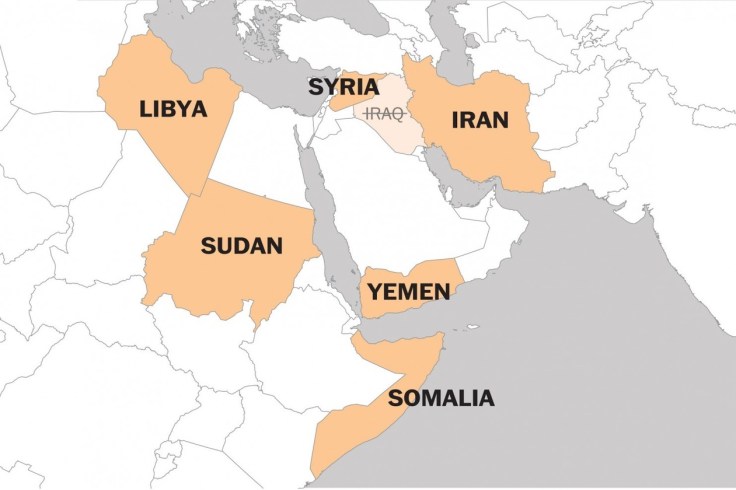
Revised executive order bans travelers from six Muslim-majority countries from getting new visas

The president is expected to sign his new, more limited rule Monday.

Source: www.washingtonpost.com

It’s hard to discuss this topic in detail without a partisan political views.  Underneath all of those opinions are geographic perspective about how the world works as well as geographical imaginations on how things should operate. 


Tags: migrationrefugees, war, political, terrorism, ISISMiddle East, conflict.

The Most Popular Running Routes in the 20 Biggest U.S. Metro Areas

These are the top running routes in the 20 biggest metro areas in the United States, according to Strava data.

Source: www.runnersworld.com

I’m a big advocate of running/mapping apps for my own personal training (I use Map My Run and Strava).  These maps were created with raw data from Strava to show the most popular urban runs in the US.   Prominent on this list are urban parks, scenic waterfronts, and retrofitted railways…in other words, successful urban planning that has help to foster a strong sense of place.


Tags: urban, place, neighborhood, planning, urbanism.

Population, Sustainability, and Malthus

In which John Green teaches you about population. So, how many people can reasonably live on the Earth? Thomas Malthus got it totally wrong in the 19th century, but for some reason, he keeps coming up when we talk about population. In 1800, the human population of the Earth passed 1 billion, and Thomas Malthus posited that growth had hit its ceiling, and the population would level off and stop growing. He was totally right. Just kidding, he was totally wrong! There are like 7 billion people on the planet now! John will teach a little about how Malthus made his calculations, and explain how Malthus came up with the wrong answer. As is often the case, it has to do with making projections based on faulty assumptions. Man, people do that a lot.

Source: www.youtube.com

This is a succinct summary of Malthusian ideas on population.  What do you think of his ideas?  Any specific parts of his theory that you agree with?  Do you disagree with some of his ideas?  What did history have to say about it?  


Tags: Demographics, population, models, APHGunit 2 population

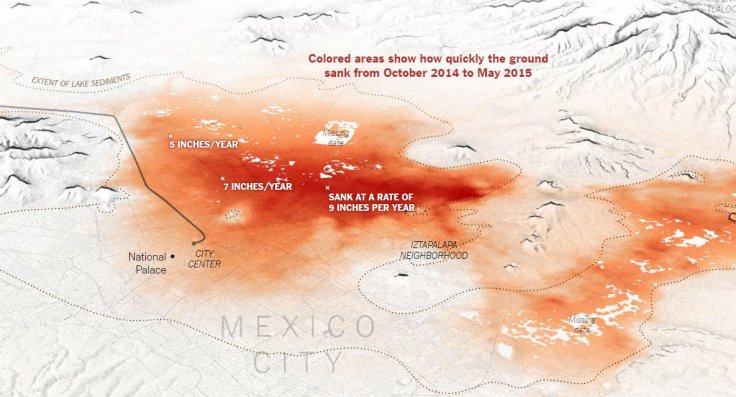
Mexico City, Parched and Sinking, Faces a Water Crisis

“A host of environmental factors are threatening to push a crowded capital toward a breaking point.”

Source: www.nytimes.com

Urban ecology, environmental justice, gendered inequities, primate city politics, the struggle of growing megacities…it’s all here in this fantastic piece of investigative reporting.  The article highlights the ecological problems that Mexico City faces (high-altitude exacerbates air pollution, interior drainage worsens water pollution, limited aquifers that are overworked lead to subsidence, importing water outside of the basin requires enormous amounts of energy, etc.).  just because the article doesn’t use the word ‘geography’ doesn’t mean that it isn’t incredibly geographic. All of these problems are at the heart of human-environmental nexus of 21st century urbanization. 


Tags: urban, megacities, water, environment, Mexico.

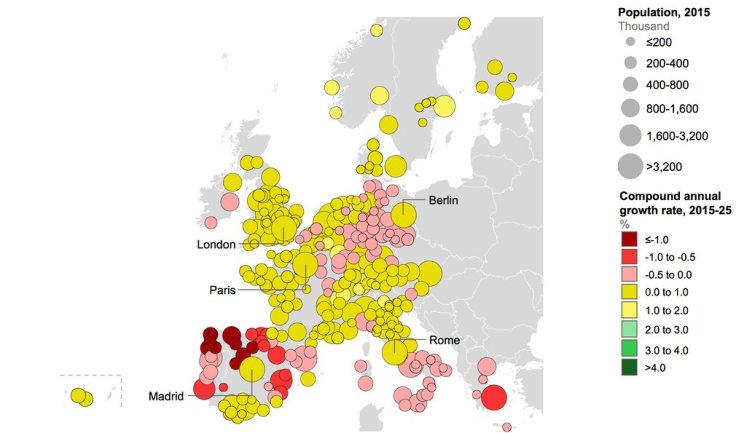
Shrinking cities: the rise and fall of global urban populations – mapped

“The world is experiencing rapid urbanisation, but not every city is growing. Population is likely to decline in 17% of large cities in developed regions and 8% of cities across the world from 2015 to 2025, according to a McKinsey report.”

Source: www.theguardian.com

This is a fantastic series of maps for human geography and regional geography classes. Some cities throughout Africa and Asia have experienced spectacular growth (click here for 5 infographics showing East Asia’s massive urban growth).  Europe, on the other isn’t see the same level of growth and is even experiencing urban decline in a few regions.   


Questions to Ponder: What patterns do you see in these maps?  What cultural, demographic and economic factors explain some of the regional patterns in these maps?        


Tags: APHG, urban, unit 7 cities, megacities.

The global food waste scandal

Western countries throw out nearly half of their food, not because it’s inedible — but because it doesn’t look appealing. Tristram Stuart delves into the shocking data of wasted food, calling for a more responsible use of global resources.

Source: www.youtube.com

No one should be surprised that more developed societies are more wasteful societies.  It is not just personal wasting of food at the house and restaurants that are the problem.  Perfectly edible food is thrown out due to size (smaller than standards but perfectly normal), cosmetics (Bananas that are shaped ‘funny’) and costumer preference (discarded bread crust).  This is an intriguing perceptive on our consumptive culture, but it also is helpful in framing issues such as sustainability and human and environmental interactions in a technologically advanced societies that are often removed form the land where the food they eat originates. 


Tags: food, agriculture, consumption, sustainability, TED, video, unit 5 agriculture.

This computer programmer solved gerrymandering in his spare time

We could take human error out of the redistricting process entirely. Why don’t we?

Source: www.washingtonpost.com

This computer programmer (code word in the newspapers for geographers using GIS) has created a way to take the human element out of the redistricting process.  Dividing places into separate, formal regions is an important task, one that often times requires an intimate knowledge of the place, it’s cultural, economic and physical characteristics.  That’s how I would want things to been done in a perfect world, but partisan chicanery has led to so many gerrymandered districts that the human touch is what many of us fear more than a cold, impersonal division that does not take place, history, and community into account.    


Questions to Ponder: Do you trust the politicians that are in charge of your state to create better districts than computer-generated districts that are optimized for compactness?  What are some of the potential limitations of compact districts?  Would an independent committee/bipartisan group do a better job? How does the Voting Rights Act complicate the redistricting process?    


Tags: gerrymandering, politicalmapping, cartography, GIS, unit 4 political.

Become an AP Reader

“Each June, over 15,000 AP® teachers and college faculty members from around the world gather to score the free-response sections of the AP Exams. These AP Readers are led by a Chief Reader — a college professor who has the responsibility of ensuring that students’ responses are scored to accurately reflect college-level achievement. AP Readers often describe the AP Reading as one of the best professional development experiences they have ever had.”

Source: apcentral.collegeboard.com

First off, I’m impressed by the phenomenal growth of the AP Human Geography exam and the number of exams this year will be unprecedented (213,000 anticipated exams).  While the number of exams has grown, the number of readers to score the exams hasn’t kept pace.  Consequently, human geography is in a deficit with our list of applicants in our reader pool.  College Board is changing the usual requirements of 3 years of experience teaching APHG for High School teachers to TWO YEARS of experience.  For higher education, anyone who teaches a class that is comparable to human geography is certainly invited to apply and we appreciate having those with college teaching experience within our ranks.  (OPEN DISCLOSURE: I am the Chief Reader Designate, so while I will be reviewing applications, I do not have the final say and obviously can’t promise that anyone will or will not get invited to the reading).  Personally, I LOVE attending the readings and consider it the best networking/professional development opportunity for a geography educator out there.

Tags: APHG, geography education, teacher training.
Create a free website or blog at WordPress.com.

Up ↑