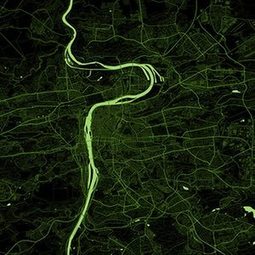
Designer Alex Szabo-Haslam has stripped out the street names and highlighted the water features around 11 world cities. Can you identify them?
Source: www.theguardian.com
Designer Alex Szabo-Haslam has stripped out the street names and highlighted the water features around 11 world cities. Can you identify them?
Source: www.theguardian.com
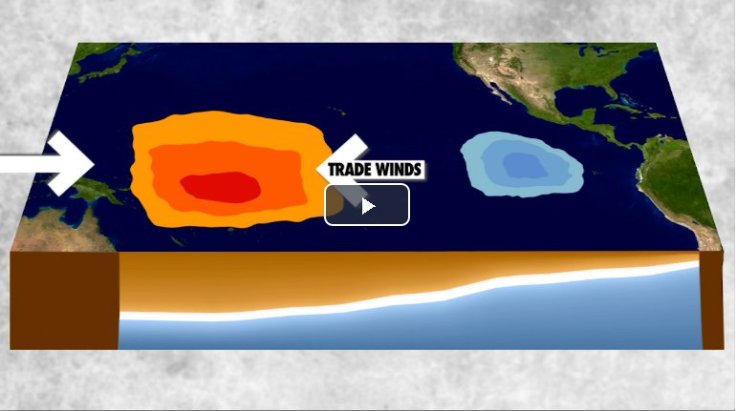
“El Niño and La Niña are complex weather patterns resulting from variations in ocean temperatures in the Equatorial Pacific–officially known as the El Niño-Southern Oscillation (ENSO) cycle. These deviations from normal surface temperatures can have large-scale impacts not only on ocean processes, but also on global weather and climate.”
Source: oceanservice.noaa.gov
This short video from NOAA is an excellent summary that explains the ENSO cycle. The video has a particular emphasis on how changing patterns in the Pacific Ocean currents can impact weather patterns in various regions of the United States.
Tags: physical, weather and climate, regions, USA.
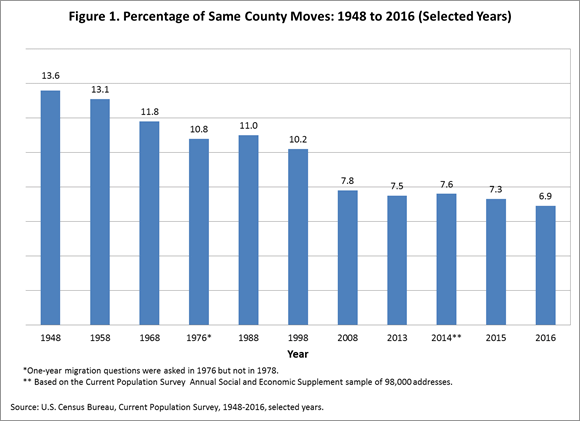
The Census reports that a record-low share of Americans are moving. A recent paper suggests government policies might be curbing mobility.
Source: www.citylab.com
In the past, when I’ve taught world regional geography, I’ve often discussed a major regional characteristic of North America is the high degree of internal mobility…that appears to be changing and it brings up more questions than answers.
Questions to Ponder: Are there regions in the United States where people are less likely to move? How does mobility impact economic, cultural, and political patterns in the United States? Why are less people moving now than before?
Tags: mobility, migration, USA, statistics.
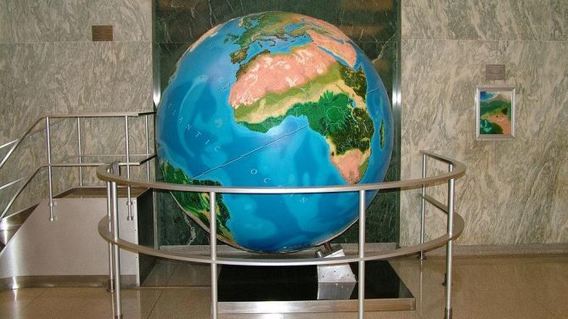
“The [importance of this study is that it] examines the dynamic between geography and area studies through their distinct understandings of space. As I argue, the dominance of the regional concept in geography, which took the multiple ways of bounding space as its central problematic, was reduced in area studies rendering of global space. This study assesses the transformation of geography during the two decades before and after the Second World War. This era was one of contrasts. On the one hand, geography was central to the war effort and in the creation of post-war programs, most notably area studies. On the other, this era also marked the relative marginalization of geography as a discipline in higher education.”
Tags: education, geography, geography education, geopolitics, historical.
Source: americangeo.org
“The United Nations Development Programme started to advocate against the practice of female genital mutilation (FGM) back in 2003 when it was taboo even to speak about it. In 2008, the practice was banned. The government of Egypt has institutionalized the adoption of FGM abandonment; while prevalence rates remain high (namely among older women), the response of younger girls and mothers of new generations to FGM abandonment campaigns is much higher.”
Source: www.youtube.com
This is always a difficult topic for me to talk about in my college classes since it is such a sensitive topic. However, because it touches on so many taboo topics, that is the very reason that that practice of FGM has continued in many African and Middle Eastern countries. See the map embedded in this article to know which countries have the highest prevalency rates. Some are concerned that through relocation diffusion, international migrants can bring this practice to areas such as Europe. Western efforts to eradicate FGM are usually ineffective and sometimes backfire (the author in the linked articles feels that the term mutilation, while accurate, is counterproductive).
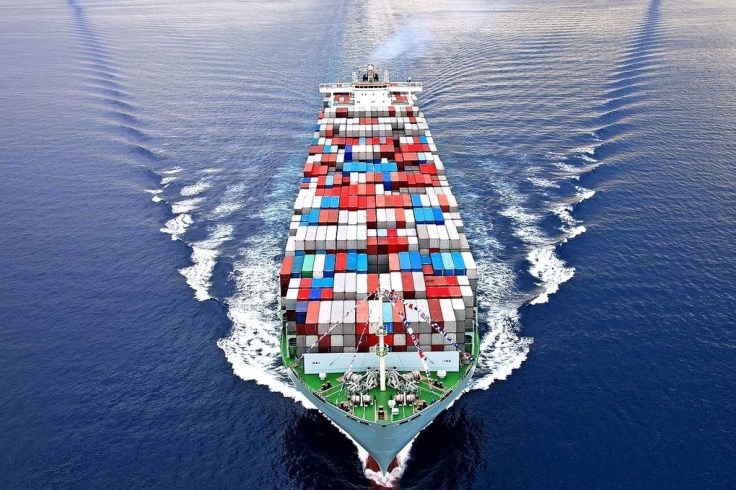
“It is estimated that 97 per cent of all trade – the things we buy in shops – will have been transported in containers by ships at sea. The container vessel, stacked high with uniformly-sized metal boxes, has become a symbol of our globalized world. This is a world of imports and exports, a world where moving things across huge distances keeps the price of daily commodities low as items are manufactured in one place, then packaged in another, before arriving on the shores where they will eventually be sold. In recent geographical literature, attention has turned to the world at sea – a space traditionally overlooked. Geography means ‘Earth-writing’ and geographers have taken the origins of the term very seriously. They have written primarily about the Earth: the ground, the soil, the land. The sea is something ‘out there’ – seemingly disconnected from our everyday lives. However, an appreciation of the world as made from flows and connections has enabled geography to recognize that the sea is essential to our landed life.” http://wp.me/p2Ij6x-5DS
Tags: transportation, globalization, diffusion, industry, economic.
Source: geographical.co.uk
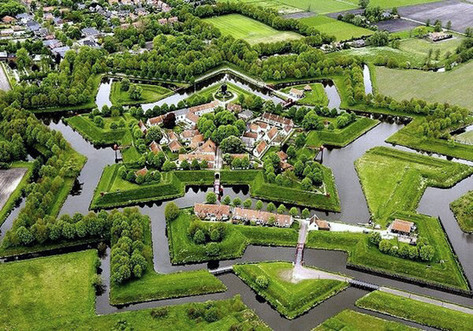
Fort Bourtange remains perfectly preserved, with historic structures strewn across the 11-acre pentagon.
Star forts, five-sided forts designed to give guards a panoramic view of any potential attackers, originated in Italy in the 15th century. Providing the optimal structure for protection from threats, star forts were used in Italian warfare for years and eventually diffused to the Groningen region of the Netherlands, where the Bourtange star fort was constructed in 1593.
Tags: military, historical, landscape.
Source: www.atlasobscura.com
This is video is a great tool to drum up interest in an AP Human Geography course produced by David Burton. See more promotional videos/start-of-the-year clips at http://wp.me/P2dv5Z-1ec
Source: www.youtube.com
This is just one of my favorite “start of the year” videos. I’ve compiled them for when you need to show the importance of geography, spatial thinking and geo-literacy. Collectively, they show why taking geography courses is so important, useful and interesting.
Tags: geo-inspiration, geography education, APHG.
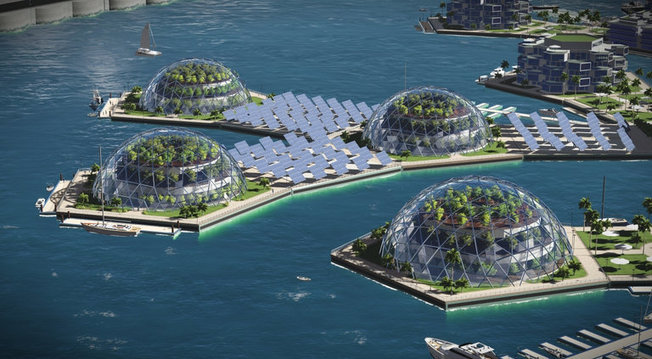
A costly plan to build floating islands shows how climate change is pushing the search for innovative solutions, but some critics ask who will ultimately benefit.
Source: www.nytimes.com
As coastal communities are considering what the tangible impacts of climate change might be, things that were once considered science fiction could be a part of how people adapt to the modifications we’ve collectively made to our global environment that we depend on to sustain life.
Tags: physical, technology, sustainability, climate change, environment, resources, water, coastal, environment depend, environment adapt, environment modify.


 GEOGRAPHY EDUCATION