Search

GEOGRAPHY EDUCATION

Supporting geography educators everywhere with current digital resources.

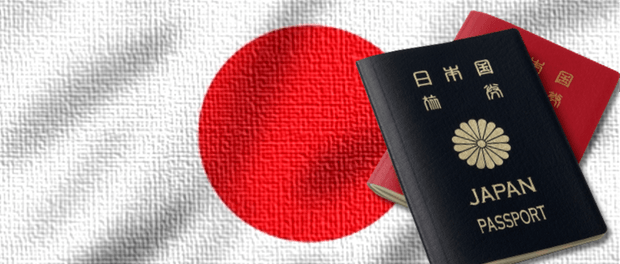
Getting Japanese Citizenship

“To become a Japanese citizen, a foreigner must display ‘good conduct’, among other things. The rules do not specify what that means, and make no mention of living wafu (Japanese-style). But for one candidate, at least, it involved officials looking in his fridge and inspecting his children’s toys to see if he was Japanese enough (he was). Bureaucratic discretion is the main reason why it is hard to get Japanese nationality. The ministry of justice, which handles the process, says officials may visit applicants’ homes and talk to their neighbors.”

Source: www.economist.com

Japan has a remarkably homogeneous population, in large part because they have very tight immigration laws (here is a more extended list of the requirements to obtain a Japanese citizenship).


Questions to Ponder: How is the notion of Japanese citizenship different from American citizenship?  As Japan’s population continues to decline, how might that change Japan’s migration/citizenship policies?   


Tags: JapanEast Asia, place, perspective, cultural norms, culture.

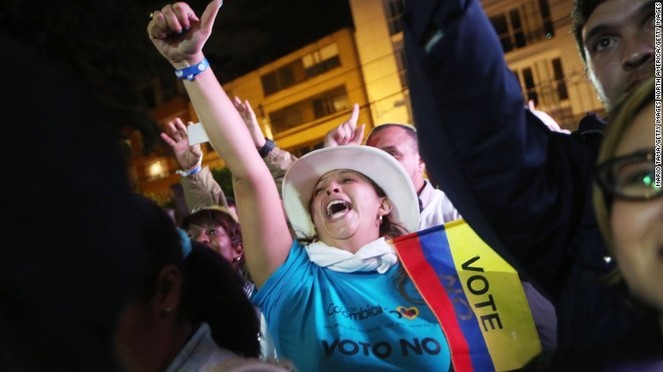
Colombia rejects FARC deal: What’s next?

“A narrow win for Colombia’s opponents to a government peace deal with FARC rebels has thrown the country into disarray, leading one journalist to starkly declare, ‘Nobody really knows what will happen tomorrow.’  Likened to the fallout from the United Kingdom’s ‘Brexit’ referendum, the vote’s unexpected failure has left the Colombian political classes reeling and unsure how to respond in order to save four years of hard negotiation with the Marxist militia.”

Source: www.cnn.com

The Colombian peace negotiations with FARC (the insurgent rebels in drug producing regions) were hailed as the key for Colombia to move past it’s violent, drug-cartel past and move into the future.  As the Colombian population rejected the deal by the slimmest of margins (50.22% against), it leaves the government “without a Plan B.” There are more questions than answers at this point about what might happen (if you are asking what’s FARC?, then this primer will walk you through it). 


TagsSouth America, Colombiapoliticalnarcotics, conflict.

Mekong Delta fights losing battle against salt water

Vietnam’s rice region is facing the worst drought to date. Over half a million people have been affected, and the country could lose one million tons of its staple food.Leaders of six countries along the Mekong River met in China to discuss the relief measures.

Source: www.youtube.com

Economic progress for some often entails job loss and environmental degradation for others.  As dams upstream are slowing the flow of the Mekong River, the low-lying delta that is a rich agricultural region is facing the ocean water that is moving further inland.  The once isolated and remote Mekong is experiencing some impacts of globalization. 


Tags: fluvial, waterVietnamagriculture, SouthEastAsia.

India’s campaign to change cultural practices

“Television commercials and billboards now carry a message that strike at the heart of the Indian contradiction of being the world’s fastest-growing major economy and also where relieving oneself in the open is the norm in most villages. Research shows that one of the reasons for the stubborn social practice is the centuries-old caste system, in which cleaning human waste was a job reserved only for the lowest caste. Having a toilet at home is still considered unclean by many villagers. They regard it cleaner to go to the open farms, which can cause water-borne diseases, the second leading cause of death of Indian children younger than 5.”

Source: www.washingtonpost.com

An aggressive new campaign is ridiculing those who are no longer poor but continue to defecate in the open–even this UNICEF campaign (some language and low-brow humor, so use your own discretion) is working hard to change the cultural patterns and practices surrounding defecation and sanitation.  There are more cellphones than toilets in India and the lack of adequate sanitation and toilets is serious enough that that Prime Minister Narendra Modi has made building toilets a national priority.  Comics are using their platform to bring this issue of uneven development to light. 54% of people in India do not have regular access to toilets and these comedians are using their platform to not only get some laughs, but to advocate for social change. 


Tagsdevelopment, poverty, India.

This is where your smartphone battery begins

Workers, including children, labor in harsh and dangerous conditions to meet the world’s soaring demand for cobalt, a mineral essential to powering electric vehicles, laptops, and smartphones, according to an investigation by The Washington Post.

Source: www.washingtonpost.com

The Democratic Republic of the Congo (DRC) is a land rich with minerals and resources vital for high end consumer goods (laptops, cellphones, electric cars, etc.).  This in-depth investigation from the Washington Post of the cobalt mining districts in the DRC (60% of global cobalt production) is incredible.  It has great videos, maps, and an detailed article that cuts across the geographic themes (exploited local labor, global commodity chains, political governance, polluted water supply, medical geography, etc.).  


Just two days ago, the United States pulled the families of all governmental officials out of the DRC amid political turmoil and violence in the streets of Kinshasa, highlighting the fact that the weakness of political institutions in the DRC are a major reason for this situation.  


Tags: Congolaborwatermedical, environmentpollution, political, conflict, resourcespolitical ecology, Africa.

Music and Resistance

“Life imitated art in early 1980 when South African school children, fed up with an inferior apartheid-era education system, took to chanting the lyrics of Pink Floyd‘s ‘Another Brick in the Wall.’ The song, with its memorable line stating, “We don’t need no education,” had held the top spot on the local charts for almost three months, a total of seven weeks longer than it did in America. By May 2, 1980, the South African government had issued a ban on ‘Another Brick in the Wall,’ creating international headlines.”

Source: www.youtube.com

How a song about rigid school rules in England became banned in South Africa is a fantastic lesson in cultural diffusion and glocalization (where the global becomes intensely local).  Here we see an historical example of a global cultural phenomenon taking on local political dimensions.  If you are interested in teaching more about the social and historical content of music, check out TeachRock.org.      


Questions to Ponder: Why would this song resonate in South Africa?  How might the video/lyrics map onto the South African situation? 


Tags culturediffusion, globalization, popular culture, South AfricaAfrica, music.

Historic Aerial Mapper

“This application was developed by The Providence Plan utilizing photos from the Rhode Island Geographic Information System.”

Source: mapper.provplan.org

This map is a great archive of historic satellite imagery of the Ocean State, with a special nod to Providence.  This is a great tool that can be used to show how and particular place in Rhode Island has changed over the years at the neighborhood scale.  At the metropolitan scale, it is easy to see the population grown, development expansion, and urban sprawl.  The years of data coverage are 1939, 1952, 1962, 1972, 1981, 1985, 2003, 2008, 2011, and 2014.    


Tags: mapping, Rhode IslandESRIStoryMap, GIS, remote sensing.

Being white, and a minority, in Georgia

“A generation ago, this Atlanta suburb was 95 percent white and rural with one little African-American neighborhood that was known as ‘colored town.’ But after a wave of Hispanic and Asian immigrants who were attracted to Norcross by cheap housing and proximity to a booming job market, white people now make up less than 20 percent of the population in Norcross and surrounding neighborhoods. It’s a shift so rapid that many of the longtime residents feel utterly disconnected from the place where they raised their children.”

Source: www.bostonglobe.com

This article touches on some pretty weighty (and sensitive) topics, but in a fairly nuanced manner.  Local ethnic neighborhoods change as international migration patterns bring in new residents and this demographic shift can is currently impacting national political parties.  That’s geography, various processes at a variety of scales that are all interconnected.  


Tags: migration, ethnicity, neighborhood, scale.  

India watches anxiously as Chinese influence grows

A $46bn economic corridor through disputed territories in Kashmir is causing most concern

Source: www.ft.com

The Indian government doesn’t want to seem threatened by the fact that China is paying for better transportation infrastructure that is essentially in their backyard.  India’s neighbors are excited for the potential economic growth that this can bring, but weary of China’s added clout and power throughout Asia.  As Parag Khanna argues is his new book Connectography, infrastructure and economic linkages will become increasingly more important to geopolitics and global economics; within that lens, China is certainly making a power move here. 


Tags: regions, transportationeconomic.

Create a free website or blog at WordPress.com.

Up ↑