Search

GEOGRAPHY EDUCATION

Supporting geography educators everywhere with current digital resources.

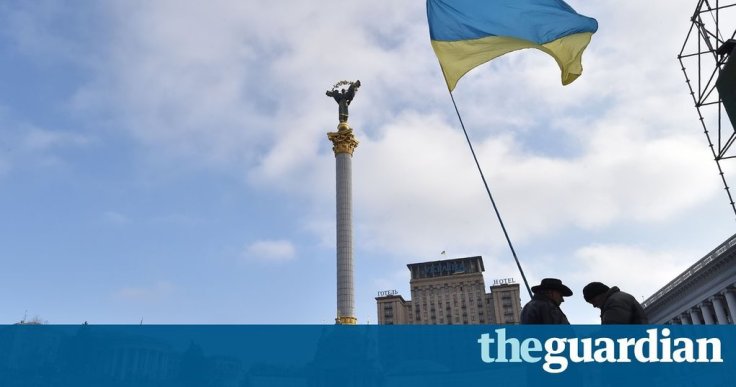
Why Ukraine needs Russia more than ever

As the country risks becoming a failed state, Kiev must recognise that economic survival depends on Moscow not the west

Source: www.theguardian.com

This is a politically inflammatory title for an op-ed article, given the recent Russia’s seizure of the Crimean Peninsula from Ukraine.  Regions and economic regional linkages form and continually reform.  Our most likely business partners aren’t necessarily our best friends.      


Tags: op-ed, economic, regions, UkraineRussia.  

Pros and Cons of Cotton Production in Uzbekistan

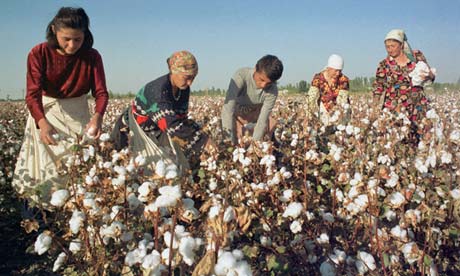
“This case study considers the pros and cons of cotton production in Uzbekistan. Since the country’s independence from the Soviet Union in 1991, revenues from cotton taxation have contributed substantially to developing the industrial sector, boosting the current account, achieving energy and food-grain self-sufficiency, and buffering domestic shocks in food and energy prices. Nonetheless, some argue that the state procurement system hampers the development of the agricultural sector. Often the payments for cotton hardly cover farmers’ production costs, and the quasi mono-culture of cotton production has adversely affected environmental sustainability.”

Source: cip.cornell.edu

Uzbekistan is a top world producer and exporter of cotton. There are many sectors involved in managing the cotton commodity chain to partake in the production. Not only is it a source of income, but provides labor jobs and food consumption. However, the land where the cotton production takes place is suffering. This land faces many types of land degradation that has an impact on the cotton. In order to secure the land, there are possible solutions and policies to improve the agriculture and the cotton benefits. Once the world’s fourth largest lake, the Aral Sea, is located in Uzbekistan, and has had a major impact on the cotton industry. This production has given Uzbekistan a world-wide reputation in cotton production, but is also known for destroying one of the world’s largest lakes.  Just because it is your greatest economic competitive advantage, doesn’t mean that it is environmentally sustainable.


Questions to Ponder: How much does the cotton production contribute to Uzbekistan economically? What are the solutions to address the demising Aral Sea? Who is impacted the most because of the land issues?


Tags:  agriculture, labor, Uzbekistan, physical, weather and climateland use, environmentAral Sea.

Cities are the New Nations

“Political geography is not determinant anymore, because cities are more important.”

Source: www.citylab.com

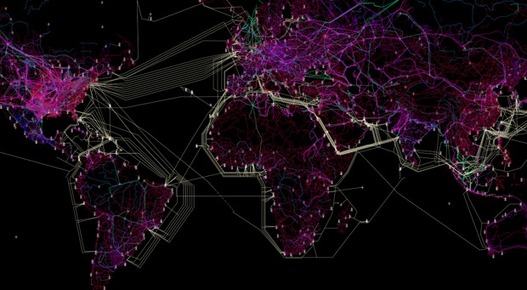
Controlling borders and territory were the main factors in geopolitics for centuries.  In his book Connectography by Parag Khanna, he argues that connectivity and networks are more important today.  The world’s most connected cities act in ways that transcend political boundaries.      


What’s New in ArcGIS Online

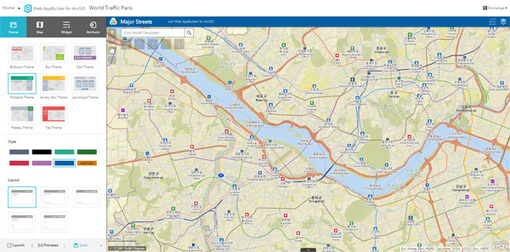
“ArcGIS Online has just been updated (June 2016) with the following new features and enhancements. This release includes updates and new capabilities for smart mapping, item pages, improvements to the map viewer and scene viewer, updated content, and more. For additional details see the what’s new help topic.”


TagsmappinggeospatialESRI, edtech.

Source: blogs.esri.com

How Syria Ruined the Arab Spring

How Syria Ruined the Arab Spring « | Foreign Policy | the Global Magazine of News and Ideas

Source: foreignpolicy.com

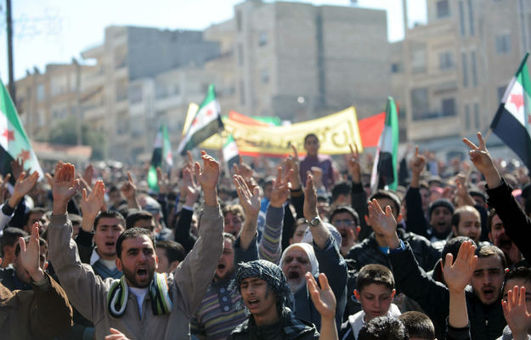
Unraveling the situation on the ground in Syria is much like opening a Russian nesting doll, it’s a battle, inside of a battle, inside of a battle. A complex series of local, regional, and global rivalries all playing out on the battle grounds of Syria, turning the country in a wasteland. It’s created a nightmare for the millions of non-combatants forced to flee, and those stuck within the borders. What started as Syrian leader Bashar al-Assad cracking down on Arab spring protesters in early 2011, quickly escalated into a civil war. Regional rivals Iran, and Saudi Arabia then got involved sending aid to differing sides. Soon, as a result of the rise of ISIS, the west and Russia chose to intervene. Lost in the greater game of Geo-politics is the sad, slow death of the optimism that accompanied the Arab Spring. As Marc Lynch laments in ‘How Syria ruined the Arab Spring’, all of the momentum was lost and forgotten when Al-Assad resorted to force and Syria became a pawn in regional and global geopolitics.


Tagsop-ed, Syria, war, conflict, political, geopolitics, Middle East.

How Geospatial Analytics Are Changing Habitat Conservation

“The BirdReturns program is an effort to provide ‘pop-up habitats’ for some of the millions of shorebirds, such as sandpipers and plovers that migrate along the Pacific Flyway, a route that spans from Alaska to South America. Birds flying on this journey seek out the increasingly rare wetlands teeming with tasty insects to fuel their long-distance flights.  Over the last century, California’s Central Valley has lost 95% of the wetlands habitat to development, agriculture, and other land use changes. As a solution, scientists use big data, binoculars, and rice paddies.”

Source: www.youtube.com

This project combines data from satellite imagery to map surface water in California’s Central Valley, and individual bird observations to select locations that can be temporarily converted into wetlands to aid the migratory birds (for more information than the video provides about this project, read this article). 


This is a great example of using both ‘big’ geospatial data as represented by the satellite imagery and combining it with field data and actual observations to make the world a better place.  We need more decision makers that can think spatially and use geographic skills.  


Tags: physicalCalifornia, water, environmentbiogeography, remote sensing.

Where our food came from

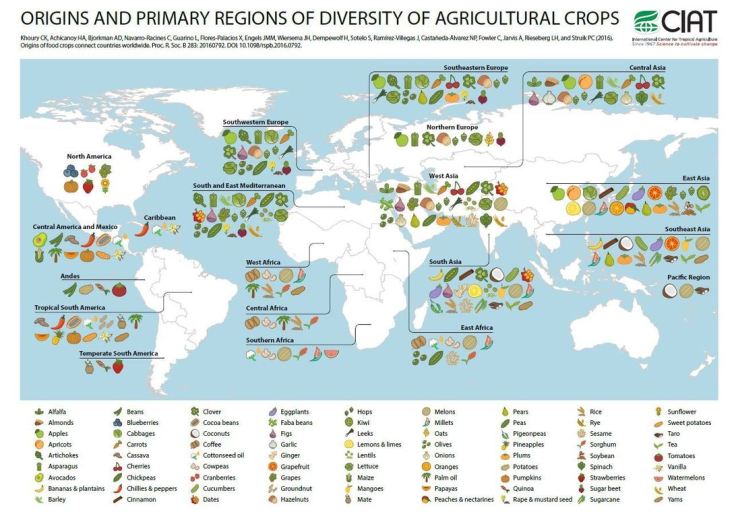
“Explore the geographic origins of our food crops – where they were initially domesticated and evolved over time – and discover how important these ‘primary regions of diversity’ are to our current diets and agricultural production areas.”

Source: blog.ciat.cgiar.org

This is an incredibly rich website with great interactive maps, dynamic charts, and text with rich citations.  This is one of those resources that an entire class could use as a starting point to create 30+ distinct project.  This is definitely one of the most important and best resources that I’ve shared recently, one that I’m going to use in my class.  Where did a particular crop originally come from?  Where is it produced today?   How do these historic and current agricultural geographies change local diets and economies around the world?  All these issues can be explored with this interactive that includes, but goes beyond the Columbian Exchange


Tags: foodeconomicfood production, agribusiness, agriculture, APHG, unit 5 agriculture, globalizationbiogeography, ecology, diffusion.

Coast Lines

In the next century, sea levels are predicted to rise at unprecedented rates, causing flooding around the world, from the islands of Malaysia and the canals of Venice to the coasts of Florida and California. These rising water levels pose serious challenges to all aspects of coastal existence—chiefly economic, residential, and environmental—as well as to the cartographic definition and mapping of coasts. It is this facet of coastal life that Mark Monmonier tackles in Coast Lines. Setting sail on a journey across shifting landscapes, cartographic technology, and climate change, Monmonier reveals that coastlines are as much a set of ideas, assumptions, and societal beliefs as they are solid black lines on maps.

Source: www.press.uchicago.edu

I haven’t yet had the chance to look at this book, but it is currently being offered as a free e-book; I’m very excited to look it over.   


Tagsmappingcoastal, cartography, textbook.

NOAA’s GFS model visualized on NOAA’s Science on a Sphere

NOAA’s powerful Global Forecast System model was upgraded on May 11, 2016, providing forecasters with a more accurate 4-D picture of how a weather system will evolve. The upgrade is the latest of a number of model improvements rolling out this spring and summer, thanks to increased supercomputing power NOAA acquired earlier this year.

Source: www.youtube.com

There’s some good science with practical applications underneath this very artistic rendering of the planet’s atmosphere…it is more fluvial that we give it credit for if we only think of air as empty space.  This video also reminds me or the words of one pilot and his perspective on both the atmosphere and Earth from above: “Geographically speaking, the sky is like a whole other planet encasing our own.”


Tagsweather and climate, atmosphere, space, video, physical, fluvialremote sensing.

Create a free website or blog at WordPress.com.

Up ↑