Search

GEOGRAPHY EDUCATION

Supporting geography educators everywhere with current digital resources.

How Islam Created Europe

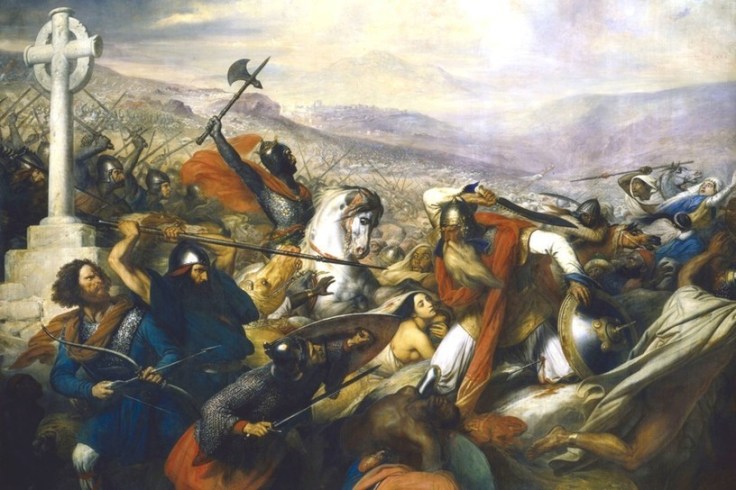
“For centuries in early and middle antiquity, Europe meant the world surrounding the Mediterranean. It included North Africa, but the swift advance of Islam across North Africa in the seventh and eighth centuries virtually extinguished Christianity there, thus severing the Mediterranean region into two civilizational halves, with the ‘Middle Sea’ a hard border between them rather than a unifying force. Islam is now helping to undo what it once helped to create. A classical geography is organically reasserting itself, as the forces of terrorism and human migration reunite the Mediterranean Basin, including North Africa and the Levant, with Europe.” 

Source: www.theatlantic.com

The title is a bit overstated (aren’t they all in this click-bait driven media age?), but the article shows nicely how regions are cultural constructs that change over time. 


Tags: op-edregions, Europe, historical, Islamreligionhistorical, culture, Christianity.
GeoInquiries – Grade 4 Interdisciplinary

“GeoInquiries are designed to be fast and easy-to-use instructional resources that incorporate advanced web mapping technology. Each 15-minute activity in a collection is intended to be presented by the instructor from a single computer/projector classroom arrangement. No installation, fees, or logins are necessary to use these materials and software.

The Elementary, Grade 4 GeoInquiry collection is under-development.

Source: edcommunity.esri.com

ESRI has produced GeoInquires for Earth Science, US History, Environmental Science, AP Human Geography, and has just recently released an interdisciplinary set of GeoInquiries designed for fourth graders.     These include:

TagsmappinggeospatialESRI, K12, edtech.

Why Germany’s recognition of Armenian genocide is such a big deal

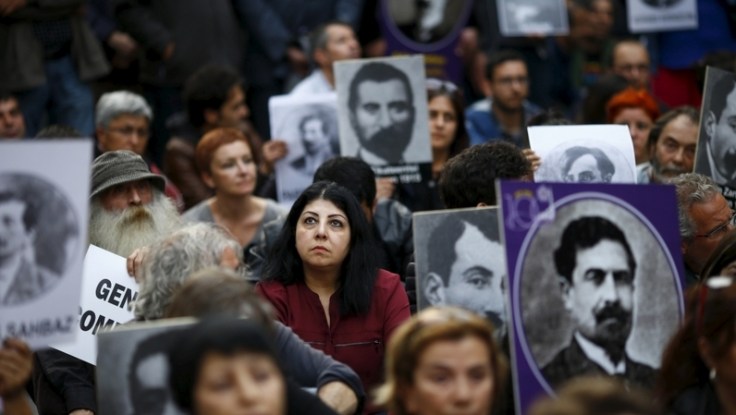
Armenian American journalist Liana Aghajanian says the German parliament’s decision is all the more groundbreaking because it was a politician of Turkish descent who pushed it through.


The German Bundestag’s overwhelming vote last week in favor of this resolution, with just one vote against and one abstention, brought both gratitude and anger. Armenian communities, many of them descendants of genocide survivors who are dispersed across the world, are grateful. Turkey, however, was incensed and recalled its ambassador to Germany. Many Turks see the vote as not just a threat to longstanding German-Turkish relations, but to Turkish national identity.

Source: www.pri.org

I’ve posted in about the Armenian genocide in the past, and until Turkey acknowledges that it was a genocide, this issue will continue to fester.  Considering that Germany has a large Turkish population and an obvious historical connection to genocide, this recognition is far more important some other random country taking this stance. 


TagsArmenia, genocidepolitical, conflict, TurkeyGermanywar, historical.  

Break Dancing, NGOs, and Global Lives

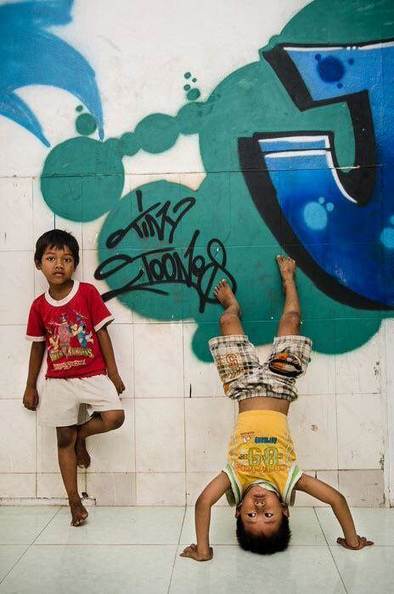
Deported to Cambodia, Former Gang Member Gets A Second Chance. When Tuy Sobil was deported to Cambodia from the U.S., it was the first time he had ever stepped foot in the Southeast Asian country.

Source: www.nbcnews.com

My students have enjoyed this video about a break-dancing NGO that was created by a former refugee from the United States who was subsequently deported to Cambodia (this article serves as some added background and a follow-up to the story).  This story shows the influence of urban youth culture and various strands of geography in this young man’s global life.


Tags: Cambodia, diffusion, cultureNGOs, globalization.

Keynote Address at the AP Human Geography Reading

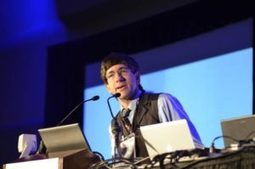
“I gave the keynote at the AP Human Geography reading, entitled The Age of Geotechnologies:  Five Converging Forces, available here.  The keynote was given as an Esri storymap!  It was a great honor to give this presentation and interact with some of the world’s finest geography educators!”


TagsAPHG, storymapgeography education, teacher training, ESRI.

Source: www.josephkerski.com

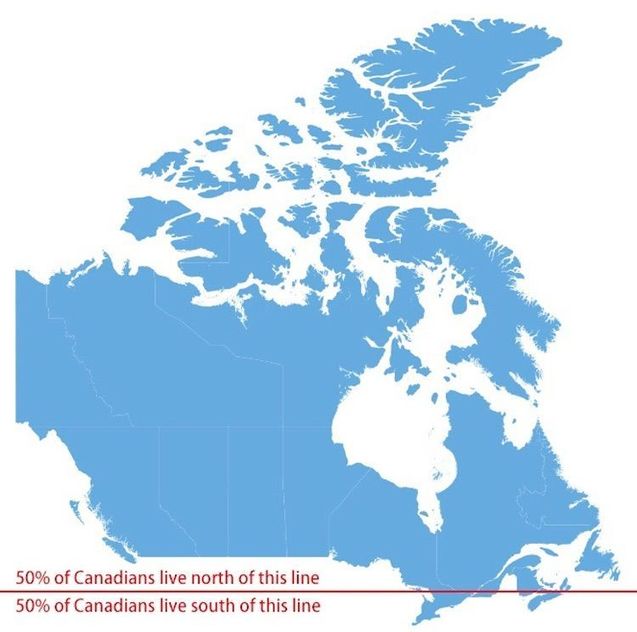
Canada is a huge country. Most of it is unfit for human habitation.

“The area below the red line includes most of Nova Scotia, in Canada’s east, but most of the population comes from the area a little farther west, in a sliver of Quebec and a densely populated stretch of Ontario near the Great Lakes.”

Source: www.vox.com

Admitted, the web Mercator projection of this map distorts the far northern territories of Canada, but still it hammers home some fascinating truths about Canada’s population distribution.  Land-wise, Canada one of the world’s biggest countries, but population-wise, most of it is quite barren.  What geographic factors explain the population concentration and distribution in Canada?  


TagsCanada, map, North America, population, density.

Bad drivers are a good indicator of a corrupt government

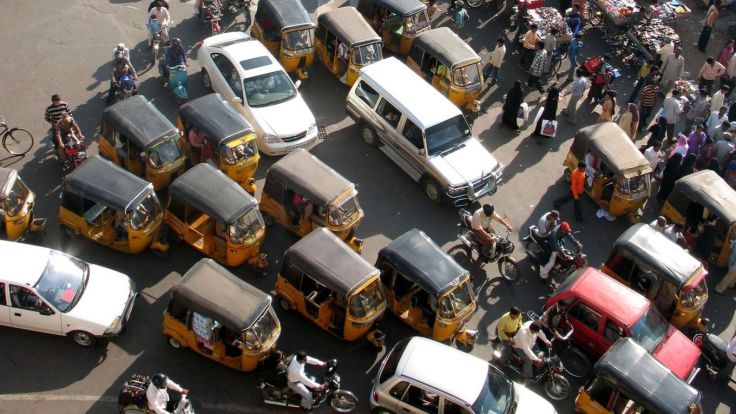
“Traffic accidents kill 1.25 million people per year, and it’s well-known that those deaths are disproportionately in low- and middle-income countries. Over at CityMetric, writer James O’Malley has added an interesting wrinkle, by showing a correlation between the number of traffic fatalities in a country and the corruptness of its government.”

Source: qz.com

I love the last paragraph in this article because it echoes the “Broken Windows” theory–not at the neighborhood scale, but for the state.  Horrible driving isn’t the worse thing for a country, but it is indicative of the degree of social trust in each other and in the collective system; corruption erodes both. 


“Bottom line: If you’re in a country where everyone drives on the sidewalk and nobody stops at stop signs, you can be pretty sure the government isn’t working right.”


Tags: political, governancetransportation.

2016 APHG Reading Newletters

APHG Newsletter Banner Greetings from Cincinnati, OH, home of the 2016 AP Human Geography reading.  Over 600 professionals are here to score over 187,000 exams.  I’ve been delighted in the past to share the Professional Development activities and newsletters and will continue to do so.  This post will be updated throughout the reading (June 2-8).

Pisa tests to include ‘global skills’ and cultural awareness

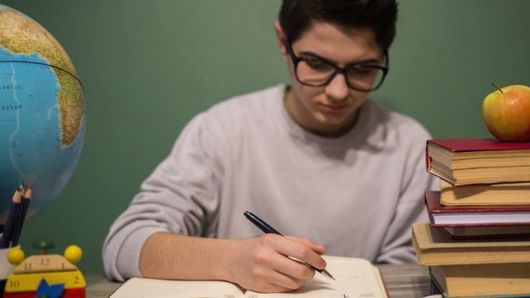
Pisa tests, an international standard for comparing education systems around the world, could include a new measurement of global skills in the next round of tests in 2018. The OECD, which runs the tests in maths, reading and science, is considering adding another test which would look at how well pupils can navigate an increasingly diverse world, with an awareness of different cultures and beliefs. The OECD’s education director Andreas Schleicher explains why there is such a need for new rankings to show young people’s competence in a world where globalisation is a powerful economic, political and cultural force.

Education leaders around the world are increasingly talking about the need to teach ‘global competences’ as a way of addressing the challenges of globalisation.”

Source: www.bbc.com

They define global competence as: “the capacity to analyse global and intercultural issues critically and from multiple perspectives, to understand how differences affect perceptions, judgements, and ideas of self and others, and to engage in open, appropriate and effective interactions with others from different backgrounds on the basis of a shared respect for human dignity”.


So I guess geography does matter then.  Who knew? 


Tagsgeography education, unit 1 GeoPrinciples.

Create a free website or blog at WordPress.com.

Up ↑