Search

GEOGRAPHY EDUCATION

Supporting geography educators everywhere with current digital resources.

Anyone who wants to be president needs to understand these 5 maps

Parag Khanna argues that these five maps are critical to understand the world we live in.


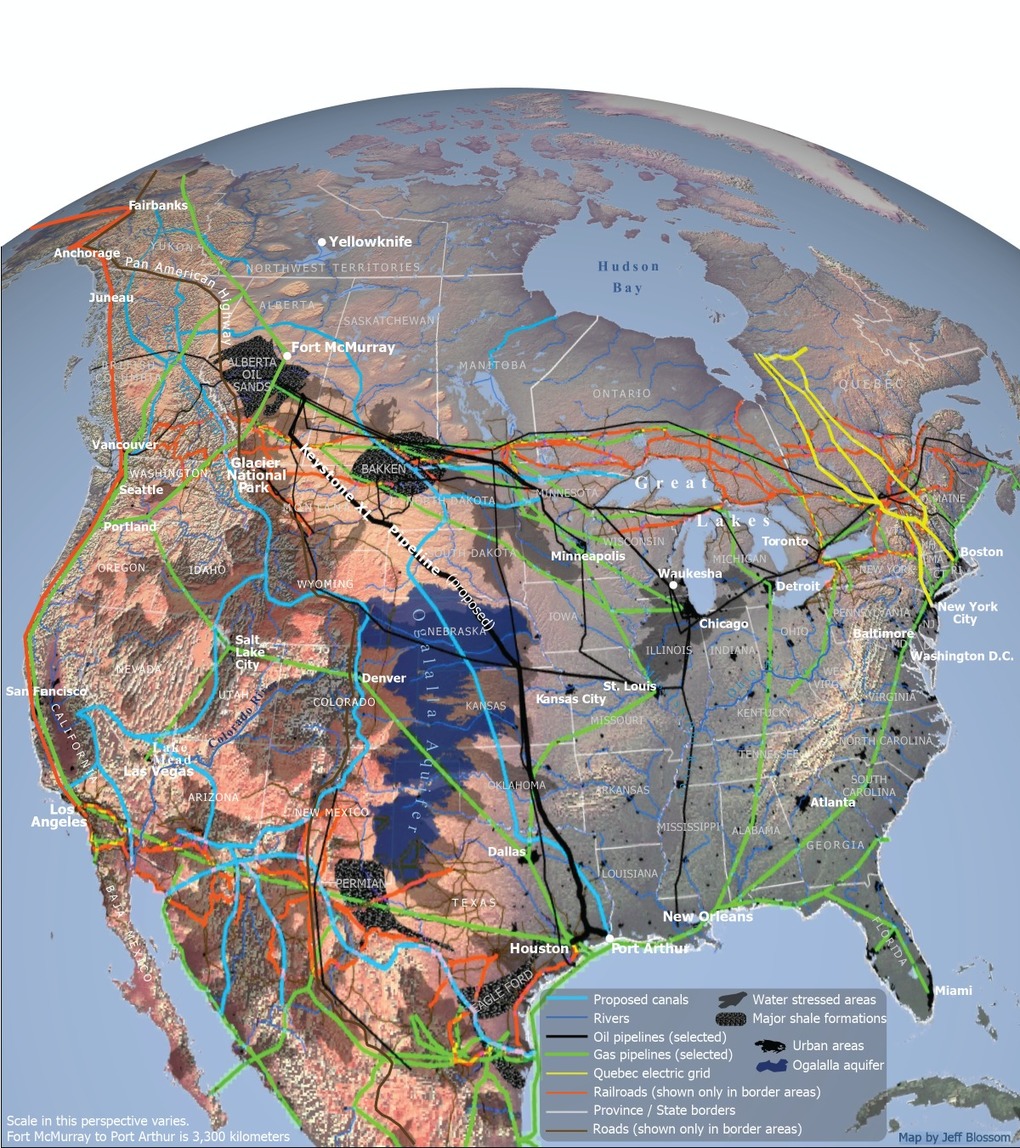
Maps shape how we see the world.  But most of the maps hanging on our walls are dangerously incomplete because they emphasize political borders rather than functional connections.

Source: www.businessinsider.com

These 5 maps in this article are a sneak peek preview from the new book Connectography by Parag Khanna.  These maps all highlight interactions across political borders which is Khanna’s big thesis.  For example, the map above emphasizes political, economic, and environmental linkages of NAFTA and minimizes the national divisions.    
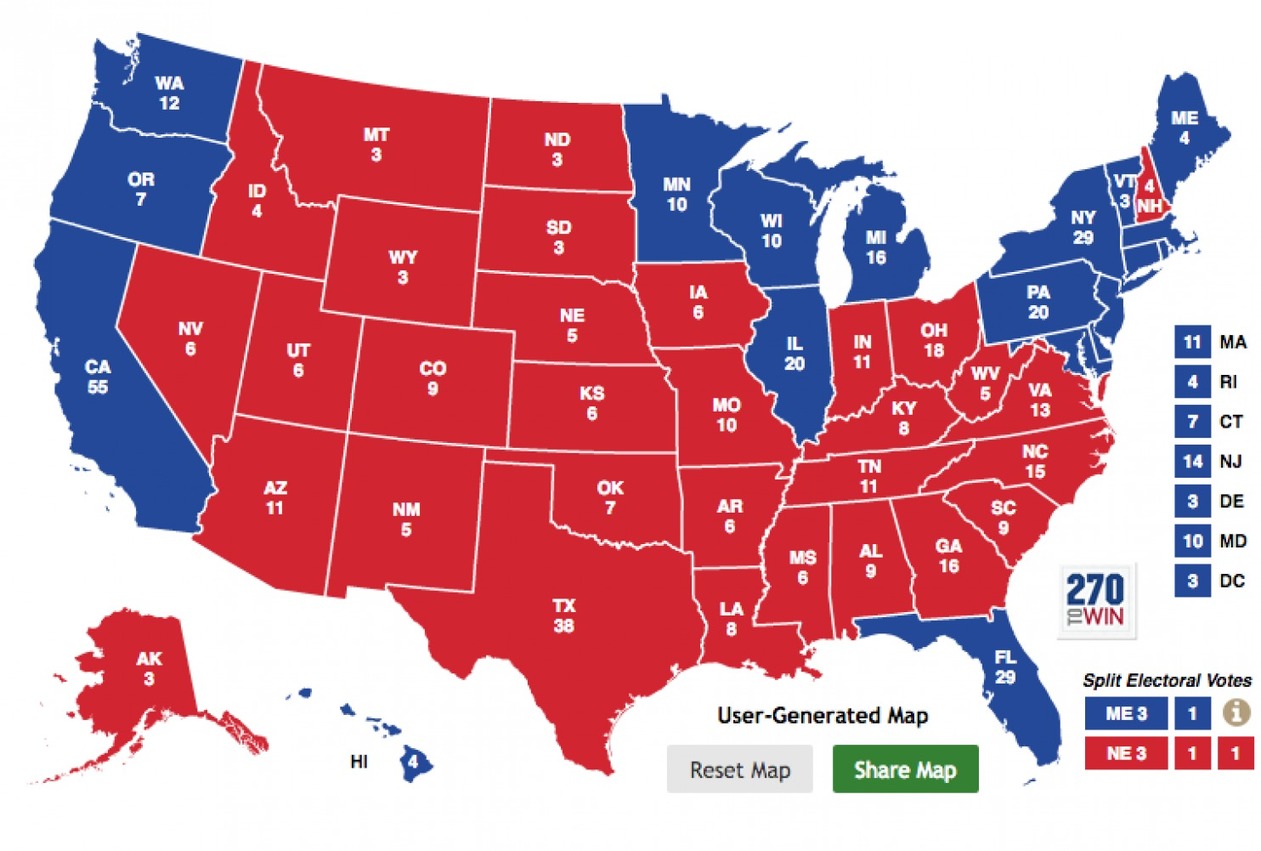
Republicans have a massive electoral map problem that has nothing to do with Donald Trump

“If Clinton wins the 19 states (and D.C.) that every Democratic nominee has won from 1992 to 2012, she has 242 electoral votes. Add Florida’s 29 and you get 271. Game over.

The Republican map [is more difficult] — There are 13 states that have gone for the GOP presidential nominee in each of the last six elections. But they only total 102 electorate votes.That means the eventual nominee has to find, at least, 168 more electoral votes to get to 270. 

Source: www.washingtonpost.com

This isn’t just the about the presidential election of 2016, but the demographic configuration of the United States and potential voter base of parties in the future.  As American demographics have shifted, the appeal of particular parties as well as their platforms will eventually shift in response.  Future party realignments will center on maps and demographics as much as they do policies and platforms.


Tags: electoral, political, mapping.

The Ever-Expanding Slums

“Slums lack:

  • Permanent housing
  • Sufficient space
  • Clean water
  • Sanitation
  • Personal safety

Source: www.youtube.com

What is a slum?  Why do so many people around the world live in slums?  What are the largest slums in the world?  These are the questions that this video seeks to answer as the TestTube team tackles one of the more pressing issues of confronting urban areas in the developing world.   


Tagspoverty, squatter settlements, development.

Edible Cutlery

“India is one of the world’s largest consumers of disposable plastic cutlery, which has the makings of a huge health and environmental crisis written all over it.”

Source: www.youtube.com

Plastics clog our landfills and single-use plastic consumption is one of the most wasteful elements of our consumer-based, disposable society.  This product is a reaction against the waste of disposable cutlery, but it is also an intriguing developmental strategy (see company kickstarter page or website). 


Tags: developmentfood, gender, agricultureconsumption, South Asia, pollution

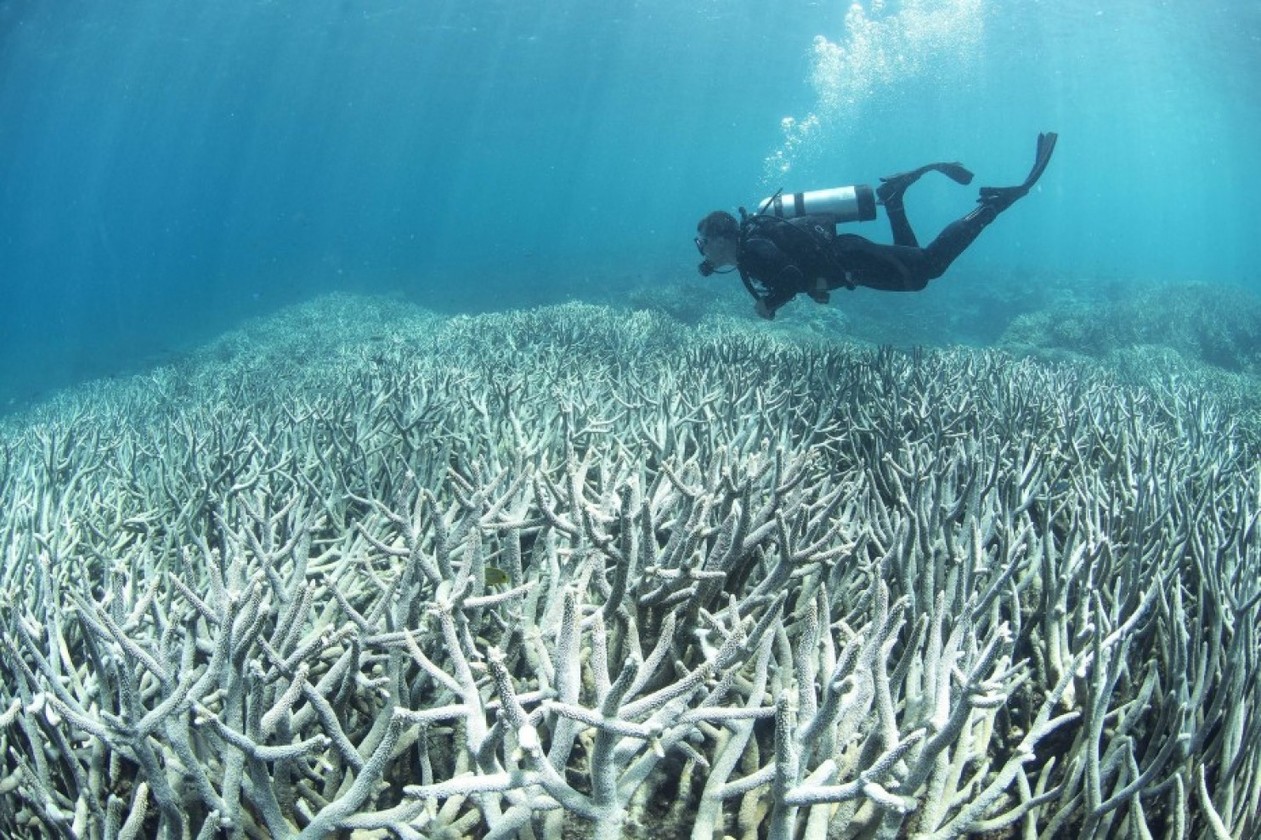
The Great Barrier Reef was not bleached naturally

“This year, we’ve seen alarming bleaching of the Great Barrier Reef, caused by warm sea temperatures. A recently completed aerial survey of the reef found that 93 percent of the smaller reefs that comprise it showed at least some bleaching, and in the northern sector of the reef, the large majority of reefs saw bleaching that was severe — meaning many of these corals could die.  There was already considerable murmuring that this event, which damages a famous World Heritage site and could deal a blow to a highly valuable tourism industry, did not simply happen by chance. And now, a near real-time analysis by a group of Australian climate and coral reef researchers has affirmed that the extremely warm March sea temperatures in the Coral Sea, which are responsible for the event, were hardly natural.”


Tags: biogeography, environmentecology, Australia, Oceania.

Source: www.washingtonpost.com

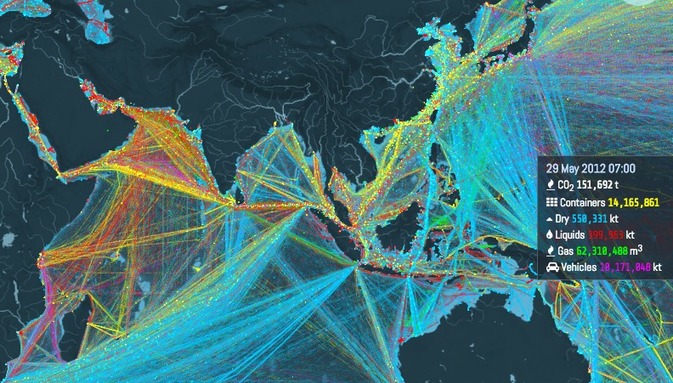
This is an incredible visualization of the world’s shipping routes

“Ships carry 11 billion tons of goods each year. This interactive map shows where they all go.  About 11 billion tons of stuff gets carried around the world every year by large ships. Clothes, flat-screen TVs, grain, cars, oil — transporting these goods from port to port is what makes the global economy go ’round.  And now there’s a great way to visualize this entire process, through this stunning interactive map from the UCL Energy Institute.”

Source: www.vox.com

If you haven’t discovered www.shipmap.org then you are in for a treat.  This delightful geographic visualization nicely shows the shipping lanes and connectivity that makes the globalized economy flow.  


Tags: transportation, globalization, diffusion, industry, economic, mapping, visualization.

How Orange Juice Is Made

The process of making orange juice on a humongous scale. The Americans drink so much of the stuff I’m surprised they still have any left for export.

Source: www.youtube.com

If you image that your orange juice comes from farmers on ladders picking, then hand-squeezing oranges into orange juice, then you need to see just how mechanized this agribusiness is.  The machinery alone means that a small-scale farmer simply can’t compete on the open market.  


Questions to Ponder: Why is OJ concentrate cheaper in the store if they have to work hard to extract the water out of the juice?  How would OJ concentrate be an example of either a bulk-gaining product or a bulk-reducing product?  


Tagsfood production, agriculture, foodeconomic, industry, economic, scale, agribusiness.

von Humboldt: The Invention of Nature

“Andrea Wulf’s new book The Invention of Nature reveals the extraordinary life of the visionary German naturalist Alexander von Humboldt (1769-1859) and how he created the way we understand nature today. Though almost forgotten today, his name lingers everywhere from the Humboldt Current to the Humboldt penguin. Humboldt was an intrepid explorer and the most famous scientist of his age. Perceiving nature as an interconnected global force, Humboldt discovered similarities between climate zones across the world and predicted human-induced climate change. Wulf traces Humboldt’s influences through the great minds he inspired in revolution, evolution, ecology, conservation, art and literature.  In The Invention of Nature Wulf brings this lost hero to science and the forgotten father of environmentalism back to life.”

Source: vimeo.com

Alexander von Humboldt has been described as the last great ancient geographer concerned with understanding an eclectic cosmography as well as the first modern geographer. He is honored far and wide throughout Europe and especially  Latin America for his explorations, but given that people are confused as how to categorize him and classify his contributions, today he is under-appreciated.  Geographers need to reclaim his memory and call his extensive, globetrotting work on a wide range of subjects ‘geography.’  Here are more articles and videos on the man that I feel geographers should publicly champion as their intellectual ancestor the way that biologists point to Darwin.  


Tags:  historicalbiogeography, book reviews.

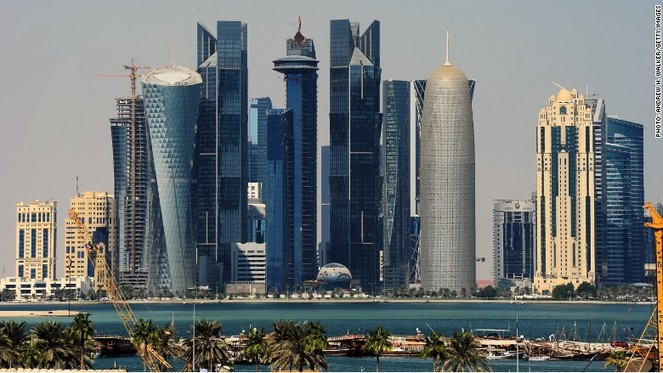
These cities will be very rich in 10 years

Forget New York, London or Hong Kong. Here are seven cities that are racing up the rankings of the world’s richest, and will be among the top 10 by 2025, according to researchers from McKinsey.

Source: money.cnn.com

  1. Doha, Qatar
  2. Bergen, Norway
  3. Trondheim, Norway
  4. Hwaseong, South Korea
  5. Asan, South Korea
  6. Rhine Ruhr, Germany
  7. Macau, China

Tagsurbandevelopment, economic, planninglaborglobalization, technology.

Blog at WordPress.com.

Up ↑