Search

GEOGRAPHY EDUCATION

Supporting geography educators everywhere with current digital resources.

Tag

Africa

Labor unrest in Cameroon after clashes over language discrimination

In Cameroon, unrest in minority English-speaking regions over discrimination by majority French speakers is still simmering after violent clashes with police claimed at least four lives.


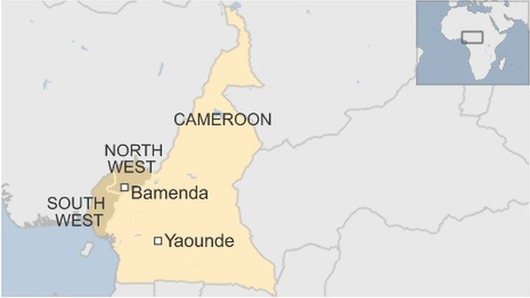
English-speakers have been protesting since Monday (11/21/2016) against what they see as their “second-class citizen status” and attempts to marginalize them in the west African nation. Eight of Cameroon’s ten regions are largely Francophone, but two regions, North West and South West Cameroon are English-speaking. English-speaking teachers complain that French-speaking counterparts are being increasingly deployed in English schools, despite differences in the curricula and teaching systems.


Tags: language, CameroonAfrica, culture.

Source: www.dw.com

Bamenda protests: Mass arrests in Cameroon

Some 100 people are arrested after protests against using French in Cameroon’s English-speaking region.


Areas controlled by Britain and France joined to form Cameroon after the colonial powers withdrew in the 1960s. The country has 10 semi-autonomous administrative regions – eight are Francophone and use the French civil law. English-speakers have long complained that they face discrimination. They often complain that they are excluded from top civil service jobs and that government documents are often only published in French, even though English is also an official language. Bamenda is the founding place of Cameroon’s largest opposition political party, the Social Democratic Front.


Tags: language, colonialism, CameroonAfrica, culturepolitical, devolution.

Source: www.bbc.com

This is where your smartphone battery begins

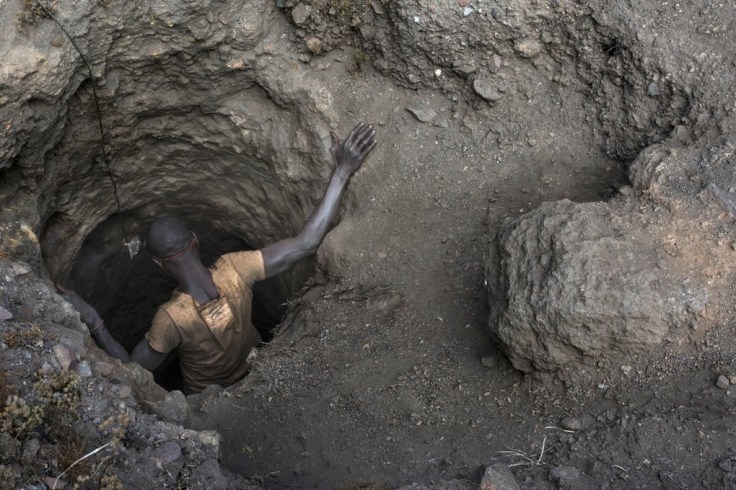
Workers, including children, labor in harsh and dangerous conditions to meet the world’s soaring demand for cobalt, a mineral essential to powering electric vehicles, laptops, and smartphones, according to an investigation by The Washington Post.

Source: www.washingtonpost.com

The Democratic Republic of the Congo (DRC) is a land rich with minerals and resources vital for high end consumer goods (laptops, cellphones, electric cars, etc.).  This in-depth investigation from the Washington Post of the cobalt mining districts in the DRC (60% of global cobalt production) is incredible.  It has great videos, maps, and an detailed article that cuts across the geographic themes (exploited local labor, global commodity chains, political governance, polluted water supply, medical geography, etc.).  


Just two days ago, the United States pulled the families of all governmental officials out of the DRC amid political turmoil and violence in the streets of Kinshasa, highlighting the fact that the weakness of political institutions in the DRC are a major reason for this situation.  


Tags: Congolaborwatermedical, environmentpollution, political, conflict, resourcespolitical ecology, Africa.

Music and Resistance

“Life imitated art in early 1980 when South African school children, fed up with an inferior apartheid-era education system, took to chanting the lyrics of Pink Floyd‘s ‘Another Brick in the Wall.’ The song, with its memorable line stating, “We don’t need no education,” had held the top spot on the local charts for almost three months, a total of seven weeks longer than it did in America. By May 2, 1980, the South African government had issued a ban on ‘Another Brick in the Wall,’ creating international headlines.”

Source: www.youtube.com

How a song about rigid school rules in England became banned in South Africa is a fantastic lesson in cultural diffusion and glocalization (where the global becomes intensely local).  Here we see an historical example of a global cultural phenomenon taking on local political dimensions.  If you are interested in teaching more about the social and historical content of music, check out TeachRock.org.      


Questions to Ponder: Why would this song resonate in South Africa?  How might the video/lyrics map onto the South African situation? 


Tags culturediffusion, globalization, popular culture, South AfricaAfrica, music.

DR Congo election: 17 dead in anti-Kabila protests

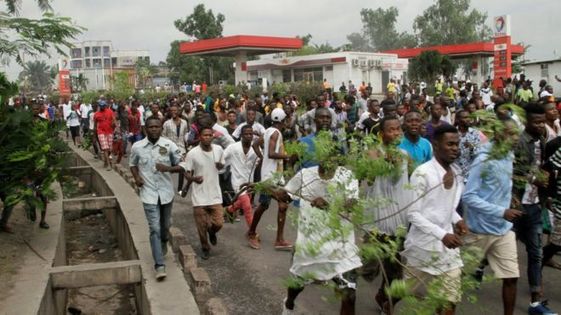
Three police officers and 14 civilians die in Kinshasa, capital of DR Congo, during protests calling for President Joseph Kabila to step down.

Source: www.bbc.com

The DRC is a land of great wealth but is impoverished.  This may seem strange to outsiders but the weakness of their social institutions pays a key role in keeping the economy from reaching it’s potential.  Strong institutions matter more than resources for sustained economic development. The most important line in the article was the last one: “DR Congo has never had a smooth transfer of power since independence more than 55 years ago.”  That is a staggering historical burden.  


Tags: Congo, political, conflict, Africa.

Africa’s Charcoal Economy Is Cooking. The Trees Are Paying.

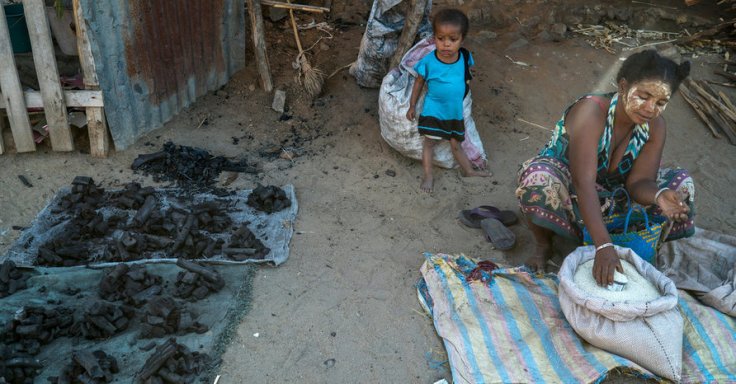
In Madagascar, the booming charcoal business is contributing to deforestation and may exacerbate the effects of global warming.

Source: www.nytimes.com

Deforestation does not happen in a vacuum–it occurs in an economic, political, and historical context.  Rural Africans have less access to high value commodities and converting forests into charcoal is one of the few options (similar to the issue in Haiti).  The short-term economic gain for a few individuals leads to long-term environmental problems such as soil erosion, flooding, and habitat destruction for many species.  


Tags: biogeography, environmentecology, poverty, development, economic, labor, Madagascar, erosionAfrica, resourcespolitical ecology.

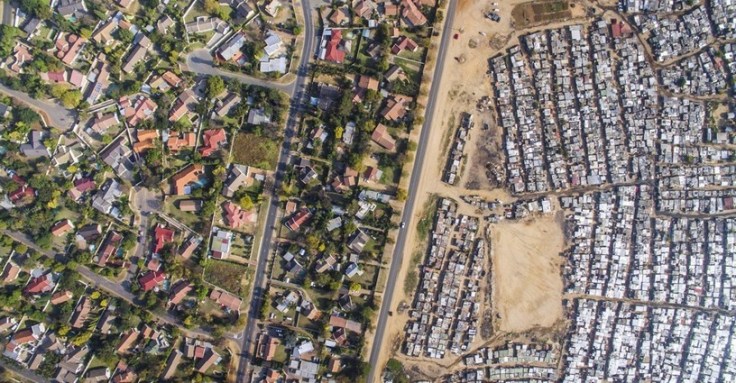
Aerial Photos Show how Apartheid Still Shapes South African Cities

An American used drones to capture the color lines still stark in South African cities.

Source: www.citylab.com

In some respects this isn’t surprising, but it is still striking to see how stark the differences are.  One generation of political change does not reverse generations of systemic racism that have had economic, cultural, and political impacts.  Many of the urban planning decisions were based on apartheid, and that historical legacy is still embedded landscape.


Tags: South Africa, images, Africarace, ethnicityneighborhood, urban, planning, images, remote sensing.

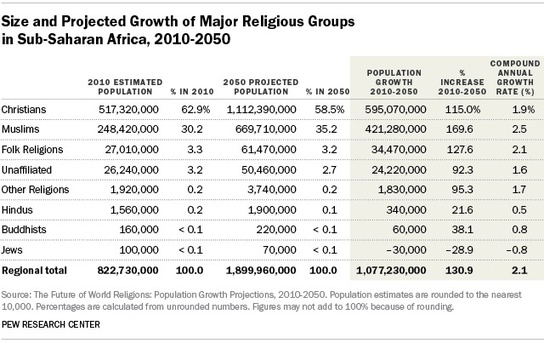
Projected Religious Population Changes in Sub-Saharan Africa

“The total population in sub-Saharan Africa is expected to grow at a faster pace than in any other region in the decades ahead, more than doubling from 823 million in 2010 to 1.9 billion in 2050. As a result, the two dominant religions in the region – Christianity and Islam – both are expected to have more than twice as many adherents in 2050 as in 2010.”

Source: www.pewforum.org

Sub-Saharan Africa is one of the poorest regions of the world. While the economy is growing, the rate at which poverty is falling is less than the population growth rate.  Nearly all of the population growth in Africa between now and 2050 is expected to occur in Sub-Saharan Africa.  As the population grows, the religious dynamics of Sub-Saharan Africa will change.  The share of residents practicing Christianity, the majority religion of the region, is expected to decline from 2010 to 2050 while the share of Muslims is expected to increase in the same time frame.  The changes in religious demographics is occurring alongside the region’s youth bulge (click here for a population pyramid).  Understanding religious demographics is key to understanding the challenges faced by the African people.   


Question to Ponder: What impact are the region’s two fastest-growing religions having on Sub-Saharan Africa’s overall fertility rate?    


Tagsreligionpopulation, ChristianityIslam, Africa.

Why Africa’s migrant crisis makes no sense to outsiders

“Violence and insecurity are so bad that other war-torn countries have become sites of refuge.”


In 2015, nearly 100,000 Ethiopians and Somalis traveled by boat to Yemen, one of the world’s most dangerous countries. Last year, nearly 5,000 citizens of Congo, which is fighting powerful rebel groups, were seeking refuge in the Central African Republic, itself torn apart by civil war. And yet 10,000 Burundians have fled their country’s own growing civil unrest for Congo. Thousands of Nigerians escaping the extremist Islamist group Boko Haram have gone to Chad, where different strains of that same insurgency conduct frequent deadly attacks. 


Developing countries have long taken in a disproportionate number of the world’s refugees — roughly 80 percent, according to the United Nations. But even for migration experts and relief workers, the willingness of refugees to leave one war for another is shocking. It’s also proving an enormous challenge for humanitarian agencies, which are already overstretched and often not equipped to welcome refugees in countries that are still racked by conflict.


Tags: refugeesAfrica, migration, conflict, political, war

Source: www.washingtonpost.com

Create a free website or blog at WordPress.com.

Up ↑