Search

GEOGRAPHY EDUCATION

Supporting geography educators everywhere with current digital resources.

Tag

borders

The unbearable sadness of being Taiwan, a liberal island other democracies refuse to talk to

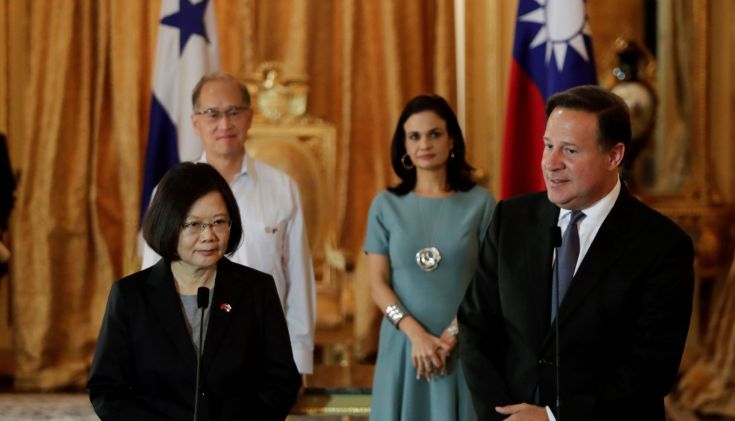
“An island, a territory, a self-governing entity, a renegade province, a breakaway part of China, the place formerly known as Formosa—call Taiwan any of those things, but never a country, a state, or a nation. The simple fact that it took a phone call between US president-elect Donald Trump and Taiwanese president Tsai Ing-wen to draw attention to one of Asia’s most vibrant democracies highlights the humiliating plight of Taiwan in the international arena. The irony that the US and other democratic countries cannot openly recognize Taiwan’s achievements for fear of incurring Beijing’s wrath has not been lost on many observers, who nevertheless fear that a cavalier move by Trump to upend diplomatic protocol in such a way could ultimately end badly for little Taiwan.”


Tags: Taiwan, political, states, borders, geopoliticsEast Asia.

Source: qz.com

Belgium and the Netherlands Swap Land, and Remain Friends

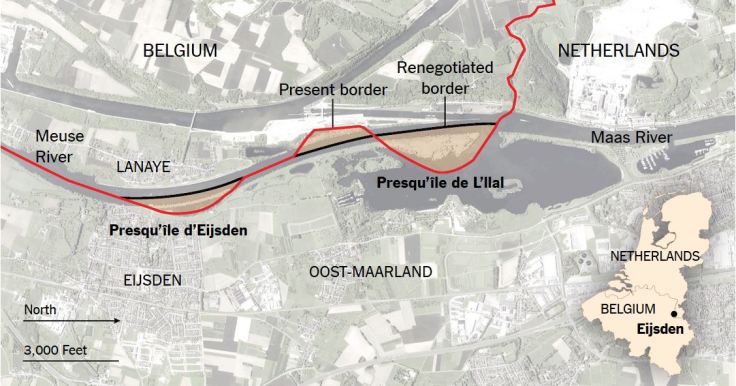
The discovery of a headless corpse in the Netherlands helped Belgium and its bigger Dutch neighbor resolve a property squabble that began in 1961.


In a region that has long known geopolitical and linguistic squabbles, and where Belgium has lived in the shadow of its neighbor, the land swap was anything but inevitable. In 1961, when the Meuse was reconfigured to aid navigation, it had the side effect of pushing three pieces of land onto the wrong side of the river. The uninhabited area subsequently gained a reputation for lawlessness, wild parties and prostitution.


Tags: borders, political, territoriality, BelgiumNetherlands, unit 4 political, Europe.

Source: www.nytimes.com

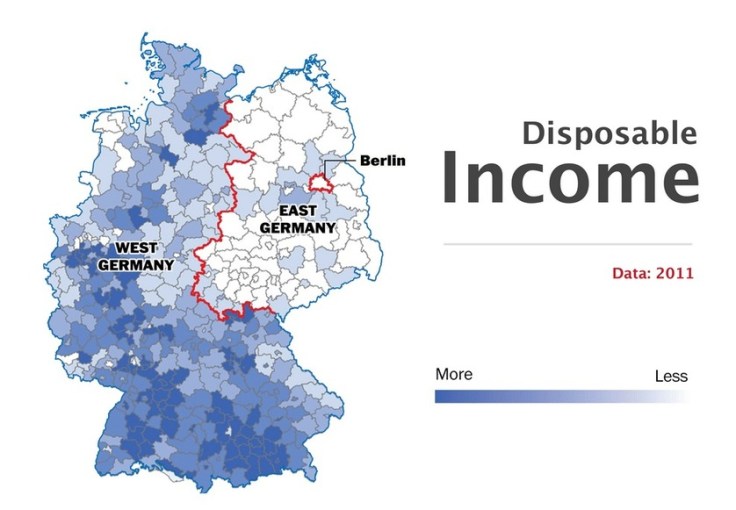
Germany reunified 26 years ago, but some divisions are still strong

“While 75 percent of Germans who live in the east said that they considered their country’s reunification a success, only half of western Germans agreed. With eastern and western Germans blaming each other for past mistakes over the past two years, that frustration has likely increased. Younger citizens, especially — who do not usually identify themselves with their area of origin as strongly anymore — have grown worried about the persistent skepticism on both sides. But where do those divisions come from? And how different are eastern and western Germany today?”

Source: www.washingtonpost.com

This series of 10 maps (and 1 satellite image) highlights many of the cultural and economic divisions between East and West, despite efforts to in the last 26 years to smooth out these discrepancies. The social geographies imposed by the Iron Curtain and the Berlin Wall are still being felt from this relic border and will for years to come. 


Tags: Germany, industry, laboreconomichistorical, politicalborders.

Turkey’s New Maps Are Reclaiming the Ottoman Empire

Erdogan’s aggressive nationalism is now spilling over Turkey’s borders, grabbing land in Greece and Iraq.


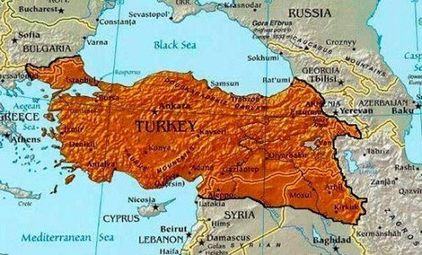
In the past few weeks, a conflict between Ankara and Baghdad over Turkey’s role in the liberation of Mosul has precipitated an alarming burst of Turkish irredentism. President Erdogan criticized the Treaty of Lausanne, which created the borders of modern Turkey, for leaving the country too small. Turkey won’t be annexing part of Iraq anytime soon, but this combination of irredentist cartography and rhetoric nonetheless offers some insight into Turkey’s current foreign and domestic policies and Ankara’s self-image.  The military interventions and confrontational rhetoric this nationalism inspires may worsen Turkey’s security and regional standing.


Tags: political, irredentism, culture, Turkeyhistorical, bordersempire, geopolitics.

Source: www.yahoo.com

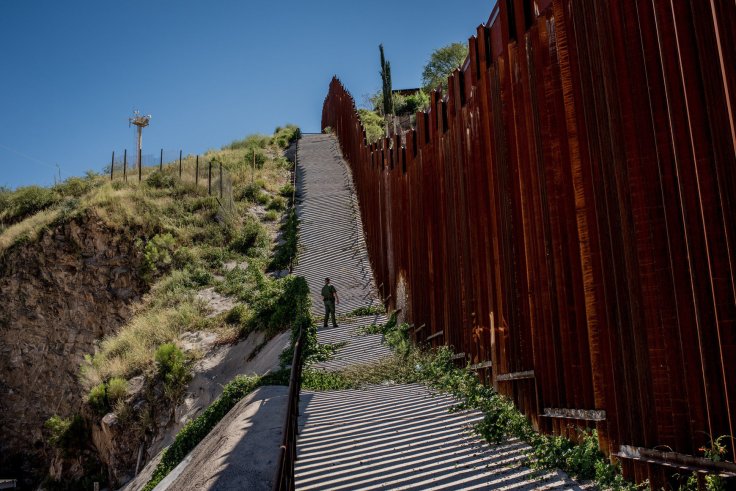
‘The Wall Is a Fantasy’

A week in the borderlands with migrants and guards.

Source: www.nytimes.com

This is not a political statement but a reiteration of the geographic realities of borders; they are inherently permeable and unite people just as much as they divide. 


Tags: Mexico, borders, political.   

Country Cluster Quiz

“No borders. No landmarks. No context. How many countries will you be able to recognize? Here’s how this works. I give you a the outline of several countries together, without borders or any other context, and you guess which countries you’re looking at.”

Source: www.buzzfeed.com

This is not the most difficult geography quiz (as advertised on Buzzfeed), but it does take some time since all the countries in a given cluster aren’t all immediately obvious.  The fact that it is multiple choice certainly simplifies the this quiz.


Tagsmapping, trivia, funborders.

Do You Know The Outline of These Countries?

Can you spot the real outline from the fake?..

Source: www.buzzfeed.com

This is just for fun…The borders/coastlines of these 14 countries are slightly photoshopped in one of the two images, and you have to remember from your mental maps which one is correct.  And yes, of course I got a 14. 


Tagsmapping, trivia, funborders, cartography.

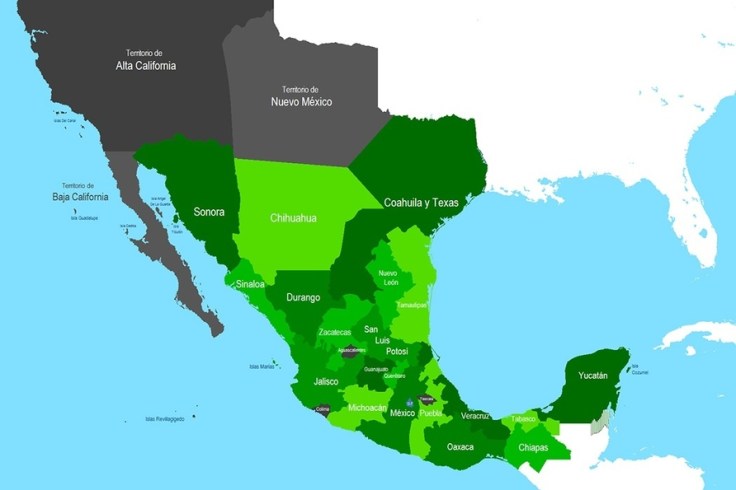
When Mexico Was Flooded By Immigrants

In the early nineteenth-century, Mexico had a problem with American immigrants.

Source: daily.jstor.org

A century and a half ago, the immigration debate and geopolitical shifts in power on the United States-Mexico border reflected a profoundly different dynamic than it does today.  This history has enduring cultural impacts on southwestern states that had the international border jump them.


Tags: culture, demographicsmigration, North Americahistorical, colonialism, borders, political.

Old Mexico lives on

On February 2nd 1848, following a short and one-sided war, Mexico agreed to cede more than half its territory to the United States. An area covering most of present-day Arizona, California, Nevada, New Mexico and Utah, plus parts of several other states, was handed over to gringolandia. The rebellious state of Tejas, which had declared its independence from Mexico in 1836, was recognised as American soil too. But a century and a half later, communities have proved more durable than borders. The counties with the highest concentration of Mexicans (as defined by ethnicity, rather than citizenship) overlap closely with the area that belonged to Mexico before the great gringo land-grab of 1848. Some are recent arrivals; others trace their roots to long before the map was redrawn. They didn’t jump the border—it jumped them.


Tags: culture, demographics, North Americahistorical, colonialism, borders, political.

Source: www.economist.com

Create a free website or blog at WordPress.com.

Up ↑