Search

GEOGRAPHY EDUCATION

Supporting geography educators everywhere with current digital resources.

Tag

diffusion

Are Americans trashing the English language?

“Are American’s trashing the English language? The Economists language expert, Lane Greene, knows a thing or two about English. Lane is a fan of words, lots of words, and Lane is an American living in London. He’s become accustomed to British English slang. But Lane often hears Britons complain that there are too many American words and expressions creeping into British English, these are called Americanisms. British writer Matthew Engel can’t stand Americanisms being used in Britain and even wrote a book about it. But are Americanisms trashing British English?”

Source: www.youtube.com

This video touches on important cultural and spatial dynamics of the linguistic change impacting the world’s current lingua franca…in other words, this is incredibly relevant to human geography. 

 

Tags: languagecultureworldwide, English, diffusion,

 colonialism.

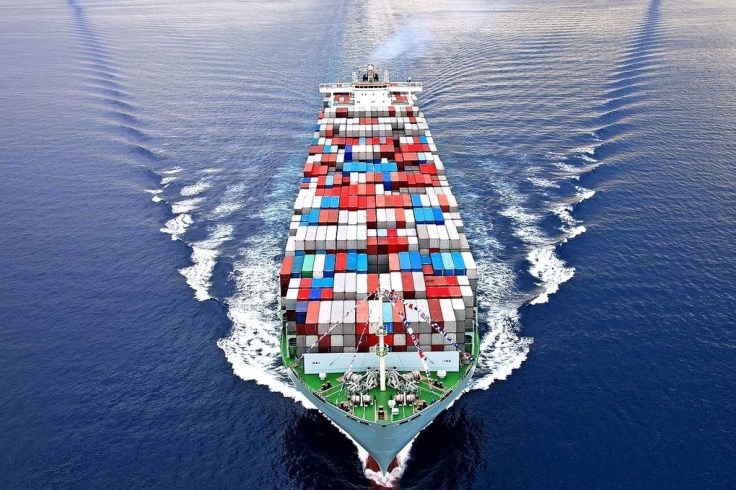
How a Steel Box Changed the World: A Brief History of Shipping

“As the container shipping industry continues to boom, companies are adopting new technologies to move cargo faster and shifting to crewless ships. But it’s not all been smooth sailing and the future will see fewer players stay above water.”

Source: www.youtube.com

This WSJ video, similar to an animated TED-ED video, explains some of the geographic consequences of economic innovation. Containerization has remade the world we live in, and will continue to see it drive economic restructuring.  


Tags: transportationlabor, globalization, diffusion, industry, economic.

Korean Baseball 101: Way Beyond the Bat Flips

Baseball in South Korea is more than a game. It’s akin to a religion. American missionaries first brought the sport to the peninsula in 1905, and the country absolutely loved it. Today, the Korean Baseball Organization (KBO) features 10 teams and a unique sporting culture all its own. The city of Busan and its hometown Lotte Giants have a particularly passionate fan base. From the hitters’ flashy bat flips, to the team’s famous “cheermaster” and its unlikely American super fan, consider this is your crash course on the joyful madness that is Lotte Giants fandom.

Source: www.youtube.com

If a sport (or other cultural practice) diffuses to a new place, is it going to look exactly the same as it does in the original cultural hearth? The bat flip is the go-to difference between Korean and American baseball, but there are other differences.  Maybe, or like baseball in South Korea, it can have a culture all its own. This is an interesting story that shows how the diffusion of cultural traits around the globe doesn’t have to lead to a more bland cultural mosaic. As cultural traits are reterritorialized into new places, they add vibrancy to the cultural fabric of the institution/sub-culture that they’ve adopted.

Tags: sport, popular culturediffusion, culturecultural norms, South Korea, East Asia.

Why Don’t We All Speak the Same Language?

There are 7,000 languages spoken on Earth. What are the costs — and benefits — of our modern-day Tower of Babel?

Source: freakonomics.com

These two podcasts are great mainstream looks at issues that filled with cultural geography content.  So many languages on Earth is clearly inefficient (the EU spends $1 billion per year on translation), and yet, linguistic diversity is such a rich part of humanity’s cultural heritage.  Listen to the first episode, Why Don’t We All Speak the Same Language? as well as the follow-up episode, What Would Be the Best Universal Language?


Tags: languagecultureworldwide, English, regions, diffusiontechnology.

Pro Wrestling and Economic Restructuring

“For decades, professional wrestling in North America operated under a system of informally defined ‘territories.’ Each territory represented an individual promotion with its own stable of talent that drew crowds to local arenas and broadcast the product on regional television stations. In 1982, Vince McMahon purchased his father’s company, the World Wrestling Federation. For almost two decades, he endured an epic conquest of the pro wrestling world that led to where he is today: standing tall as the undisputed king of the industry.”

Source: www.youtube.com

This may seem like a strange video for geography educators and students.  In one sense, the history of a wrestling entertainment business is trivial, but this provides a great example of how using economies of scale can overcome regional advantages as new technologies enter the market.  Maybe is not a ‘real’ sport, but the example of wrestling might pique a few students’ interest as the economic principles are made manifest. 


Questions to Ponder: How do emerging technologies lead to economic disruption?  Why was regional systems so prevalent in the 1950s and1960s?  If Vince McMahon didn’t pursue this plan, would there still be smaller, regional wrestling organizations?  Why or why not? 


Tags: regions, economic, diffusiontechnologysport, industry

Human Settlement Predictive Model

“Simulating climate conditions over the last 125,000 years and predicting how those changes would have allowed humans to spread around the globe, this video models human migration patterns.” Read more: http://ow.ly/lWIp304qZEo

Source: www.youtube.com

The World Economic Forum noted that some spatial research that was originally published in Nature, shows how geneticists took DNA samples from people of different cultures in different parts of the world to track their dispersal throughout the globe.  The video uses climatic data, combined with the genetic data, to create a model showing how the human race spread across the globe over a 125,000 year period.


Tagsdiffusiondemographicsmappingmigration, populationhistorical, video, visualization.

Anti-vaccine activists spark Minnesota’s worst measles outbreak in decades

In Minnesota, the Somali American community has been hit hard, with a fourth of the young patients hospitalized.

Source: www.washingtonpost.com

I had measles as a child. I am so disheartened to see this now-perfectly preventable disease that nearly killed me resurface in the United States because of a fear-baiting, anti-intellectual movement.  The spread of any disease carries spatial component that interests geographers, but there is also cultural geographies that help to understand, explain, and (hopefully) combat this issue.  Please vaccinate the ones you love.   


Tagsmedicaldiffusion, culture, mortality, development, cultural norms.

Why do people and nations trade?

//cdn.embedly.com/widgets/media.html?src=https%3A%2F%2Fplayer.vimeo.com%2Fvideo%2F164108675&wmode=opaque&url=https%3A%2F%2Fvimeo.com%2F164108675&image=https%3A%2F%2Fi.vimeocdn.com%2Fvideo%2F587047534_1280.jpg&key=359ed8ab27db4f02a128049b1f89d6a1&type=text%2Fhtml&schema=vimeo

“Mark Blyth of Brown University explains international trade.” 

Source: vimeo.com

To understand international trade, you need to understand how the factors of production vary from place to place, resulting in different locations having a comparative advantage on a global market.  This video nicely explains that with the example of Scotland’s comparative advantage raising sheep with southern Europe’s comparative advantage in producing wine.   Does the size of a country matter in trade?  You betcha.


Tags: regions, economic, diffusion, industry

Ship to shore: tracking the maritime motorways

“It is estimated that 97 per cent of all trade – the things we buy in shops – will have been transported in containers by ships at sea. The container vessel, stacked high with uniformly-sized metal boxes, has become a symbol of our globalized world. This is a world of imports and exports, a world where moving things across huge distances keeps the price of daily commodities low as items are manufactured in one place, then packaged in another, before arriving on the shores where they will eventually be sold. In recent geographical literature, attention has turned to the world at sea – a space traditionally overlooked. Geography means ‘Earth-writing’ and geographers have taken the origins of the term very seriously. They have written primarily about the Earth: the ground, the soil, the land. The sea is something ‘out there’ – seemingly disconnected from our everyday lives. However, an appreciation of the world as made from flows and connections has enabled geography to recognize that the sea is essential to our landed life.” http://wp.me/p2Ij6x-5DS


Tags: transportation, globalization, diffusion, industry, economic.

Source: geographical.co.uk

Create a free website or blog at WordPress.com.

Up ↑