Search

GEOGRAPHY EDUCATION

Supporting geography educators everywhere with current digital resources.

Tag

EastAsia

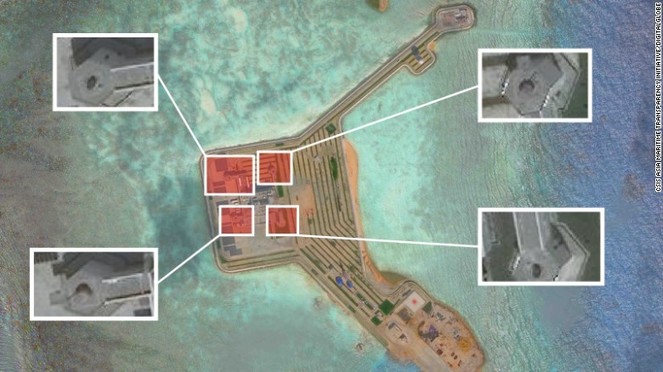
China installs weapons on contested South China Sea islands

New satellite imagery indicates that China has installed weapon systems on all seven artificial islands it has built in the contested waters of the South China Sea, a move that’s likely alarm the country’s neighbors.

UPDATE: After this news, the Pentagon says a Chinese warship has seized a US Navy underwater drone collecting unclassified data in international waters in the South China Sea.

Tags: borders, political, conflict, China, remote sensing, East Asia.

Source: www.cnn.com

The unbearable sadness of being Taiwan, a liberal island other democracies refuse to talk to

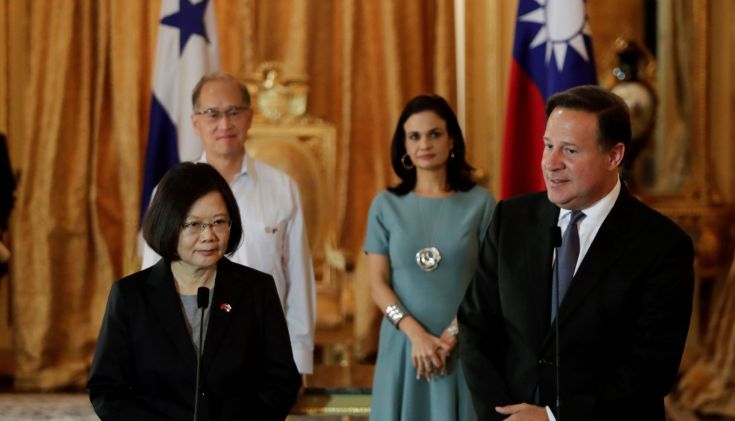
“An island, a territory, a self-governing entity, a renegade province, a breakaway part of China, the place formerly known as Formosa—call Taiwan any of those things, but never a country, a state, or a nation. The simple fact that it took a phone call between US president-elect Donald Trump and Taiwanese president Tsai Ing-wen to draw attention to one of Asia’s most vibrant democracies highlights the humiliating plight of Taiwan in the international arena. The irony that the US and other democratic countries cannot openly recognize Taiwan’s achievements for fear of incurring Beijing’s wrath has not been lost on many observers, who nevertheless fear that a cavalier move by Trump to upend diplomatic protocol in such a way could ultimately end badly for little Taiwan.”


Tags: Taiwan, political, states, borders, geopoliticsEast Asia.

Source: qz.com

The great Korean bat flip mystery

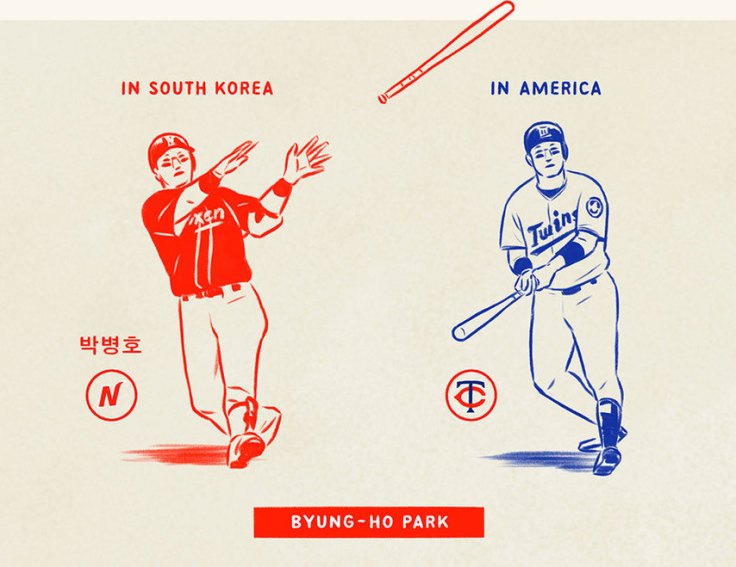
MLB’s code is clear: Flip your bat and you’ll pay. But in South Korea, flips are an art. How does this alternate world exist? And what does it say about us? Writer Mina Kimes trekked across South Korea with illustrator Mickey Duzyj to unravel the mystery.

Source: www.espn.com

There are unwritten rules in Major League Baseball, or in geographic terms, there are are cultural norms that are informally enforced to maintain homogeneity and to prevent  cultural drift.  Jose Bautista’s repuation as a villain has much to do with his rejection of a key MLB unwritten rule–Never ‘show up’ the pitcher by flipping the bat.  In South Korea, typically a country much more associated with cultural traditions of honor and respect than the United States, bat flipping is much more accepted and common (diffusion plays a role in the story–baseball came to South Korea via Japan).  This is an interesting story about South Korean baseball’s cultural norms that might intrigue some sports fans. 


Tags: sport, popular culturediffusion, culturecultural norms, South Korea, East Asia.

Getting Japanese Citizenship

“To become a Japanese citizen, a foreigner must display ‘good conduct’, among other things. The rules do not specify what that means, and make no mention of living wafu (Japanese-style). But for one candidate, at least, it involved officials looking in his fridge and inspecting his children’s toys to see if he was Japanese enough (he was). Bureaucratic discretion is the main reason why it is hard to get Japanese nationality. The ministry of justice, which handles the process, says officials may visit applicants’ homes and talk to their neighbors.”

Source: www.economist.com

Japan has a remarkably homogeneous population, in large part because they have very tight immigration laws (here is a more extended list of the requirements to obtain a Japanese citizenship).


Questions to Ponder: How is the notion of Japanese citizenship different from American citizenship?  As Japan’s population continues to decline, how might that change Japan’s migration/citizenship policies?   


Tags: JapanEast Asia, place, perspective, cultural norms, culture.
The rise of the Asian megacity (and why ‘metacities’ are the next big thing)

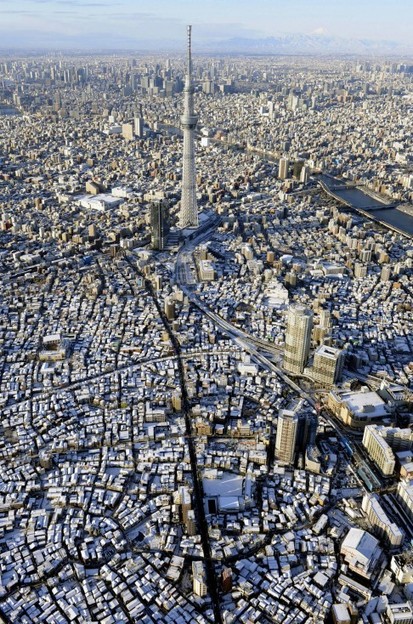
“Asia’s rapid urbanisation is changing the very shape and nature of what we think of as a city.  It’s not just the rapid increase in their numbers or their sheer size that makes these megacities fascinating. They look, feel and behave differently, too.”

Source: www.scmp.com

The term megacity (a city with a population greater than 10 million) has been around for a while and there wasn’t much linguistic need to describe something bigger.  Today, most megacities are more like Lagos and Mumbai, places of extreme wealth asymmetries than the global cities of New York City and London.  Some are now using the term metacity to describe cities with populations of 20 million.  Asian metacities are a good place to start thinking about the largest urban regions that are increasingly dominating economic, political and cultural affairs.      


Tags: urbanmegacitiesEast Asia.

China pollution: First ever red alert in effect in Beijing

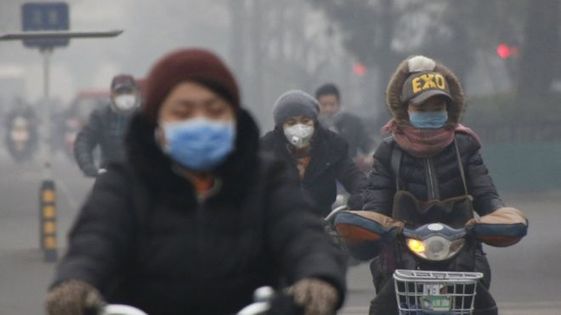
“Schools in Beijing are closed and outdoor construction halted as the Chinese capital’s first ever pollution “red alert” comes into effect over smog levels.”

Source: www.bbc.com

A large part of China’s rapid economic growth has been dependent on cutting corners in labor and environmental standards.  This is one reason why I don’t think that the Chinese economy can continue this growth indefinitely.


Tags: pollutionChina, development, economic, megacities, East Asia, industry, sustainability, urban ecology.

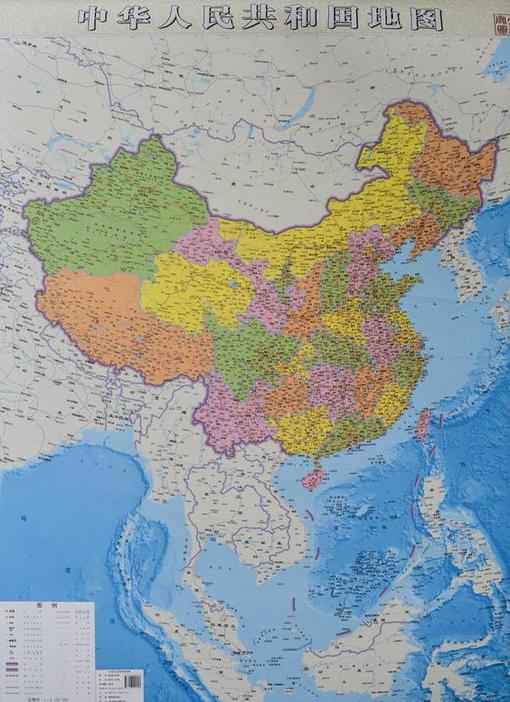
China publishes new map

China has published a new map of the entire country including the islands in the South China Sea (West Philippine Sea) in order to “better show” its territorial claim over the region.

Source: globalnation.inquirer.net

China is attempting to bolster its geopolitical claims through cartographic validation.  It as if to say, ‘it’s on a map, who can question that it is legitimately our territory?’  Why is a map such a powerful and convincing document?  Why is the Philippines upset by this map?  I think that explains this rival Filipino map as the Philippines and China engage in the cartographic version of dueling banjos.  (note the uage of the South China Sea or West Philippine Sea to refer to the same body of water) .  But this is more than just a map; it’s production has the potential to destabilize regional security.     

For more resources, the Choices Program has put together supplemental materials to investigate China on the world stage.

Tags: borderstoponyms, political, conflict, waterChina, East Asia.

Beijing’s Facelift

“A government-initiated redevelopment plan will transform one of the oldest neighborhoods in Beijing into a polished tourist attraction.”

Source: www.youtube.com

This 2010 video (and related article) showcases one of China’s urban transformation projects.  Urban revitalization plans are not without critics, especially those who see the cultural transformation of a neighborhood they deem worthy of historical preservation.  This process is occurring all over the world (we’ve recently seen this in Brazil as they were preparing for the World Cup).  This is one of the videos that I’ve put into my interactive map with over 65 geography videos to share in the classroom.
 

Blog at WordPress.com.

Up ↑