Search

GEOGRAPHY EDUCATION

Supporting geography educators everywhere with current digital resources.

Tag

historical

The Very Great Alexander von Humboldt

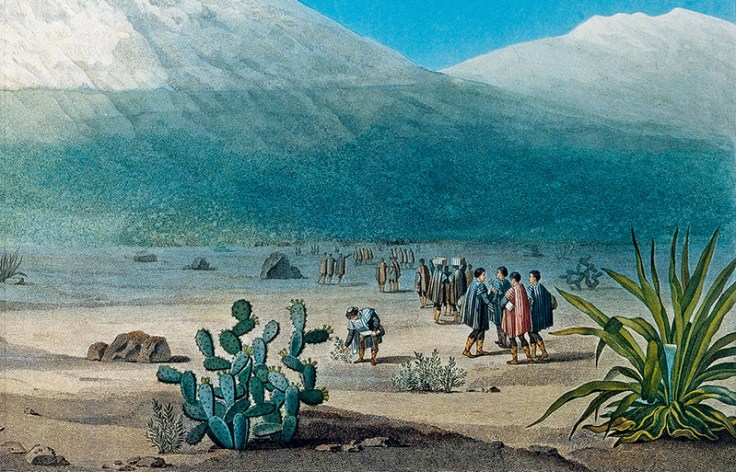
The Prussian naturalist Alexander von Humboldt (1769–1859) is all around us. Yet he is invisible. “Alexander von Humboldt has been largely forgotten in the English-speaking world,” writes Andrea Wulf in her thrilling new biography. “It is almost as though his ideas have become so manifest that the man behind them has disappeared.” Wulf’s book is as much a history of those ideas as it is of the man. The man may be lost but his ideas have never been more alive.

Source: www.nybooks.com

Alexander von Humboldt has been described as the last great ancient geographer concerned with understanding an eclectic cosmography as well as the first modern geographer. He is honored far and wide throughout Europe and especially Latin America for his explorations, but given that people are confused as how to categorize him and classify his contributions, today he is under-appreciated.  Geographers need to reclaim his memory and call his extensive, globetrotting work on a wide range of subjects ‘geography.’  Here are more articles and videos on the man that I feel geographers should publicly champion as their intellectual ancestor the way that biologists point to Darwin.   


Tags:  historicalbiogeography, book reviews.

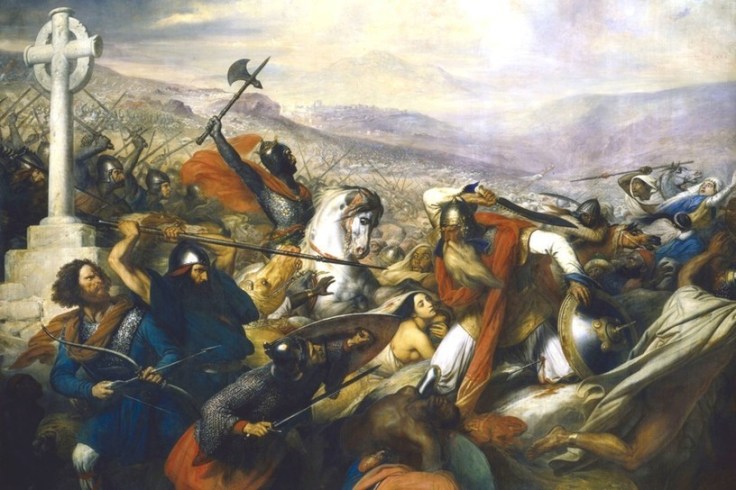
How Islam Created Europe

“For centuries in early and middle antiquity, Europe meant the world surrounding the Mediterranean. It included North Africa, but the swift advance of Islam across North Africa in the seventh and eighth centuries virtually extinguished Christianity there, thus severing the Mediterranean region into two civilizational halves, with the ‘Middle Sea’ a hard border between them rather than a unifying force. Islam is now helping to undo what it once helped to create. A classical geography is organically reasserting itself, as the forces of terrorism and human migration reunite the Mediterranean Basin, including North Africa and the Levant, with Europe.” 

Source: www.theatlantic.com

The title is a bit overstated (aren’t they all in this click-bait driven media age?), but the article shows nicely how regions are cultural constructs that change over time. 


Tags: op-edregions, Europe, historical, Islamreligionhistorical, culture, Christianity.

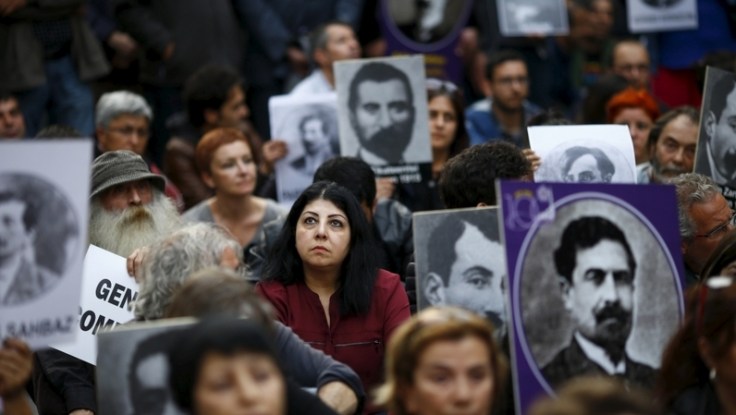
Why Germany’s recognition of Armenian genocide is such a big deal

Armenian American journalist Liana Aghajanian says the German parliament’s decision is all the more groundbreaking because it was a politician of Turkish descent who pushed it through.


The German Bundestag’s overwhelming vote last week in favor of this resolution, with just one vote against and one abstention, brought both gratitude and anger. Armenian communities, many of them descendants of genocide survivors who are dispersed across the world, are grateful. Turkey, however, was incensed and recalled its ambassador to Germany. Many Turks see the vote as not just a threat to longstanding German-Turkish relations, but to Turkish national identity.

Source: www.pri.org

I’ve posted in about the Armenian genocide in the past, and until Turkey acknowledges that it was a genocide, this issue will continue to fester.  Considering that Germany has a large Turkish population and an obvious historical connection to genocide, this recognition is far more important some other random country taking this stance. 


TagsArmenia, genocidepolitical, conflict, TurkeyGermanywar, historical.  

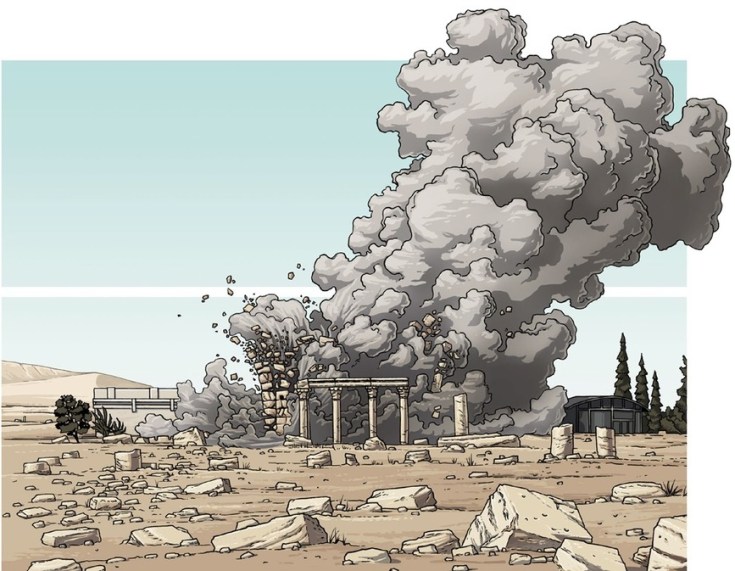
Looting and Conflict: The ISIS Antiquities Pipeline

“Since the outbreak of the civil war in Syria in 2011, ISIS has looted ancient sites, using the plunder to help finance its operations.”

Source: www.nationalgeographic.com

This short comic-book style interactive from National Geographic is incredibly well-done and very engaging.


Tags: National Geographic, Syria, political, terrorism, ISIS, historical.

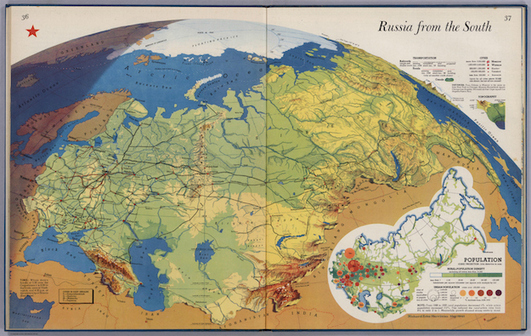
World War II Led to a Revolution in Cartography

“More Americans came into contact with maps during World War II than in any previous moment in American history. From the elaborate and innovative inserts in the National Geographic to the schematic and tactical pictures in newspapers, maps were everywhere. On September 1, 1939, the Nazis invaded Poland, and by the end of the day a map of Europe could not be bought anywhere in the United States. In fact, Rand McNally reported selling more maps and atlases of the European theaters in the first two weeks of September than in all the years since the armistice of 1918. Two years later, the attack on Pearl Harbor again sparked a demand for maps.”

Source: www.newrepublic.com

Author of Mapping the Nation, Susan Schulten explains how historical events created a huge demands for maps, revolutionizing the industry and leading to many new ways of visualizing the world.  

Tags: historical, mapping, war.

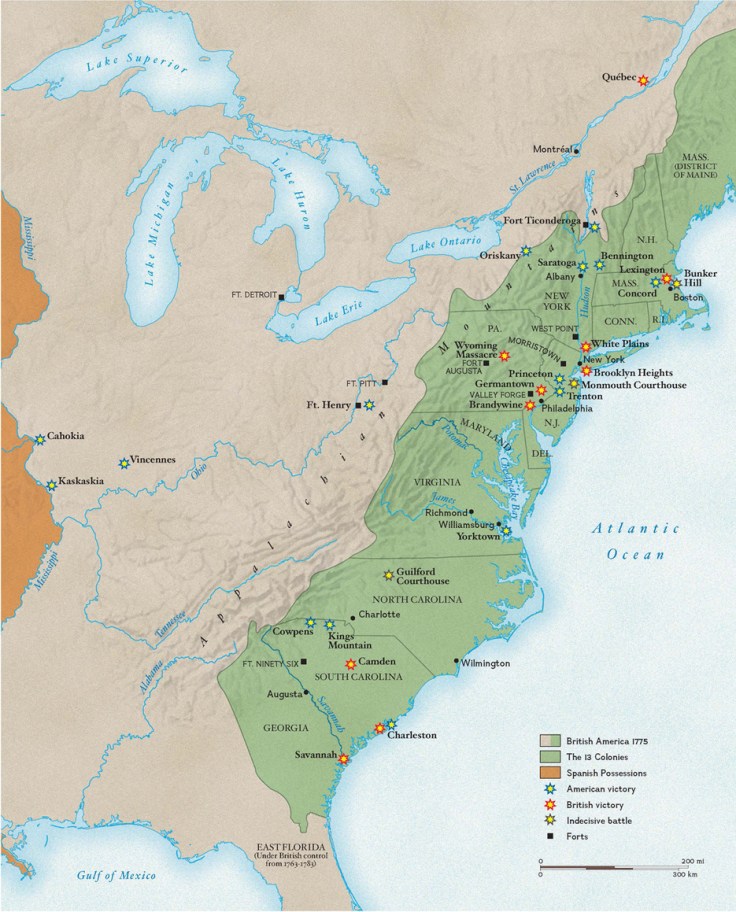
Revolutionary War Battles

America’s war for indpendence began on April 19, 1775, when the first shots were fired at Lexington and Concord in Massachusetts.

Tags: USA, historicalmapping, National Geographic.

Source: education.nationalgeographic.com

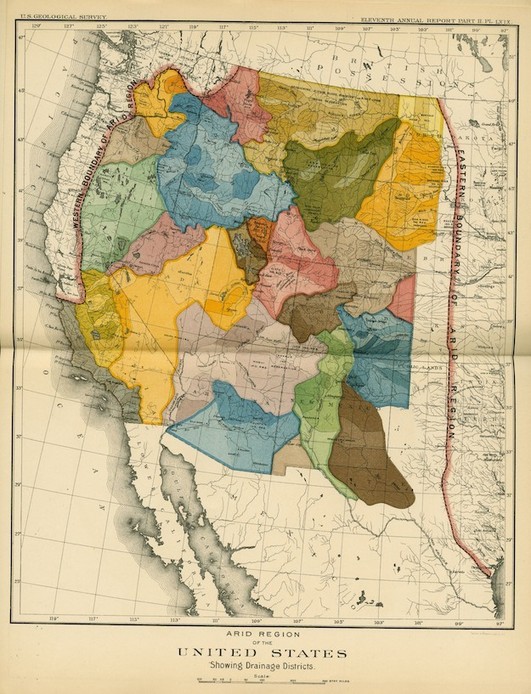
This 19th Century Map Could Have Transformed the West

Today’s drought-riven west would look very different if Congress had listened to John Wesley Powell

Source: www.newrepublic.com

Author of Mapping the Nation, Susan Schulten explains how western expansion failed to recognize the basic physical geographic reality of the United States–that the west is much drier than the east.  Given that much of the west, especially California, is in the midst of a severe drought, this article serves as a reminder to recognize that localized understandings of human and environmental actions are necessary.  Do you know what watershed you live in?  How does and should that impact us?   


Tags: physical, historical, California, water, environment.

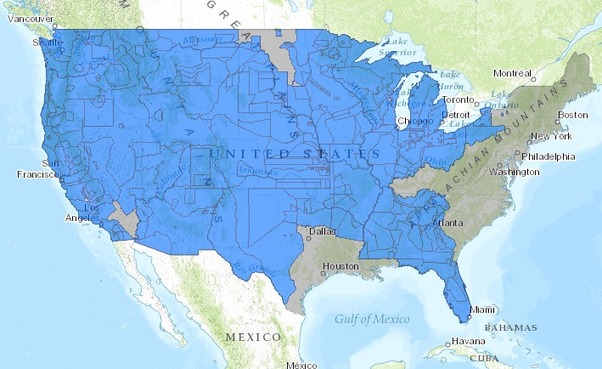
The Invasion of America

This interactive map, produced by University of Georgia historian Claudio Saunt to accompany his new book West of the Revolution: An Uncommon History of 1776, offers a time-lapse vision of the transfer of Indian land between 1776 and 1887. As blue “Indian homelands” disappear, small red areas appear, indicating the establishment of reservations (above is a static image of the map; visit the map’s page to play with its features).

Source: www.slate.com

In the past I’ve shared maps that show the historic expansion of the United States–a temporal and spatial visualization of Manifest Destiny.  The difference with this interactive is that the narrative focuses on the declining territory controlled by Native Americans instead of the growth of the United States.  That may seem a minor detail, but how history is told shapes our perception of events, identities and places.


Tags: USA, historicalmapping, visualization

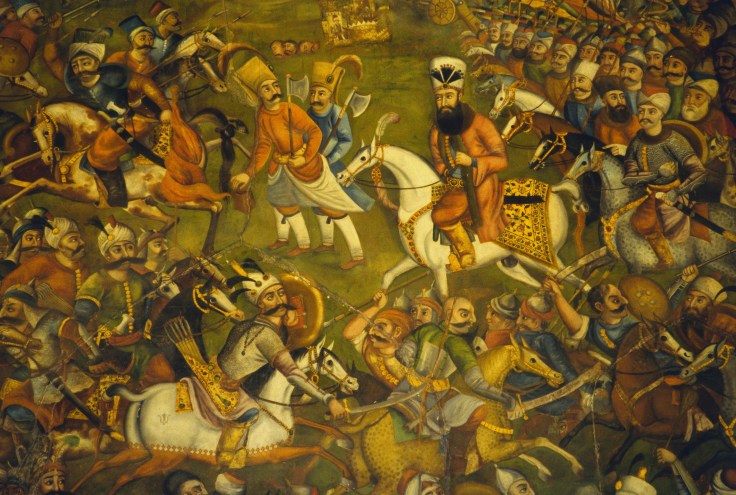
The Origins Of The Shiite-Sunni Split

The division between Islam’s Shiite minority and the Sunni majority is deepening across the Middle East. The split occurred soon after the death of the Prophet Muhammad, nearly 1,400 years ago.

Source: www.npr.org

The ghosts of religious wars past are rattling in Iraq; The geography of the Sunni-Shiite division is incredibly important for a good understanding of world regional geography as well as modern geopolitics. This NPR podcast examines the  historical and religious aspects of this split to then analyze the political and cultural implications in the Middle East today.  


Tags: MiddleEast, Islamreligionhistorical, culturepodcast.

shia-sunni-split2_vert-c54281df26243133666cc54f16e76b6f72cb468f-s3-c85


Create a free website or blog at WordPress.com.

Up ↑