Search

GEOGRAPHY EDUCATION

Supporting geography educators everywhere with current digital resources.

Tag

Iran

Chokepoints

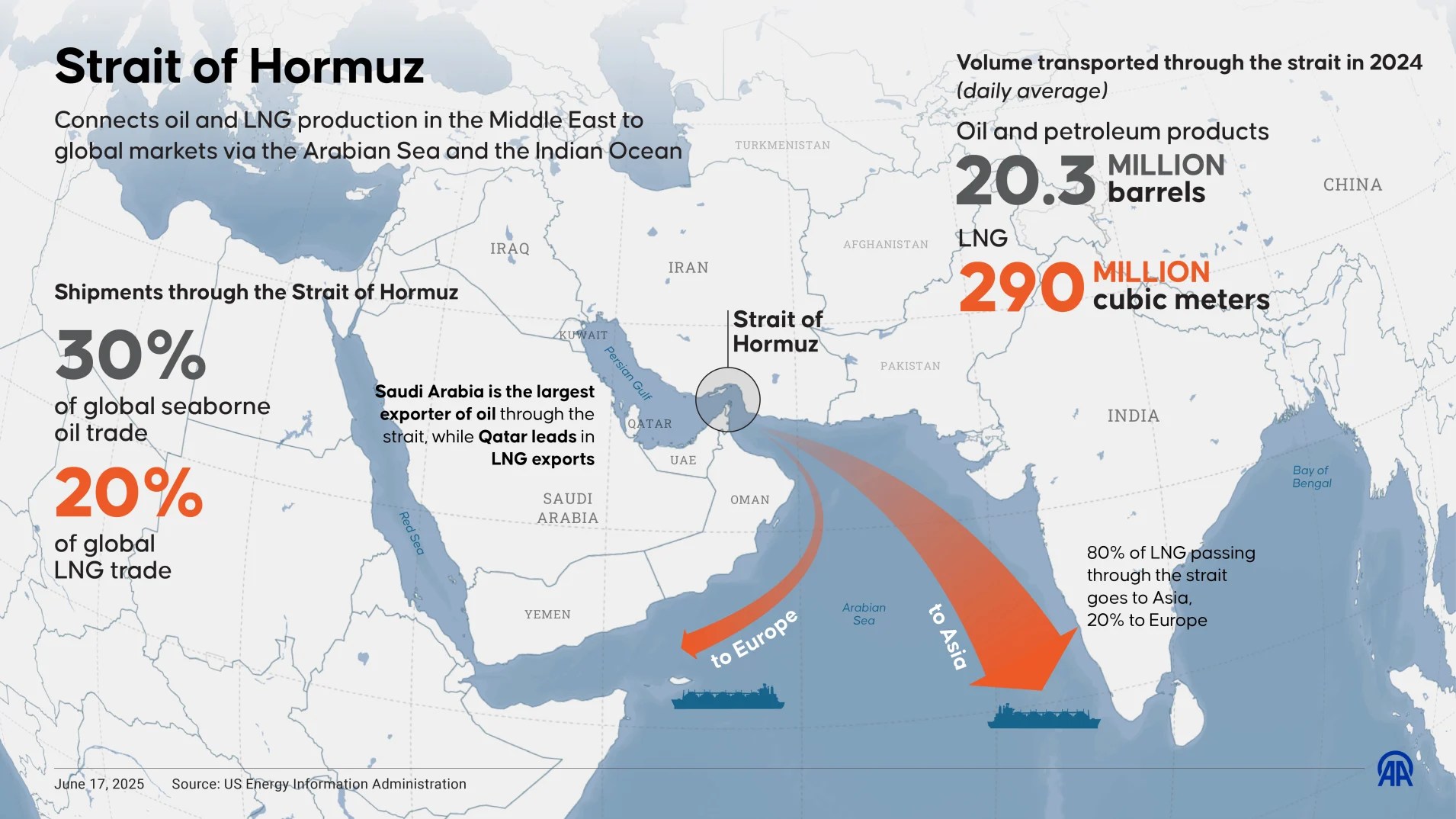
Chokepoints are to the global economy as referees are to a sporting event…when things are running smoothly you don’t notice a thing, but when they are the topic of conversation, you know there are some problems. In 2026, chokepoints became a far more relevant geographic constraint on global trade than we’d prefer, because the Persian Gulf is at the center of discussion for geopolitics and economics. People I’d never expect start talking to me about the Kharg Island with opinions about an island that they didn’t know existed one month ago. Chokepoints aren’t a problem…until you start choking. Below are some videos to give good context, one about all the chokepoints around the world, and the second focusing on the Straits of Hormuz (not current events, but geographic contraints).

SOURCE: Youtube
SOURCE: Youtube

TAGS: Iran, political, chokepoints, transportation, globalization.
War at Different Scales

SOURCE: RealLifeLore on YouTube

A geographic concept that becomes incredibly important to understanding during war or any armed conflict is the concept of scale. The same issue looks quite different when you see the issue primarily through a local lens, national lens, regional lens, or a global lens. Elements of a war operate of all of these scales and jump scales.

Let’s first take the example of the Syrian Civil War as a template for seeing war operate on various scales. The Syrian Civil War began with the regional spark of the Arab Spring, but it took a different form in Syria because of the distinct national geographic characteristics. The urban warfare in cities like Aleppo and Damascus were intensely local, but regional powers like Saudi Arabia and Iran were taking sides that favored their particular geopolitical objectives. Then global powers like the United States, Russia, and China were also involved as this local war, with regional impacts, started to have global ramifications.

Given that a war operates on many scales, a geographic analysis of any conflict will require us to consider so many thematic factors such as the historical, political, economic, cultural, demographic, and environmental context. Even after considering all that, we’ll need to look at those issues at a variety of scales to understand the full complexity of the situation. Actions that might not make sense at one scale often have a logic that is understandable at a different scale.

TAGS: Middle East, Iran, political, war.

Changes in Iran

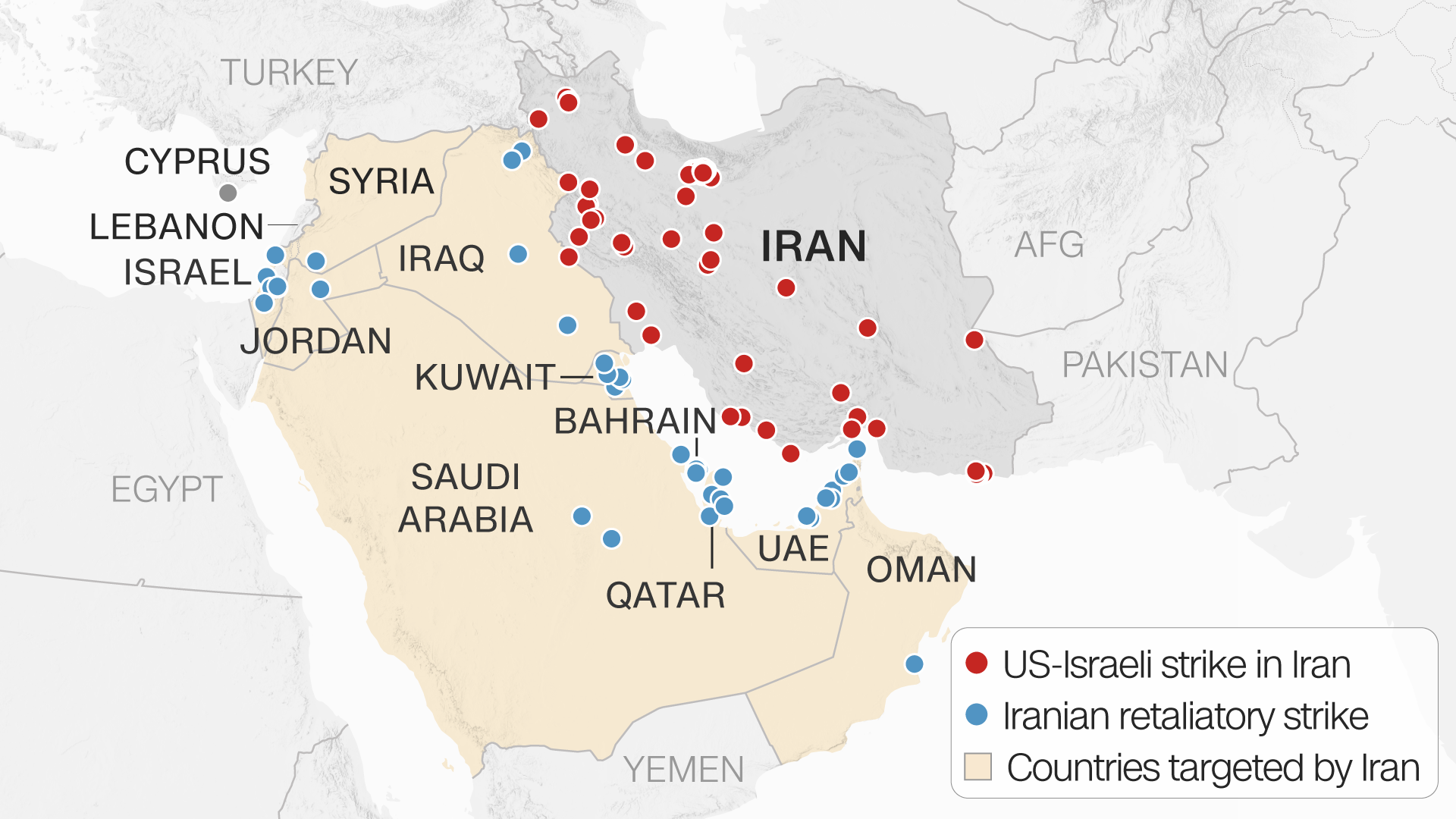
Map showing the countries bombed by Iran in the days after the death of Khamenei. SOURCE: CNN

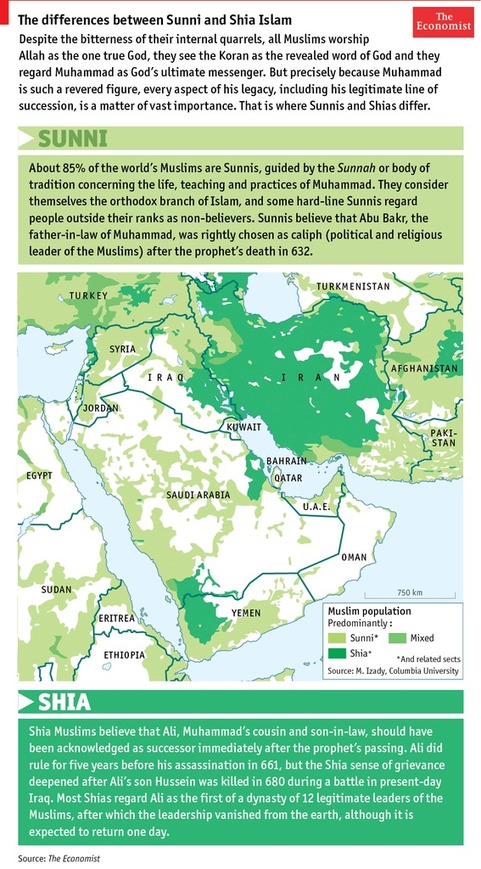
In writing this with the assumption that you’ve all seen the headlines about the US/Israeli strikes on Iran that led to the death of Iran’s Supreme Leader, Ayatollah Khamenei. Post of my students are currently asking “now what?” Things are still murky as I’m writing this, but the news often will make no sense without the regional geographic context. Understanding the Sunni/Shia divide is vital to understanding why Iran, after being attacked, bombed at least a dozen countries including many other Muslim countries. They are expending their weapons without an ability to replenish their supplies and facing. They’ve threatened to attack any ship going through the Straits of Hormuz, and which doesn’t mean much if we don’t understand what a choke point is, and why their are economic vital, and geopolitically strategic. Fellow Gulf countries like Kuwait, Bahrain, Qatar, and Saudi Arabia are seeing this as a closure as a maritime crisis that will profoundly economically damage them.

The economic and political importance of a choke point is highlighted in a crisis that closes it. SOURCE: CNBC

Nine U.S. bases in the Middle East have been bombed in drone attacks and while it is hard to assess in “the fog of war,” satellite imagery shows us the extent of the damage. Of course this has many domestic ramifications in the United States that are significant, but as a geographic analysis of this situation pulls the focus more to Middle Eastern impacts, starting with the question,
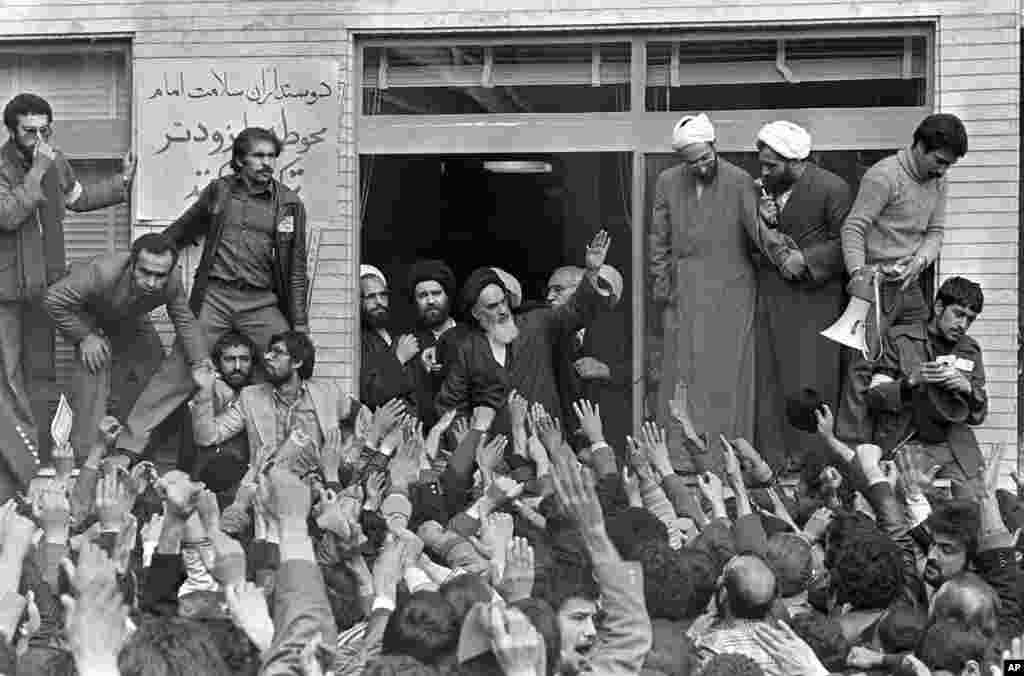
“who will be in charge of Iran two months from now?” There are many possibilities ranging from the mullahs staying in charge, to the son of the Shah (Rezi Pahlavi) being installed in the future. Prior to the 1979 Islamic Revolution that installed the Ruhollah Khomeini. The current regime has been the largest state sponsor of terror and has been the greatest source of regional destabilization. They’ve funded Hamas, Hezbollah, Islamic Jihad, the Houthis, and various other Shi’ite militia groups in Iraq, Syria, and elsewhere.

The ABC video here is a good “need to know” primer for March 4, 2026…but the details will fade in time.

The news of the next few month will shape the coming decades and the possibilities are still wide open. The Caspian Report has produced good geopolitical analysis over the years, so this is their latest video (below)

TAGS: Middle East, Iran, political, war.

How to Recapture the Muslim World’s Lost Hope

1979
Understanding the events of 1979 is crucial for those trying to figure out a better future for today’s Middle East.

What happened to us? The question haunts us in the Arab and Muslim world. We repeat it like a mantra. You will hear it from Iran to Syria, from Saudi Arabia to Pakistan, and in my own country, Lebanon. For us, the past is a different country, one not mired in the horrors of sectarian killings. It is a more vibrant place, without the crushing intolerance of religious zealots and seemingly endless, amorphous wars. Though the past had coups and wars too, they were contained in time and space, and the future still held much promise. What happened to us? The question may not occur to those too young to remember a different world, whose parents did not tell them of a youth spent reciting poetry in Peshawar, debating Marxism in the bars of Beirut, or riding bicycles on the banks of the Tigris in Baghdad. The question may surprise those in the West who assume that the extremism and bloodletting of today have always been the norm.” SOURCE: The Atlantic

This opinion piece is a somewhat controversial, but that is part of its value.  The core of the author’s thesis is that to understand the modern Middle East, especially if one is searching for a way to create a more democratic Middle East, we must look to the past to see how we got there.  1979 is seen here as the pivotal year that changed the trajectory of the Middle East, in large part because of the Islamic Revolution in Iran, but for many other region-wide changes.  A nice pairing would be to also read this discussion from the NY Times about the rise of MBS as the key prince in Saudi Arabia, looking to reform society and reform movements in Saudi Arabia while crushing his opponents.  Both are articles are book excerpts.

Questions to Ponder: What were the big shifts that occurred in 1979?  What are things that you think that the author gets correct about their historical analysis of the Middle East? What are some positions where you disagree with the author?

GeoEd Tags: Middle East, political, Iran, Saudi Arabia.

Ten Ways on How Not To Think About the Iran/Saudi Conflict

“Sometimes when a conflict involves Muslims, Islam may not be the best category for understanding it. Omid Safi with a reflection on the current crisis between Iran and Saudi Arabia, and why framing it as religion is not the most helpful framework.”


In the last few days, virtually every news outlet has featured a series of stories on the rising tensions between Iran and Saudi Arabia. The conflict by now is well-known: Saudi Arabia executed 47 people, including Shi‘i cleric Nimr al-Nimr. While both Iran and Saudi Arabia are among the worst global executioners of dissidents, the sheer size of these executions was rare even by their gruesome standards. Iran retaliated through bombastic rhetoric, stating, “God’s hand of retaliation will grip the neck of Saudi politicians.” The two countries have broken off diplomatic relations, a tension that has rippled across the region.


TagsSaudi Arabia, political, conflict, Iran, Middle East.

Source: www.onbeing.org

This is a good reminder that the conflict between Saudi Arabia and Iran is not just a Persian/Arab, Sunni/Shiite issue.  This isn’t just some resurgence of an ancient battle but there are many modern geopolitical issues including oil and regional rivalries.

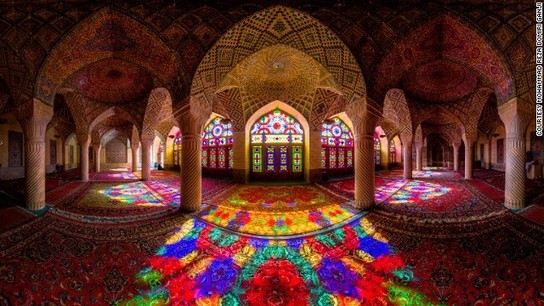
Incredible images capture dazzling symmetry of Iran’s mosques

“Self-taught Iranian photographer gains rare access to shoot religious buildings as they’ve never been seen.  It’s a side of Iran the rest of the world doesn’t normally get to see — the kaleidoscopically brilliant interiors of the country’s intricately designed mosques.With beautiful mosaics and stained glass framed by powerful architecture, the buildings are astounding.”


Tagsreligion, culture, IslamIran, Middle East.

Source: edition.cnn.com

Rap, Drugs, And Hijabs: 13 Things You Should Know About Young Iran

The future of Iran will be determined by the first post-Revolution generation. Here’s what they’re like.


Seth Dixon‘s insight:

Iran’s “Baby Boomer” generation was born in the wake of the 1979 Islamic Revolution took power in the country.  This young generation now is reaching the prime of their lives and has a great deal of power to control the destiny of their country. 

See on www.buzzfeed.com

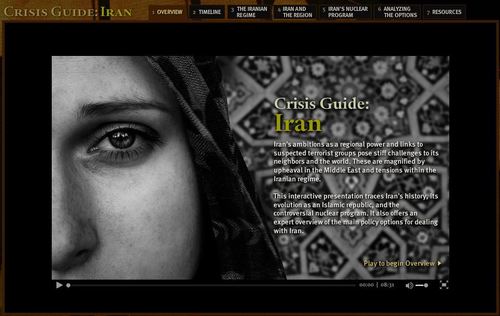
Crisis Guide: Iran

“Iran poses steep challenges to its Middle East neighbors and the world. Explore the country’s complex regime structure and controversial nuclear program, and watch experts debate the range of policy options.”


Seth Dixon, Ph.D.‘s insight:

Iran is in the middle of one of the most important geopolitical regions. One the bordered with Iraq and the Persian Gulf, Iran is stratgeically positioned to have considerable control over the world’s most important waterway for oil shipping and trade, the Strait of Hormuz.


Given it’s context, Iran is a country that students should more about than the three main facts that that most Americans are already aware of (1-Iran has an Islamic-based government, 2-an emerging nuclear program and 3-a ton of oil).  This interactive feature is a good starting point with great videos, timelines, maps, articles that assess the current situation in Iran. 


Tags: Iran, political, Middle East.

See on www.cfr.org

A Layman’s Geography Guide to the Most Confusing Region Of the World: Iran

Iran’s geography plays heavily in the foreign affairs issues it is a part of, and the policies it makes.


Seth Dixon, Ph.D.‘s insight:

“Iran sits smack in the middle of one of the most important geopolitical regions on Earth. Much of its western flank is bordered by either Iraq or the Persian Gulf, and it has considerable control over one of the world’s most important waterways for oil shipping and trade, the Strait of Hormuz.” 


Given it’s context, Iran is a country that students should know beyond the three main facts that that most Americans are aware of (Iran has an Islamic-based government, an emerging nuclear program and a ton of oil).  This article is a good starting point. 


Tags: Iran, political, Middle East.

See on www.policymic.com

Blog at WordPress.com.

Up ↑