Search

GEOGRAPHY EDUCATION

Supporting geography educators everywhere with current digital resources.

Tag

MiddleEast

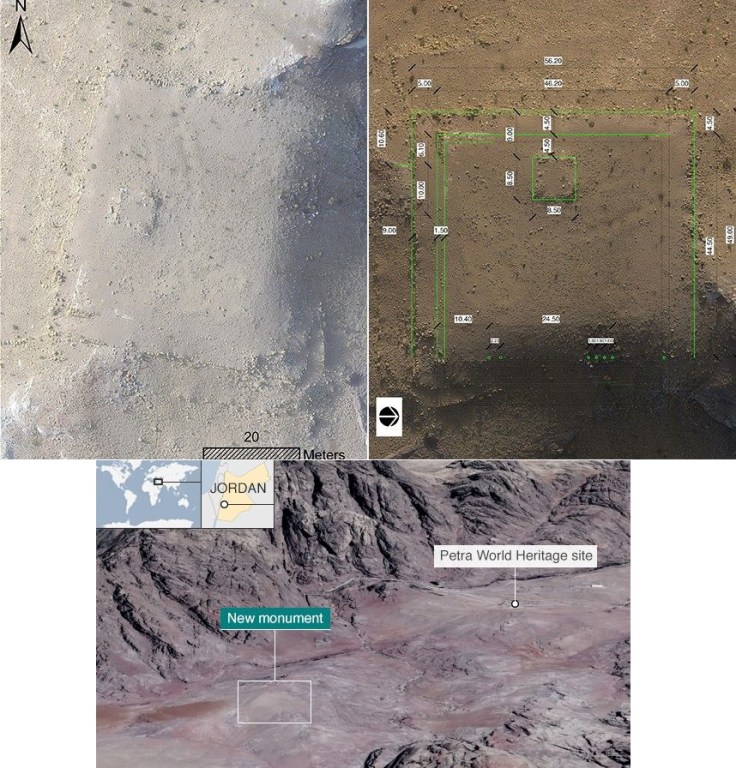
Petra, Jordan: Huge monument found ‘hiding in plain sight’

“Two archaeologists, who recently published their findings in the American Schools of Oriental Research, used Google Earth satellite images and drone photography to identify the outline of an enormous monument buried beneath sand and time at the UNESCO World Heritage site in Jordan.”  —Motherboard

Source: www.bbc.com

When in the Mexican state of Veracruz as a grad student, I saw a startling mountain covered by the dense tropical rain forest; this mountain had a consistent slope with hard angles.  I was awestruck to realize that it was an uncovered (but not undiscovered) pyramid and I wondered just how many archeological sites are waiting to be unearthed. 


Why is a geographer an important member of an interdisciplinary team? This discovery shows that spatial thinking, geographic tools, and a keen eye for usually patterns in unexpected places are critical for many disciplines and fields of research.


Tags: spatial, remote sensing, geospatial, MiddleEast, Jordan, googleunit 1 GeoPrinciples.  

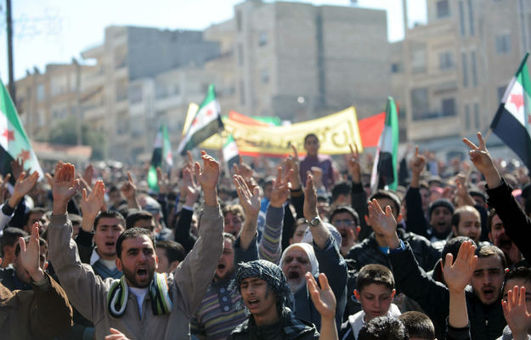
How Syria Ruined the Arab Spring

How Syria Ruined the Arab Spring « | Foreign Policy | the Global Magazine of News and Ideas

Source: foreignpolicy.com

Unraveling the situation on the ground in Syria is much like opening a Russian nesting doll, it’s a battle, inside of a battle, inside of a battle. A complex series of local, regional, and global rivalries all playing out on the battle grounds of Syria, turning the country in a wasteland. It’s created a nightmare for the millions of non-combatants forced to flee, and those stuck within the borders. What started as Syrian leader Bashar al-Assad cracking down on Arab spring protesters in early 2011, quickly escalated into a civil war. Regional rivals Iran, and Saudi Arabia then got involved sending aid to differing sides. Soon, as a result of the rise of ISIS, the west and Russia chose to intervene. Lost in the greater game of Geo-politics is the sad, slow death of the optimism that accompanied the Arab Spring. As Marc Lynch laments in ‘How Syria ruined the Arab Spring’, all of the momentum was lost and forgotten when Al-Assad resorted to force and Syria became a pawn in regional and global geopolitics.


Tagsop-ed, Syria, war, conflict, political, geopolitics, Middle East.

Challenges in Defining an Israeli-Palestinian Border

There are major hurdles in drawing borders between Israel and a future Palestine.

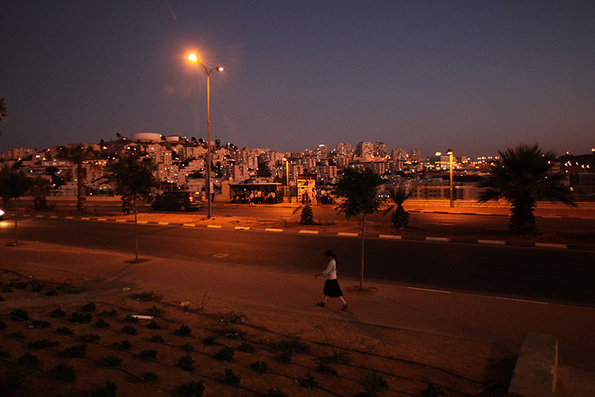
Israeli and Palestinian negotiators resumed peace talks in Washington in July for the first time in three years. While the talks are initially expected to focus on procedural issues, they are already beginning to take on a last-ditch quality. Explore some of the contentious issues that negotiators have faced in drawing borders between Israel and a future Palestinian state.

Source: www.nytimes.com

This five-part video report from the New York Times is from 2011, but still has some pertinent information, even if the situation has changed in some of the particulars.  These videos brings important voices from a variety of perspectives on the Israeli-Palestinian conflict; together they all  show how a complex cultural and political geography leads to many of the difficulties in creating a long-lasting peace.  The discipline of geography doesn’t simple study the peace process–it is a part of it.  The creation of borders and the cartographic process play a critical role in solving territorial issues.  Geography can be both the problem and the solution. 

Tags: Israel, borders, Palestine, territoriality, political, Middle East.

The tragedy of the Arabs

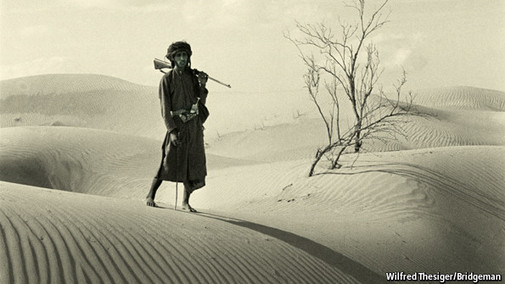
“A THOUSAND years ago, the great cities of Baghdad, Damascus and Cairo took turns to race ahead of the Western world. Islam and innovation were twins. The various Arab caliphates were dynamic superpowers—beacons of learning, tolerance and trade. Yet today the Arabs are in a wretched state. Even as Asia, Latin America and Africa advance, the Middle East is held back by despotism and convulsed by war.  

Pluralism, education, open markets: these were once Arab values and they could be so again. Today, as Sunnis and Shias tear out each others’ throats in Iraq and Syria and a former general settles onto his new throne in Egypt, they are tragically distant prospects. But for a people for whom so much has gone so wrong, such values still make up a vision of a better future.”

Source: www.economist.com

While the title of the article is more inflammatory than I would prefer, the analysis in this article from the Economist does a good job linking the cultural, economic and political struggles in the Middle East.

Tags: political, culture, economic, Islam, MiddleEast.

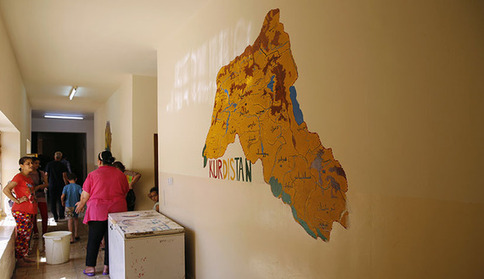
Would Turkey accept a Kurdish state?

As the likelihood of an independent Kurdish state on Turkey’s eastern border grows, Ankara is losing its historical resistance to the idea.

Developments in Iraq have left Turkey facing the prospect of an independent Kurdish state on its eastern border. Such an idea would have been abhorrent for Turkey a mere decade ago for fear that its existence would incite separation among its own restive Kurds. The standard Turkish narrative at the time was that an independent Kurdistan was a Western project aimed at destroying Turkey, an age-old ambition. Even the 2003 US invasion of Iraq was viewed in this context by many. The picture is no longer so black and white.

Source: www.al-monitor.com

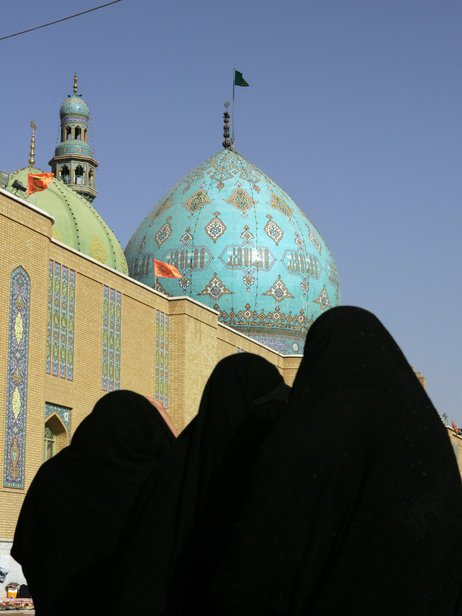
The Origins Of The Shiite-Sunni Split

The division between Islam’s Shiite minority and the Sunni majority is deepening across the Middle East. The split occurred soon after the death of the Prophet Muhammad, nearly 1,400 years ago.

Source: www.npr.org

The ghosts of religious wars past are rattling in Iraq; The geography of the Sunni-Shiite division is incredibly important for a good understanding of world regional geography as well as modern geopolitics. This NPR podcast examines the  historical and religious aspects of this split to then analyze the political and cultural implications in the Middle East today.  


Tags: MiddleEast, Islamreligionhistorical, culturepodcast.

shia-sunni-split2_vert-c54281df26243133666cc54f16e76b6f72cb468f-s3-c85


Iraq’s Current Devolution

“A radical fringe Islamic group names ISIS is fighting to establish a extremist Islamic state in Iraq and Syria…and beyond. They control eastern Syria, western Iraq, just took control of Iraq’s 2nd largest city of Mosul and are advancing on the capital Baghdad.  In this podcast, the professor John Boyer outlines just a few of the contributing factors to why this significant event is taking place, the geographic/historic background of the state, and the consequences for the future of the region.”

Source: www.youtube.com

If you haven’t yet discovered John Boyer, a.k.a. the Plaid Avenger,  I recommend exploring his site.  He has numerous resources for world regional geography and current global affairs.  His colorful persona is highly entertaining for college age-students as his class attracts over 3,000 students each semester (you can decide for yourself whether that personality works for you and your classroom).  This particular ‘plaidcast’ discussion focuses on Iraq’s current devolution and possible total collapse. 

Tags: SyriaIraq, MiddleEast, conflict, political, geopoliticsborders, colonialism, devolution.

Create a free website or blog at WordPress.com.

Up ↑