Search

GEOGRAPHY EDUCATION

Supporting geography educators everywhere with current digital resources.

Tag

migration

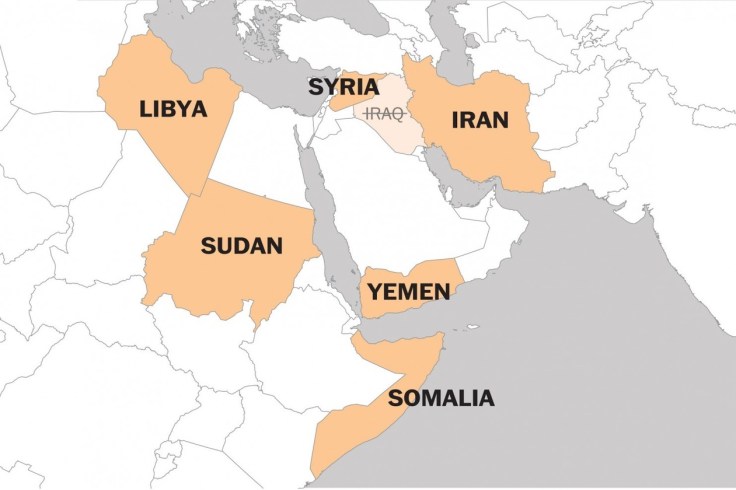
Revised executive order bans travelers from six Muslim-majority countries from getting new visas

The president is expected to sign his new, more limited rule Monday.

Source: www.washingtonpost.com

It’s hard to discuss this topic in detail without a partisan political views.  Underneath all of those opinions are geographic perspective about how the world works as well as geographical imaginations on how things should operate. 


Tags: migrationrefugees, war, political, terrorism, ISISMiddle East, conflict.

Why Did Americans Stop Moving?

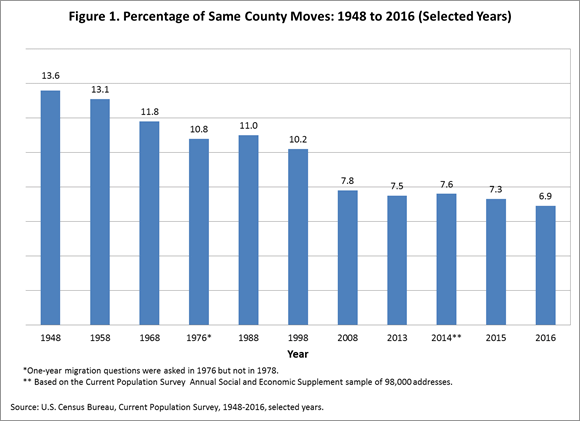
The Census reports that a record-low share of Americans are moving. A recent paper suggests government policies might be curbing mobility.

Source: www.citylab.com

In the past, when I’ve taught world regional geography, I’ve often discussed a major regional characteristic of North America is the high degree of internal mobility…that appears to be changing and it brings up more questions than answers.  


Questions to Ponder: Are there regions in the United States where people are less likely to move?  How does mobility impact economic, cultural, and political patterns in the United States? Why are less people moving now than before?  


Tags: mobilitymigration, USA, statistics.

Language: The cornerstone of national identity

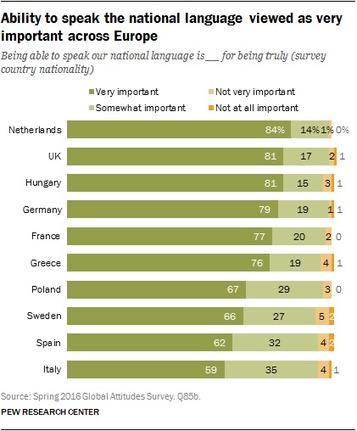
“Of the national identity attributes included in the Pew Research Center survey, language far and away is seen as the most critical to national identity. Majorities in each of the 14 countries polled say it is very important to speak the native language to be considered a true member of the nation.”

Source: www.pewglobal.org

Most Europeans see language as a strong prerequisite to be a part of the “national identity.”  Immigration has put a strain on cultural identities that are often very political. A majority of European agree on the link between language and national identity, but not surprisingly, the older Europeans and those on the political right feel more strongly about the importance of speaking the national language to truly ‘belong.’


Tags: language, culturepolitical, Europe, migration, ethnicity.

Minnesota becomes a gateway to Canada for rejected African migrants

More than 430 African migrants have arrived in Winnipeg since April, up from 70 three years ago. Most come by way of Minneapolis, sometimes after grueling treks across Latin America and stints in U.S. immigration detention.


A tangle of factors is fueling the surge: brisker traffic along an immigrant smuggling route out of East Africa, stepped-up deportations under the Obama administration and the lure of Canada’s gentler welcome. Advocates expect the Trump administration’s harder line on immigration will spur even more illegal crossings into Canada, where some nonprofits serving asylum seekers are already overwhelmed. Now Canadians worry smugglers are making fresh profits from asylum seekers and migrants take more risks to make the crossing.


Tags: migration, USACanada, borders, political.

Source: www.startribune.com

WORKSHEETS: Climate Migrants

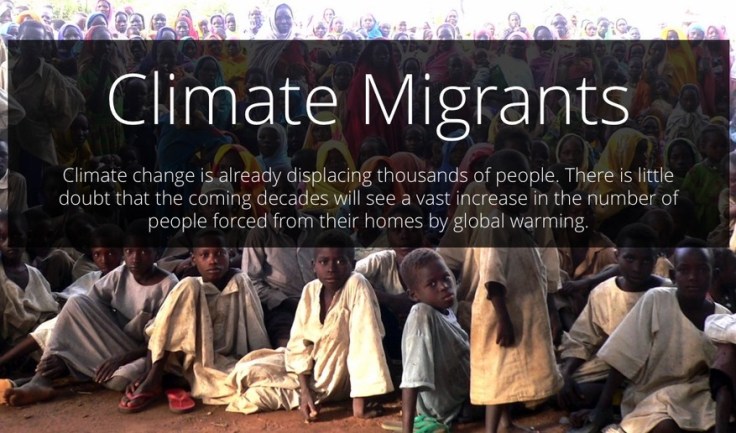
“The ESRI storymap on climate refugees does a phenomenal job sampling locations in the world that experience migration effects as a result of climate change. Attached is a guided worksheet that accompanies the ESRI Climate Migrant Storymap.”

Source: www.thehumanimprint.com

This StoryMap shows some key regions where migrants are fleeing some of the negative impacts of climate change and one APHG teacher has created a fabulous worksheet to guide students through this great resource.   


TagsAPHG, climate changemigrationrefugees, environment, coastalmappingESRIStoryMap, political ecology.

The silent minority

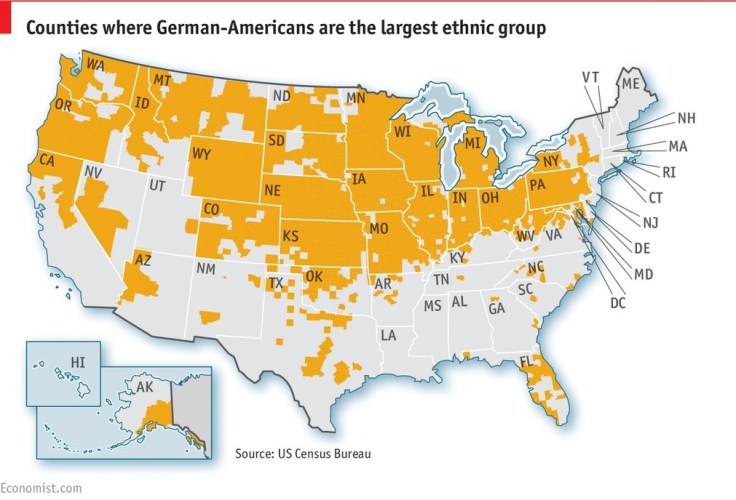
America’s largest ethnic group has assimilated so well that people barely notice it


German-Americans are America’s largest single ethnic group (if you divide Hispanics into Mexican-Americans, Cuban-Americans, etc). Yet despite their numbers, they are barely visible. During the first world war, parts of America grew hysterically anti-German. Many stopped speaking German and anglicized their names. The second world war saw less anti-German hysteria, but Hitler and the Holocaust gave German-Americans more reasons to hide their origins.


Tagsculturemigrationhistorical, ethnicityUSA.

Source: www.economist.com

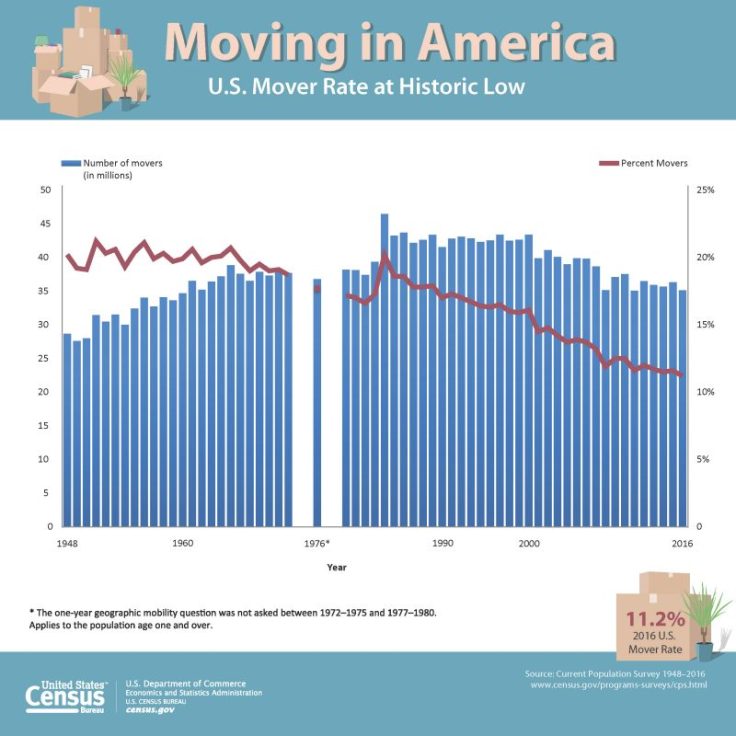
Americans Moving at Historically Low Rates

The percentage of Americans moving over a one-year period fell to an all time low in the United States to 11.2 percent in 2016.

Source: www.census.gov

In the past, when I’ve taught world regional geography, I’ve often discussed a major regional characteristic of North America is the high degree of internal mobility…that appears to be changing and it brings up more questions than answers.  


Questions to Ponder: Are there regions in the United States where people are less likely to move?  How does mobility impact economic, cultural, and political patterns in the United States? Why are less people moving now than before?  


Tags: mobilitymigration, USA, statistics.

Japan forces a harsh choice on children of migrant families

Born in Japan, Gursewak Singh considers himself Japanese. The government doesn’t. But it offers children like him a chance to stay – if their parents leave.


Gursewak’s parents, who are Sikhs, fled to Japan from India in the 1990s. For several years, they lived without visas under the radar of the authorities until they were put on a status known as “provisional release” in 2001. It means they can stay in Japan as long as their asylum application is under review.  While there were almost 14,000 asylum cases under review at the end of 2015, Japan accepted only 27 refugees last year. The year before that, the number was 11.

The low acceptance rate stands in stark contrast to Europe, which has seen hundreds of thousands of refugees arrive from countries such as Iraq, Syria and Eritrea. In the first half of the year, European countries ruled on 495,000 asylum applications, approving more than 293,000.


Tags: culture, Sikhdeclining populationpopulationmigrationrefugees, JapanEast Asia,             .

Source: www.reuters.com
Mapping the World’s Migration Flows

Visualizing the flow of the world’s migrants from country to country.


Based on data from the U.N. Population Division, this map shows the estimated net migration (inflows minus outflows) by origin and destination country between 2010 and 2015.

Blue circles = positive net migration (more inflows). Red circles = negative net migration (more outflows). Each yellow dot represents 1,000 people.

Hover over a circle to see that country’s total net migration between 2010 and 2015. Click a circle to view only the migration flows in and out of that country.

For more info about this map, read the article, All the World’s Immigration Visualized in 1 Map.


Tags: migration, USA, mapping, population, unit 2 population.

Source: metrocosm.com

Blog at WordPress.com.

Up ↑