Search

GEOGRAPHY EDUCATION

Supporting geography educators everywhere with current digital resources.

Tag

political

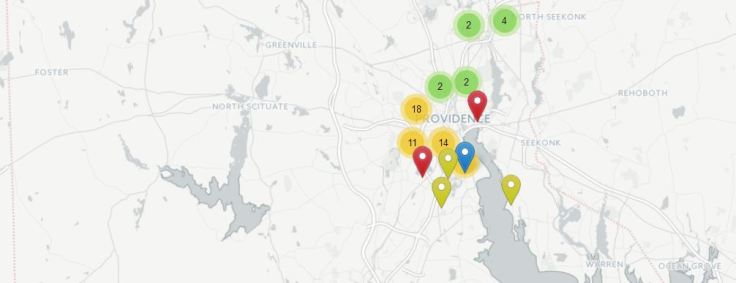
How Many People Have Been Shot in Your Neighborhood This Year? This Map Will Tell You.

“Thanks to a nonprofit, nonpartisan project known as the Gun Violence Archive, data on gun homicides and nonfatal shootings is now available well before the federal government releases its statistics. Those data include location information that makes it possible to plot those shootings on a map showing how many have taken place in your vicinity.”

Source: www.slate.com

Perspectives of gun rights and public safety are highly divided.  Part of those divisions are ideological, but there are also big differences between urban and rural America.  This map of the NRA’s “report card” on the legislators of Congress shows some pretty powerful spatial patterns.  This interactive map of people how have been shot this year shows a decidedly differnt pattern that the first.  


Questions to Ponder: How do most people feel about the second amendment where you live?  What about your local geography might influence those opinions? 

How Many People Have Been Shot in Your Neighborhood This Year? This Map Will Tell You.

“Thanks to a nonprofit, nonpartisan project known as the Gun Violence Archive, data on gun homicides and nonfatal shootings is now available well before the federal government releases its statistics. Those data include location information that makes it possible to plot those shootings on a map showing how many have taken place in your vicinity.”

Source: www.slate.com

Perspectives of gun rights and public safety are highly divided.  Part of those divisions are ideological, but there are also big differences between urban and rural America.  This map of the NRA’s “report card” on the legislators of Congress shows some pretty powerful spatial patterns.  This interactive map of people how have been shot this year shows a decidedly differnt pattern that the first.  


Questions to Ponder: How do most people feel about the second amendment where you live?  What about your local geography might influence those opinions? 

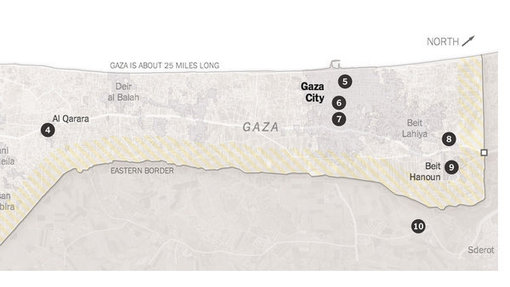
The Toll in Gaza and Israel, Day by Day

The daily tally of rocket attacks, airstrikes and deaths in the conflict between Israel and Hamas.

Source: www.nytimes.com

As the violent nature of the Israeli Palestinian conflict has escalated, this NY Times article monitors the major points of the last few weeks.  The possibility of ‘Peace in the Middle East’ feels so remote, and this Onion article parodies the difficulties of actually achieving this.  On a personal note, Chad Emmett taught the “Geography of the Middle East” course while I was at BYU and I’ve always appreciated his perspective; here are his thoughts on recent events.  


Tags: Israel, Palestine, conflict, political, borders.

Challenges in Defining an Israeli-Palestinian Border

There are major hurdles in drawing borders between Israel and a future Palestine.

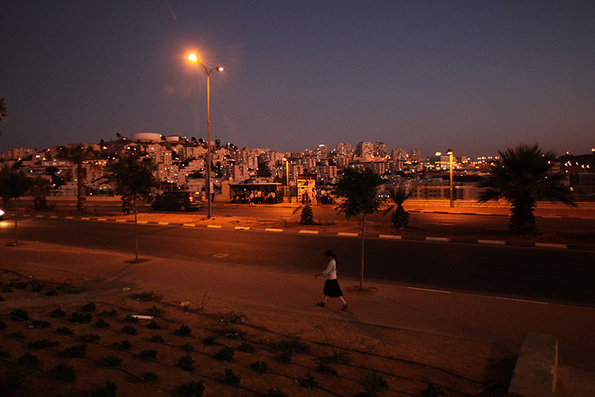
Israeli and Palestinian negotiators resumed peace talks in Washington in July for the first time in three years. While the talks are initially expected to focus on procedural issues, they are already beginning to take on a last-ditch quality. Explore some of the contentious issues that negotiators have faced in drawing borders between Israel and a future Palestinian state.

Source: www.nytimes.com

This five-part video report from the New York Times is from 2011, but still has some pertinent information, even if the situation has changed in some of the particulars.  These videos brings important voices from a variety of perspectives on the Israeli-Palestinian conflict; together they all  show how a complex cultural and political geography leads to many of the difficulties in creating a long-lasting peace.  The discipline of geography doesn’t simple study the peace process–it is a part of it.  The creation of borders and the cartographic process play a critical role in solving territorial issues.  Geography can be both the problem and the solution. 

Tags: Israel, borders, Palestine, territoriality, political, Middle East.

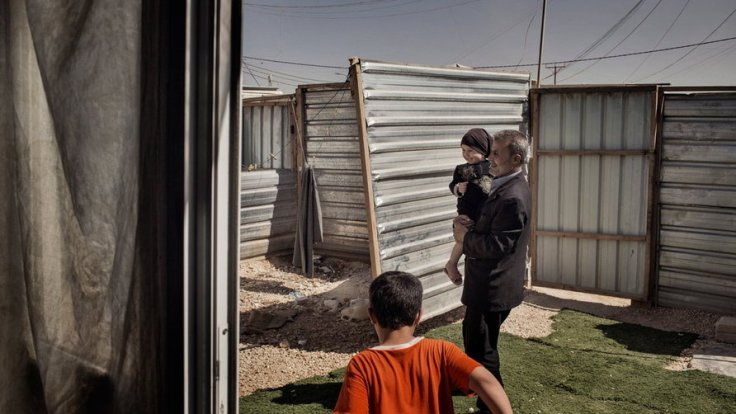
Refugee Camp for Syrians in Jordan Evolves as a Do-It-Yourself City

As the sprawling Zaatari camp evolves into an informal city — with an economy and even gentrification — aid workers say camps can be potential urban incubators that benefit host countries like Jordan.

Source: www.nytimes.com

This is an intriguing article that explores the difficulties of forced migrations that arise from civil war, but it also looks at city planning as refugee camps are established to make homes for the displaced.  These camps have become into de-facto cities. The maps, videos and photographs embedded in the article show the rapid development of these insta-cities which organically have evolved to fit the needs of incoming refugees.  Size not investing in permanent infrastructure has some serious social, sanitation and financial cost, there are some efforts to add structure to the chaos, to formalize the informal.  Truly this is a fascinating case study of in urban geography as we are increasingly living on what Mike Davis refers to as a “Planet of Slums.”  


Tags: refugees, migration, conflict, political, warsquatter, urban, planning, density, urbanism, unit 7 cities. 

Ethiopia’s Dam Problems

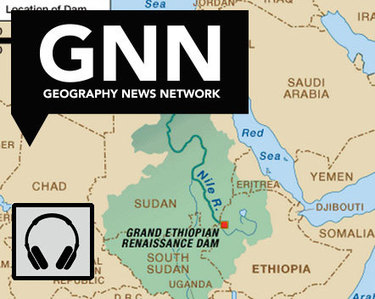
“Ethiopia is three years from completing a dam to control its headwaters, and while Egypt points to colonial-era treaties to claim the water and to stop the project, the question remains as to who own the Blue Nile.”

Source: maps101blog.com

This 7-minute Geography News Network podcast (written by Julie and Seth Dixon) touches on some key geographic concepts.  85% of the Nile’s water comes from the Blue Nile that originates in the Ethiopian highlands–it is the Blue Nile that Ethiopia has been working on damming since 2011.  The Grand Ethiopia Renaissance Dam (GERD) will be located  near the border with Sudan.  Egypt is adamantly opposed to Ethiopia’s plan and is actively lobbying the international community to stop construction on the dam, fearing their water supply with be threatened. 

Tags: Ethiopia, Africa, development. environment, water, energy, borders, political.

Chinese Uyghurs defy Ramadan ban

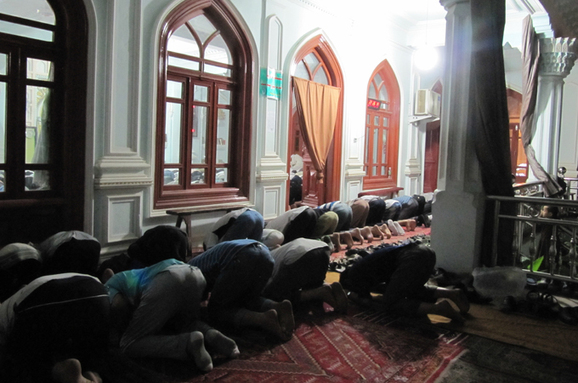
“The government’s attempt to clamp down on religious expression has backfired among Uyghurs.”

Source: www.aljazeera.com

China has used various means to eliminate minority groups’ cultural identity, and human rights groups argue that this ban on Ramadan is no different (children and government employees are banned from fasting, allegedly for health and safety concerns).  Ethnic Uyghurs speak a Turkic language are more culturally connected to Cental Asia than East Asia.  Predominantly Muslim, the Uyghurs are defying some of the more controversial laws that they feel single them out.   


Tagsethnicityconflict, politicalreligion, China.

Where Do Borders Need to Be Redrawn? – Room for Debate

What parts of the world should rethink their maps? Why and how?

Source: www.nytimes.com

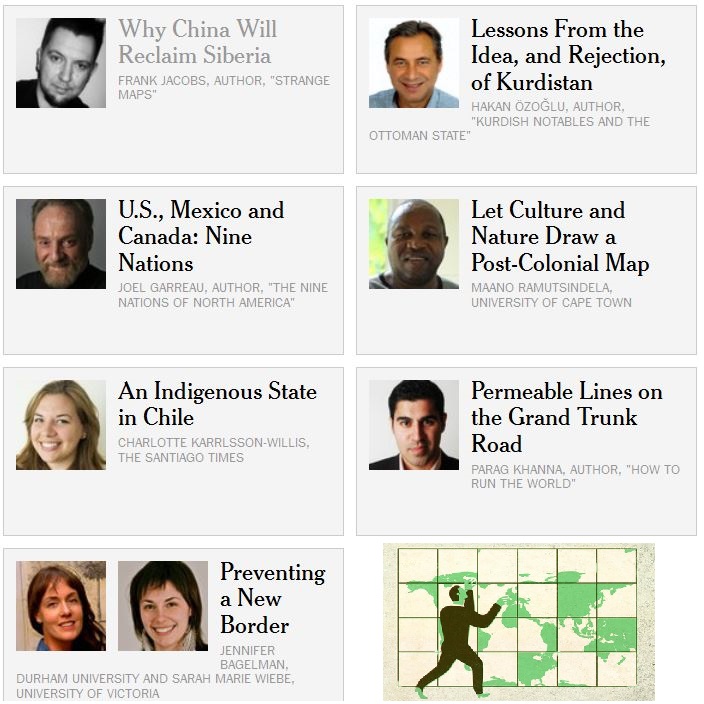
Maps are always changing as a new nation gets added and old lines cease to make sense. Territory is claimed and reclaimed.  This series of seven articles in the New York Times explores regional examples of how borders impacts places from a variety of scholarly perspectives.  Together, these article challenge student to reconsider the world map and to conceptualize conflicts within a spatial context.


Tags: bordersmapping, political, territoriality, sovereignty.

China publishes new map

China has published a new map of the entire country including the islands in the South China Sea (West Philippine Sea) in order to “better show” its territorial claim over the region.

Source: globalnation.inquirer.net

China is attempting to bolster its geopolitical claims through cartographic validation.  It as if to say, ‘it’s on a map, who can question that it is legitimately our territory?’  Why is a map such a powerful and convincing document?  Why is the Philippines upset by this map?  I think that explains this rival Filipino map as the Philippines and China engage in the cartographic version of dueling banjos.  (note the uage of the South China Sea or West Philippine Sea to refer to the same body of water) .  But this is more than just a map; it’s production has the potential to destabilize regional security.     

For more resources, the Choices Program has put together supplemental materials to investigate China on the world stage.

Tags: borderstoponyms, political, conflict, waterChina, East Asia.

Create a free website or blog at WordPress.com.

Up ↑