Search

GEOGRAPHY EDUCATION

Supporting geography educators everywhere with current digital resources.

Tag

political

Pro-Israeli perspective in UNHRC

Source: www.youtube.com

Admittedly, this is not a neutral perspective on the Israeli-Palestinian conflict, but that doesn’t mean it isn’t worth sharing if you properly contextualize the statements.  UN Watch is “a non-governmental organization based in Geneva whose mandate is to monitor the performance of the United Nations by the yardstick of its own Charter.”  UN Watch works to oppose what they see as chronic anti-Israeli bias in the UN.   


Tags: Israel, PalestineNGOs, political, Middle East.

Capital Jerusalem

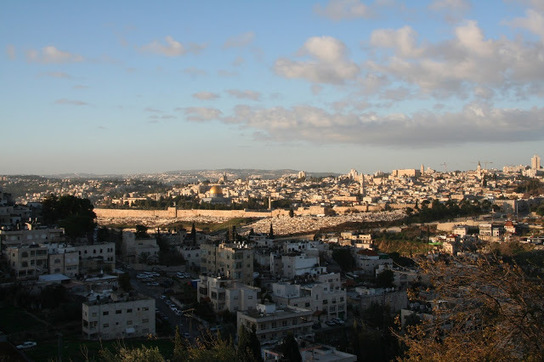
“Because Israel refused to recognize the U.N. plan for an internationalized Jerusalem and because of its annexation of occupied East Jerusalem in 1967, no country in the world has offered legal and diplomatic recognition of Jerusalem as the capital of Israel. Most states, however, have unofficially acknowledged Israel’s sovereignty and actual possession, without recognition of lawful title.”

Source: beitemmett.blogspot.com

That is, until now.  The United States is planning to move it’s embassy from Tel Aviv to Jerusalem, in a move that will have far more reaching implications than the relocation of just about any other embassy on Earth could have, given the geopolitical significance of Jerusalem to the Israeli-Palestinian conflict and the broader international ties.  Below are some resources to contextualize this shift: 


Questions to Ponder: How does this change the status quo at the local, national and international scales?  What might be some of the consequences of this move?  What would you recommend and why?  


Tags: Israel, Palestine, borders, political, Middle East, geopolitics, historical.

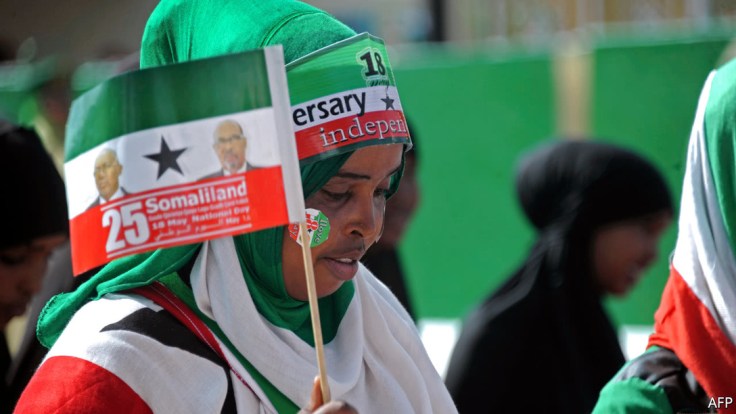
Why Somaliland is east Africa’s strongest democracy

“Though unrecognized by the international community, the country benefits from a strong social contract between government and citizens.”


Drop a pin on a map of eastern Africa and chances are it will not land on a healthy democracy. Somalia and South Sudan are failed states. Sudan is a dictatorship, as are the police states of Eritrea, Rwanda and Ethiopia. In this context tiny Somaliland stands out. Somaliland was a British protectorate, before it merged with Italian Somalia in 1960 to form a unified Somalia. It broke away in 1991, and now has a strong sense of national identity. It was one of the few entities carved up by European colonists that actually made some sense. Somaliland is more socially homogeneous than Somalia or indeed most other African states (and greater homogeneity tends to mean higher levels of trust between citizens). For fear of encouraging other separatist movements in the region, the international community, following the African Union, has never obliged [to recognize Somaliland]. Nation-building on a shoestring helped keep Somaliland’s politicians relatively accountable, and helped to keep the delicate balance between clans.


Tags: devolutionpolitical, states, sovereignty, autonomy, unit 4 political, Somalia, Africa.

Source: www.economist.com

Divided island: How Haiti and the DR became two worlds

Haiti and the Dominican Republic share a border, and an island. But the two countries are very different today: the Dominican Republic enjoys higher quality of life for many factors than Haiti. I went to this island and visited both countries, to try and understand when and how their paths diverged.

Source: www.youtube.com

This video is an exciting debut for the new series “Vox borders.”  By just about every development metric available, the Dominican Republic is doing better than Haiti, the only bordering country on the Caribbean island of Hispaniola with the DR.   


Questions to Ponder: How does the border impact both countries?  How has sharing one island with different colonial legacies shaped migrational push and pull factors?


Tags: Haiti, Dominican Republic, video, poverty, development, economic, labor, migration, political, borders.

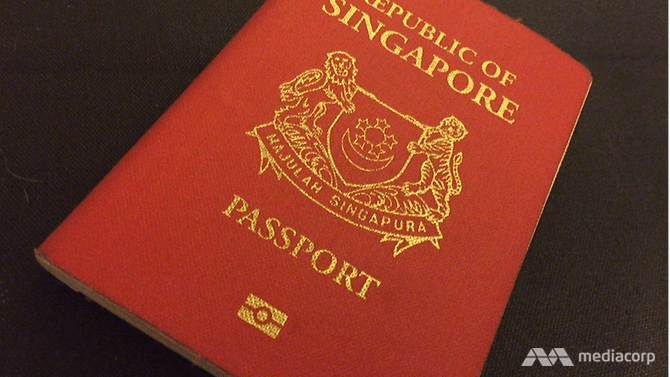
Singapore passport becomes ‘most powerful’ in the world

Historically, the top ten most powerful passports in the world were mostly European, with Germany having the lead for the past two years. Since early 2017, Singapore has tied for number one position with Germany. For the first time ever an Asian country has the most powerful passport in the world. It is a testament of Singapore’s inclusive diplomatic relations and effective foreign policy.”


Tag: SingaporeSouthEastAsia, politicaldevelopment.

Source: www.channelnewsasia.com

Who else is high on the list of the most powerful passports in the world?  This tier system is based on the number of visa-free entries available to the holder of the visa:

1. Singapore

2. Germany

3. Sweden

3. South Korea

4. Denmark

4. Finland

4. Italy

4. France

4. Spain

4. Norway

4. Japan

4. United Kingdom

5. Luxembourg

5. Switzerland

5. Netherlands

5. Belgium

5. Austria

5. Poland

6. Malaysia

6. Ireland

6. USA (that’s tied for 19th for you competitive sorts)

6. Canada

7. Greece

7. New Zealand

7. Australia

When Rich Places Want to Secede

At the core of Catalonia’s separatist movement is an argument that a country’s better-off regions shouldn’t have to pay to cover their less productive counterparts.


As a relatively rich region with its own independence movement, Catalonia’s not alone: A small set of secession movements in historically productive areas, most visibly in Europe, say they’d be better off on their own, and more are pointing to Catalonia’s example to regain momentum.

The common wisdom used to be that separatist movements mostly came from weak minorities that rallied around racial or ethnic injustices. “With globalization, that changed significantly,” said Andrés Rodríguez-Pose, a professor of economic geography at the London School of Economics (LSE). “Virtually everywhere in the world,” movements have swapped out the “identity card” for the “economic card.”

Inequality between regions is baked into the entire concept of modern nationhood—if subsidizing poorer parts of a country were motivation enough to split off, every region would have done it by now. Plus, there are economic perks to staying together: Trade is easier across internal borders, and diversified regions diffuse risk.


Tags: Cataloniaeconomic, political, devolution, autonomyEurope.

Source: www.theatlantic.com

Left For Dead: Myanmar’s Muslim Minority

In recent years, democratic reforms have swept through Myanmar, a country that for decades was ruled by a military junta. As the reforms took hold, however, things were growing progressively worse for the Rohingya, a heavily persecuted ethnic Muslim minority concentrated in the country’s western state of Rakhine. The 2012 gang rape and murder of a Buddhist woman by three Muslim men ignited violent riots in which hundreds were killed as Rakhine Buddhists and Rohingya attacked each other. In the following months, tens of thousands of Rohingya were rounded up and forced to live in squalid camps; Human Rights Watch deemed the attacks crimes against humanity that amounted to ethnic cleansing of the Rohingya. Thousands of Rohingya have since attempted to leave the country, fueling the region’s intricate and brutal human trafficking network.


Tags: Rohingyagenocide, migration, politicalconflict, refugeesBurma, Southeast Asia.

Source: www.youtube.com

State Borders

Source: xkcd.com

I imagine most geographers have wanted to tinker with state or international borders to ‘fix them’ in one way or another…but if any ‘correction’ were to be made, whose criteria would be used?  Which people in which regions would be upset by the changes?  Historical inertia is a power force in maintaining the status quo. When France was preparing to consolidate it’s administrative regions, 68% recognized that consolidating regional administration would be more efficient but 77% didn’t want it to impact their own local region.


Tags: XKCD, art, mapping, cartography, borders, political.

Teaching About the Rohingya Crisis in Myanmar

“Why are hundreds of thousands of Rohingya refugees fleeing Myanmar? Who are the Rohingya and why are they being persecuted? What responsibility does the world have to end what the United Nations is calling ‘ethnic cleansing’ and many are labeling ‘genocide’? In this lesson, students will first learn about the crisis unfolding in Myanmar using Times reporting, videos, podcasts and photography. Then, we suggest a variety of activities for going deeper, such as tackling universal questions about national identity and minority rights, considering the responsibility of the world community, and going inside the squalid refugee camps sprawling across the border in Bangladesh.”

Source: www.nytimes.com

This issue is not as firmly fixed in our minds as it should be.  So much of our media’s attention is on less substantial issues, that when they compile resources for teachers on a subject like this, it deserves mentioning.  Even if you have already read your 10 free monthly articles from the NY Times, you can still watch the video embedded in the lesson.  Attached is a worksheet that I will be using in my classes (feel free to adapt and use).

Tags: Rohingyagenocide, migration, politicalconflict, refugeesBurma, Southeast Asia.


Create a free website or blog at WordPress.com.

Up ↑