Search

GEOGRAPHY EDUCATION

Supporting geography educators everywhere with current digital resources.

Tag

political

When Rich Places Want to Secede

At the core of Catalonia’s separatist movement is an argument that a country’s better-off regions shouldn’t have to pay to cover their less productive counterparts.


As a relatively rich region with its own independence movement, Catalonia’s not alone: A small set of secession movements in historically productive areas, most visibly in Europe, say they’d be better off on their own, and more are pointing to Catalonia’s example to regain momentum.

The common wisdom used to be that separatist movements mostly came from weak minorities that rallied around racial or ethnic injustices. “With globalization, that changed significantly,” said Andrés Rodríguez-Pose, a professor of economic geography at the London School of Economics (LSE). “Virtually everywhere in the world,” movements have swapped out the “identity card” for the “economic card.”

Inequality between regions is baked into the entire concept of modern nationhood—if subsidizing poorer parts of a country were motivation enough to split off, every region would have done it by now. Plus, there are economic perks to staying together: Trade is easier across internal borders, and diversified regions diffuse risk.


Tags: Cataloniaeconomic, political, devolution, autonomyEurope.

Source: www.theatlantic.com
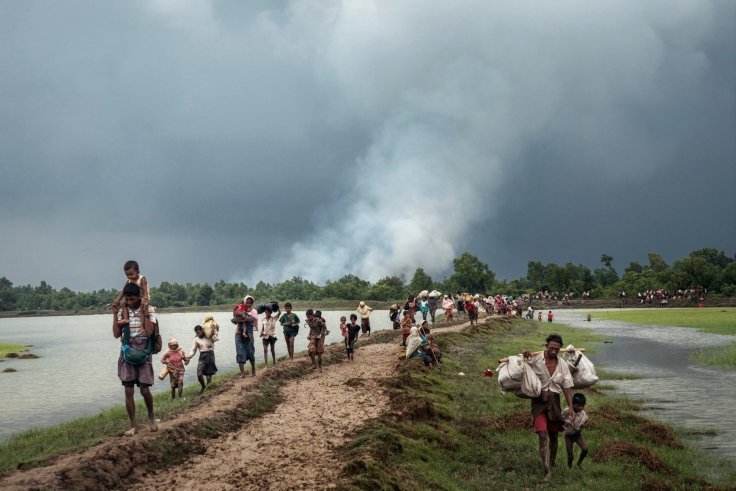
Left For Dead: Myanmar’s Muslim Minority

In recent years, democratic reforms have swept through Myanmar, a country that for decades was ruled by a military junta. As the reforms took hold, however, things were growing progressively worse for the Rohingya, a heavily persecuted ethnic Muslim minority concentrated in the country’s western state of Rakhine. The 2012 gang rape and murder of a Buddhist woman by three Muslim men ignited violent riots in which hundreds were killed as Rakhine Buddhists and Rohingya attacked each other. In the following months, tens of thousands of Rohingya were rounded up and forced to live in squalid camps; Human Rights Watch deemed the attacks crimes against humanity that amounted to ethnic cleansing of the Rohingya. Thousands of Rohingya have since attempted to leave the country, fueling the region’s intricate and brutal human trafficking network.


Tags: Rohingyagenocide, migration, politicalconflict, refugeesBurma, Southeast Asia.

Source: www.youtube.com

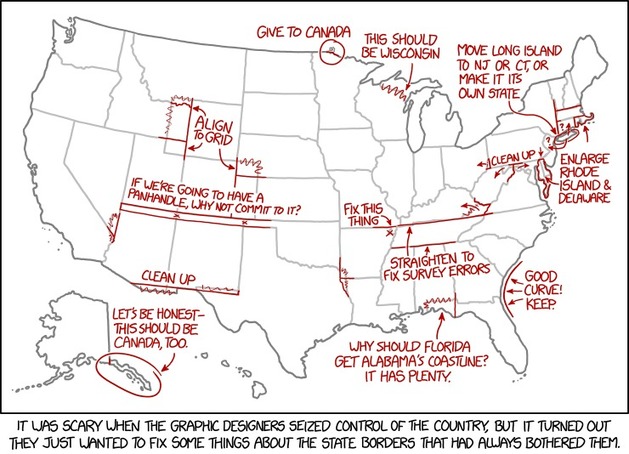
State Borders

Source: xkcd.com

I imagine most geographers have wanted to tinker with state or international borders to ‘fix them’ in one way or another…but if any ‘correction’ were to be made, whose criteria would be used?  Which people in which regions would be upset by the changes?  Historical inertia is a power force in maintaining the status quo. When France was preparing to consolidate it’s administrative regions, 68% recognized that consolidating regional administration would be more efficient but 77% didn’t want it to impact their own local region.


Tags: XKCD, art, mapping, cartography, borders, political.

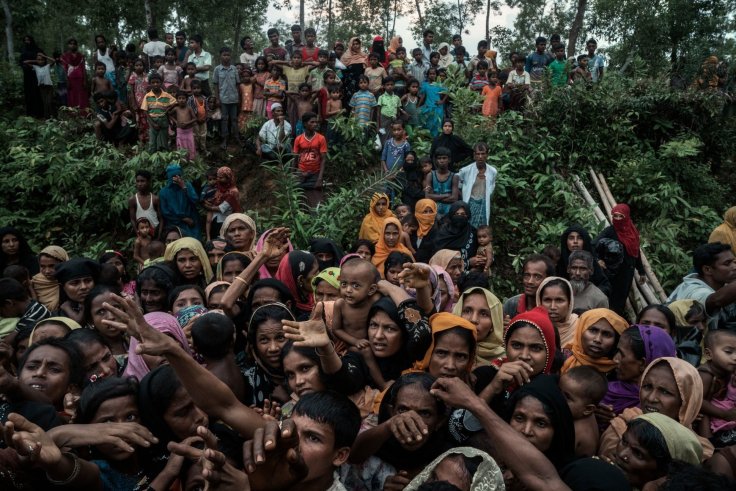
Teaching About the Rohingya Crisis in Myanmar

“Why are hundreds of thousands of Rohingya refugees fleeing Myanmar? Who are the Rohingya and why are they being persecuted? What responsibility does the world have to end what the United Nations is calling ‘ethnic cleansing’ and many are labeling ‘genocide’? In this lesson, students will first learn about the crisis unfolding in Myanmar using Times reporting, videos, podcasts and photography. Then, we suggest a variety of activities for going deeper, such as tackling universal questions about national identity and minority rights, considering the responsibility of the world community, and going inside the squalid refugee camps sprawling across the border in Bangladesh.”

Source: www.nytimes.com

This issue is not as firmly fixed in our minds as it should be.  So much of our media’s attention is on less substantial issues, that when they compile resources for teachers on a subject like this, it deserves mentioning.  Even if you have already read your 10 free monthly articles from the NY Times, you can still watch the video embedded in the lesson.  Attached is a worksheet that I will be using in my classes (feel free to adapt and use).

Tags: Rohingyagenocide, migration, politicalconflict, refugeesBurma, Southeast Asia.


Somalia: The Forgotten Story

Part I: The story of Somalia’s decline from stability to chaos and the problems facing its people at home and abroad.

Part II: The ongoing civil war has caused serious damage to Somalia’s infrastructure and economy. Thousands of Somalis have either left as economic migrants or fled as refugees. Within Somali, more than a million people are internally displaced.


Tags: devolutionpolitical, states, unit 4 politicalmigrationrefugees, Somalia, Africa.

Source: www.youtube.com

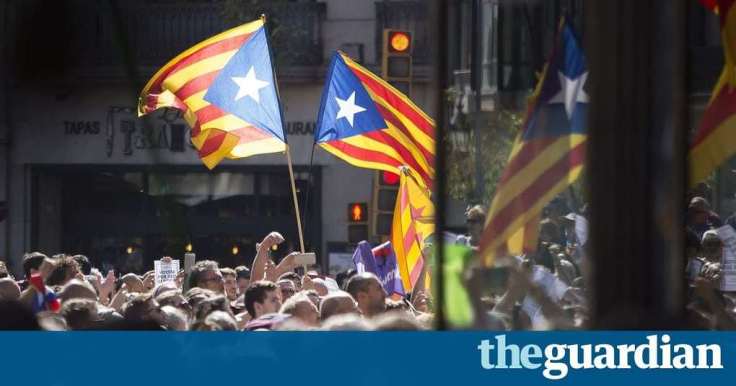
Spain crisis: ‘stop this radicalism and disobedience,’ PM tells Catalan leaders

“Spain’s prime minister has called on Catalan separatist leaders to end their ‘escalation’ as several thousand people took to the streets of Barcelona to protest at Madrid’s attempts to stop a banned referendum on independence. ‘Stop this escalation of radicalism and disobedience once and for all.’ Catalonia’s president earlier accused the Spanish government of suspending the region’s autonomy after police intensified efforts to stop a vote on independence that has sparked one of the worst political crises since Spain’s return to democracy four decades ago. Spanish Guardia Civil officers raided a dozen Catalan regional government offices and arrested 14 senior officials on Wednesday as part of an operation to stop the referendum from taking place on 1 October.”

Source: www.theguardian.com

If you are looking for an example of devolution today, this is it.  This situation has escalated as Spain and Catalonia’s governments cannot work together.  The referendum was (according to the Spanish government) outlawed but keep an eye on Catalonia over the next few weeks.

Tags: Catalonia, Spain, political, devolution, autonomyEurope.

The Rohingya in Myanmar: How Years of Strife Grew Into a Crisis

Life has long been fraught for a Muslim minority in mainly Buddhist Myanmar, but the recent “ethnic cleansing” has sent Rohingya fleeing en masse.

Source: www.nytimes.com

Many students have asked the question “Who are the Rohingya?” The Muslim minority group, concentrated near the Bangladeshi has a long history of marginalization. Its members lack full citizenship in Myanmar (Burma), and many in Myanmar deny that the Rohingya are a native ethnic group, claiming that they are recent Bengali immigrants. Now, fierce clashes between security forces and Rohingya militants left hundreds dead and entire villages torched to the ground. Hundreds of thousands of Rohingya have fled over the border into Bangladesh.


Tags: migration, politicalconflict, refugeesBurma, Southeast Asia.

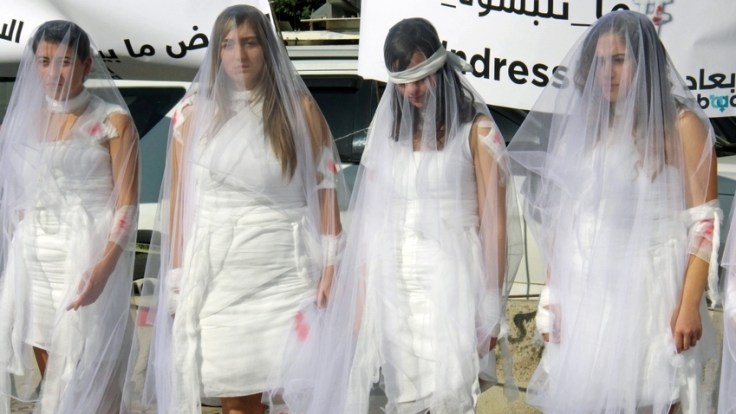
Jordanian parliament repeals rape law

“The Jordanian parliament voted on Tuesday to abolish a provision in the penal code that allows rapists to escape punishment if they marry their victims – a move that is being hailed as ‘historic’ by activists and locals. Article 308 permit[ed] pardoning rape perpetrators if they marry their victims and stay with them for at least three years.  The controversial provision has for decades divided Jordan between those who believe the law is necessary to protect women’s ‘honour’, and others who see it as a violation of basic human rights.”

Source: www.aljazeera.com

Cultural norms and political practices are so often intertwined that understanding local laws means that one has to understand the cultural context within which they were created, and in this case, the cultural processes that led to a political will to change them.  


Tagsculture, cultural norms, gender, MiddleEast, Jordan, political.

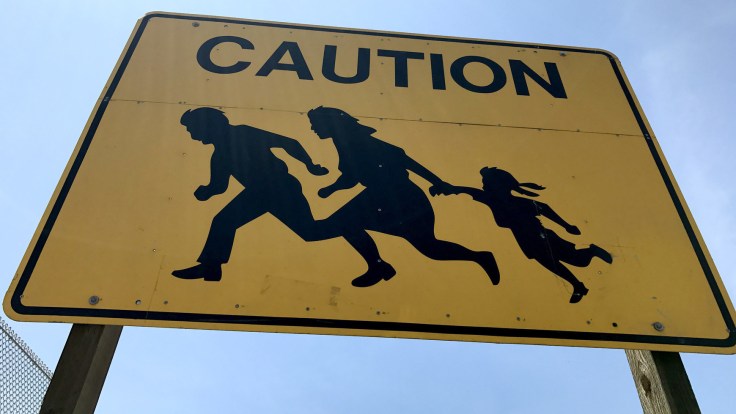
With only one left, iconic yellow road sign showing running immigrants now borders on the extinct

Only one of the 10 iconic Caltrans caution signs emblazoned with the image of an immigrant father, mother and daughter running for their lives remains. They once dotted Interstate 5.

Source: www.latimes.com

As a child of the border (I grew up 8 miles from the U.S.-Mexican border with family on both sides of the line), the cultural, political and economic impacts of this line were very tangible in my life, but to mention family.  This sign was a symbol of mass migration and cultural change in Southern California and I would pass one on the way to my grandmother’s house.  As a fixture of the cultural landscape, it also became a visual talking point that served as a lightning rod in the political landscape.  During the 80’s and 90’s, immigrants from Mexico were coming in to the United States is large numbers, but since the 2000, that dominant stream has dried up, rendering this sign no longer necessary near freeways crossings.  Mexican migration to and from the United States is a contentious topic where political ideology can be louder than the actual statistics.  Since 2009, more Mexicans have been leaving the United States than entering it (PEW Research Center).  Economic and demographic shifts in both countries have led to this reversal.    


Tags: Mexico, migration, political, landscape, California, borders.   

Blog at WordPress.com.

Up ↑