Search

GEOGRAPHY EDUCATION

Supporting geography educators everywhere with current digital resources.

Tag

urban

Five gentrification myths debunked

‘Gentrification’ is a messy bogeyman of a term deserving more critical analysis. If ‘gentrification’ is ‘exclusive economic development’, what we want is INCLUSIVE economic development.

Source: www.youtube.com

This post will need many disclaimers, but I think that it is a valuable addition to our gentrification materials since the key take-home point is that gentrification doesn’t happen the same way in all places (geographic context matters!). Some of the generalizations about gentrification around the country might not apply to some specific examples.  Are these generalizations true in some (and possibly most) contexts?  Sure, but unfortunately once people hear the word gentrification, they assume a base set of assumptions about the situation which may or may not be true.  The 5 myths outlined in this video (more detail in this Washington Post article) are:

  1. Gentrification leads to lower crime.
  2. Gentrification causes widespread displacement.
  3. Longtime residents hate gentrification.
  4. Gentrifiers are white.
  5. Gentrification happens naturally.

Tags: neighborhood, gentrificationurban, place, culture, economic   

What Rio doesn’t want the world to see

“Rio is hiding poor people. See Part II: https://www.youtube.com/watch?v=c3BRTlHFpBU

Source: www.youtube.com

This isn’t news, but it isn’t just about Rio de Janeiro, since the World Cup and Olympics have already come and gone. Yet the urban planning designed for the world’s gaze remains.  Some strategies used were to create economic development and stimulate the local communities, but more often than not, the poor of the city and the poor communities cities were swept under the rug without addressing the issues that creating poverty with the city.  Many of the poor communities closest to Olympic venues were demolished without real viable housing options for the displaced residents.


Questions to Ponder: Can you think of other ways (of other examples) that city planning is used to hide the poor or the ‘less desirable’ parts of the city?  Why does this happen?  How should urban planning approach economic redevelopment, poverty, and community?   


Tags: Brazil, urban, squatter, neighborhood, economicplanning, urbanism.


How Clean is Narragansett Bay?

“The progress in Rhode Island toward clean water owes a lot to this federal law. Seeing urban rivers and the beaches and coves of the upper bay rediscovered as natural assets for wildlife and people to enjoy is one of the great successes of the Clean Water Act [of 1972].”

Source: www.rimonthly.com

This article from geographer Mary Grady shows a pleasant story in the human and environmental interaction.  The upper bay (that in-between place where the Providence River widens and becomes part of the Narragansett Bay) has been cleaned up and has ecologically been revitalized and is becoming an asset to the community again.  It is far from pristine, but it nice to read about encouraging signs on this front.  


Tags: watercoastal, Rhode Island.

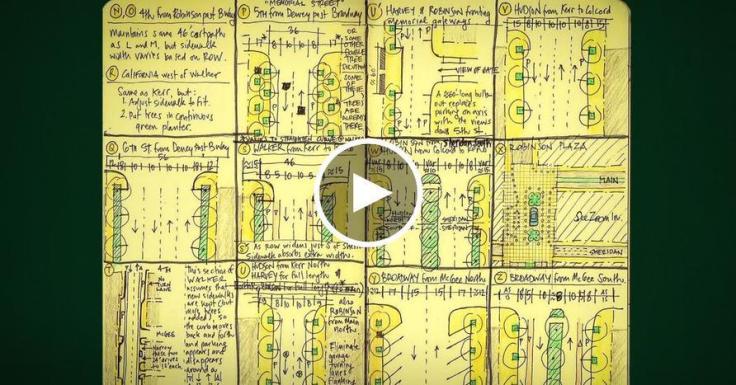
4 ways to make a city more walkable

Freedom from cars, freedom from sprawl, freedom to walk your city! City planner Jeff Speck shares his “general theory of walkability” — four planning principles to transform sprawling cities of six-lane highways and 600-foot blocks into safe, walkable oases full of bike lanes and tree-lined streets.

Source: www.ted.com

As the 2017 APHG exam has ended, some people have asked for more resources on new urbanism.  This TED talk from Jeff Speck gives a good sense of what planners believe in new urbanism are trying to do (you can also watch his earlier TED talk, The Walkable City).  Here is information from New Urbanism (dot org) from it’s practioners, including the Congress on New Urbanism.  Lastly, here is an academic article reviewing the critiques of new urbanism with rebuttals.  

Tagsplace, neighborhood, urban, planningtransportation, urbanism, scaleTED, video.

New Urbanism

New Urbanism is a planning and development approach based on the principles of how cities and towns had been built for the last several centuries: walkable blocks and streets, housing and shopping in close proximity, and accessible public spaces. In other words: New Urbanism focuses on human-scaled urban design.”

Source: www.youtube.com

As the 2017 APHG exam has ended, some people have asked for more resources on new urbanism.  Here is information from New Urbanism (dot org) the Congress on New Urbanism for teachers and students that are reassessing the Free Response Questions. 


Tagsplace, neighborhood, urban, planning, urbanism, scale

Making cities sustainable with urban agriculture

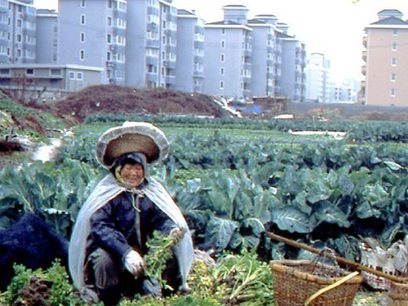
To reduce the pressure on the world’s productive land and to help assure long-term food security, writes Herbert Girardet, city people are well advised to revive urban or peri-urban agriculture. While large cities will always have to import some food, local food growing is a key component of sustainable urban living.

Source: www.theecologist.org

Urban agriculture is right at the perfect intersection for human geographers who focus on both urban networks and food systems–clearly this is an important overlap that deserves a more detailed look. 


Tags: food, consumption, sustainability, socioeconomic, food desert, food, urban, unit 5 agriculture

The Incredible growth of megacities

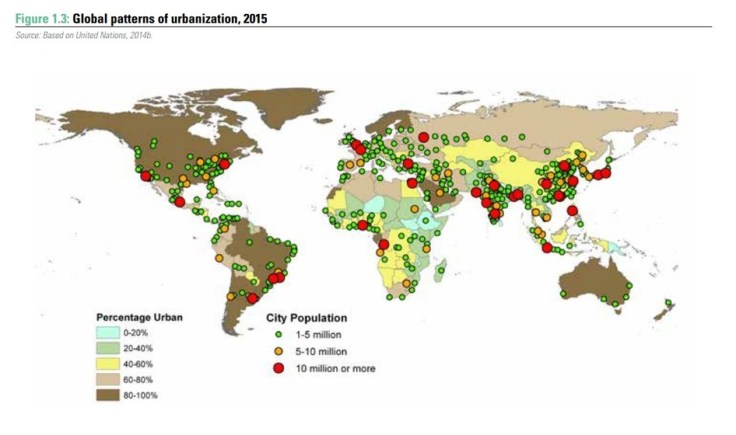
“The world’s cities are booming and their growth is changing the face of the planet. Around 77 million people are moving from rural to urban areas each year. The latest UN World Cities Report has found that the number of “megacities” – those with more than 10 million people – has more than doubled over the past two decades, from 14 in 1995 to 29 in 2016. And whereas the developed world was once the home of the biggest cities, this map shows that it is now the developing world taking the lead.”


Tags: urban, megacities, regions.

Source: www.weforum.org

How the first city got started 12,000 years ago

“In this animated video, Jonathan F. P. Rose explains how the first city was started in Turkey, 12,000 years ago.”

Source: www.youtube.com

What led to the first urban settlements? We know that the beginnings of agriculture are closely connected to the first forays into agriculture and the domestication of animals.  This brief video puts some archeological specificity on the though exercise, “what would you need to start the first city in a world without cities?” 


Tags: urban, placehistorical.

New Orleans to remove prominent Confederate statues and monuments

Statues to Confederate Generals Robert E. Lee and P.G.T. Beauregard and Confederate States of America President Jefferson Davis will be removed.

Source: www.businessinsider.com

I find issues such as these endlessly fascinating because it the cultural politics behind the shaping of the landscape are so evident. The cultural landscape clearly isn’t just an innocent reflection of the society, but is actively constructed and contested.  Some, including the NOLA mayor, claim that it isn’t political, but preserving or reconfiguring a place’s public cultural heritage is always political.


Tags: monuments, New Orleansthe Southurban, architecture, landscape.

Create a free website or blog at WordPress.com.

Up ↑