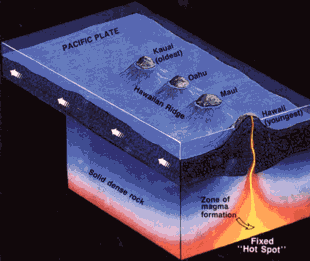
1) What is a hotspot? A volcanic “hotspot” is an area in the upper mantle from which heat rises in a plume from deep in the Earth. High heat and lower pressure at the base of the mantle facilitates melting of the rock. This melt, called magma, rises through cracks to the surface and forms volcanoes. As the tectonic plate moves over the stationary hot spot, the volcanoes are rafted away and new ones form in their place.
Seth Dixon, Ph.D.‘s insight:
Why are the Hawaiian Islands a linear formation if there are not plate boundaries in that region? Why are the islands seemingly arranged from largest to smallest? The answers lie in the physical geography of ‘hot spots.’ After this introductory video, you can learn more about the geologic life cycle of a hot spot volcanic island in this companion video shown below.
Tags: Oceania, physical, geomorphology, landforms.




Leave a Reply