Search

GEOGRAPHY EDUCATION

Supporting geography educators everywhere with current digital resources.

Month

September 2016

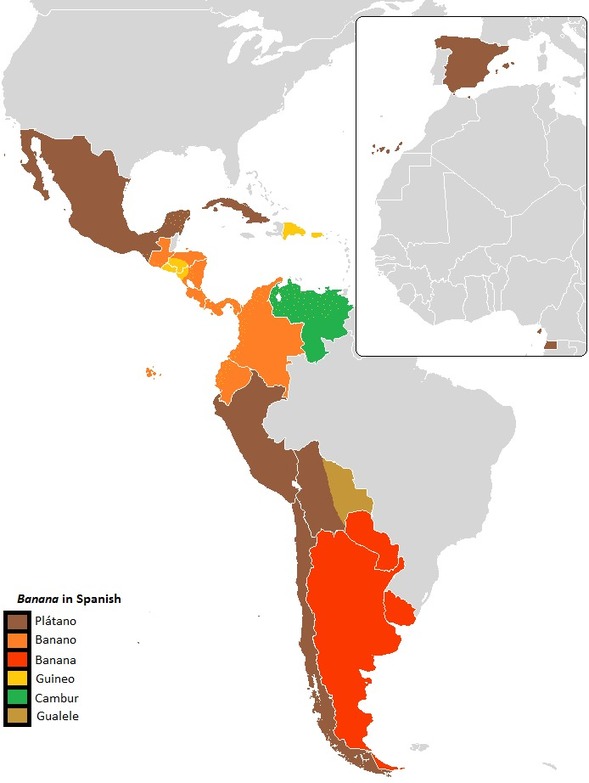
How to Say ‘Banana’ in Spanish

Source: i.imgur.com

I’ve lived in both the plátano and banano sub-regions of the Spanish-speaking realm and this discrepancy was one I always found curious (likewise, peanut butter is called crema de cacahuate in Mexico, but mantequilla de maní in Costa Rica). I’ve had many humorous encounters with friends from throughout the Spanish-speaking world when words that mean one thing in a particular country have VERY different connotations in another.


Questions to Ponder: Why do languages have different vocabularies in distinct places?  Why makes a language especially prone to a varied set of regionalized terms?


Tags: language, colonialismdiffusion, culture, mapping, regions.
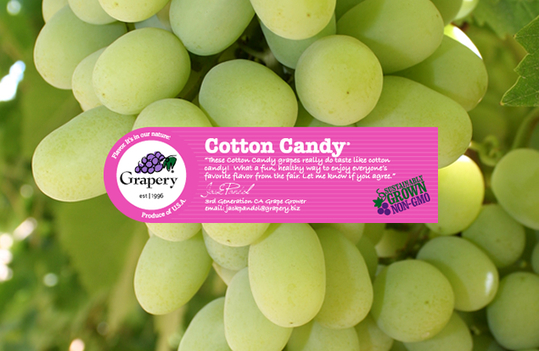
Cotton Candy Grapes?!?

Source: www.grapery.biz

After years of seeing fruit-flavored candy, we are now seeing candy-flavored fruit. The company Grapery is very careful to highlight that these patented fruit varieties are not GMOs, but the cotton candy flavored grapes are cross pollinated by hand (by fruit geneticists). You can watch this 4 minute CBS video about the agricultural production and marketing of this new product. Yes, I’ve experimented with these at a friend’s house, and they really do taste like cotton candy (and no, I’m not planning on purchasing any).     


Questions to Ponder: Does this make you leery about eating this or totally excited to try it? How come?  Why is the company so adamant to state that these grapes are non-GMO? According to the video, what are the primary concerns of most grape producers and how does that contrast with this company?  


Tagsfood, food production, agribusiness, agriculture, GMOstechnology.

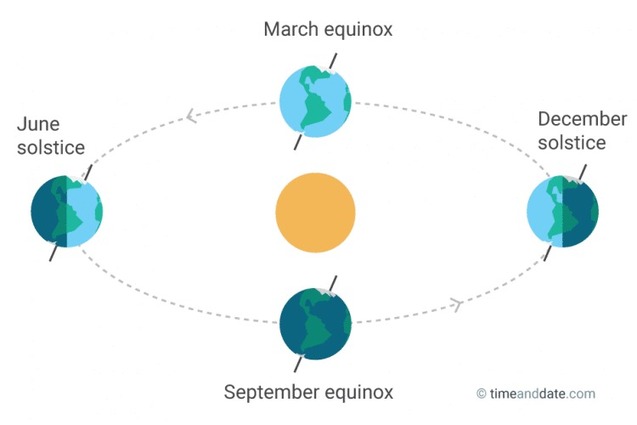
The Autumnal Equinox

“In the Northern Hemisphere, the fall equinox marks the first day of fall (autumn) in what we call astronomical seasons. There’s also another, more common definition of when the seasons start, namely meteorological definitions, which are based on average temperatures rather that astronomical events.  Equinoxes are opposite on either side of the equator, so the autumnal (fall) equinox in the Northern Hemisphere is the spring (vernal) equinox in the Southern Hemisphere and vice versa.”


Tags: Sunseasonal, space.

Source: www.timeanddate.com

‘Leftover Women’ in China

“Chinese women face immense pressure to get married before they turn 27. In many Chinese cities, so called marriage markets are a common sight, where parents go to post and match personal ads. A number of brave Chinese women have finally stood up to speak their mind against society’s labels and their parents’ pressures.”

Source: www.youtube.com

This emotional ad about ‘leftover women‘ in China has received a lot of traffic and is now invigorating a national conversation about marriage customs, gendered norms, and cultural expectations.  What isn’t as explicit in the video is how demographic policies and cultural preferences for boys has created the situation that puts added pressure on single women


Questions to Ponder: How is this (at least partially) a lingering impact of the One Child Policy?  What traits of traditional Chinese culture led to this current situation?   


Tags: gender, folk culture, China, culture, population.

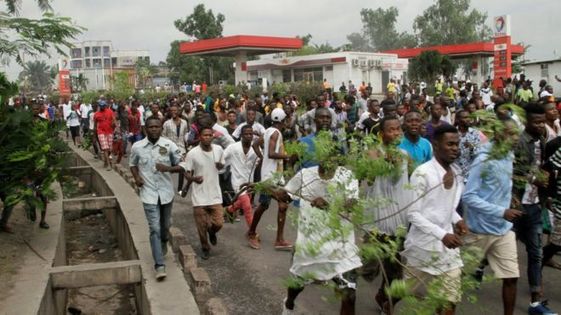
DR Congo election: 17 dead in anti-Kabila protests

Three police officers and 14 civilians die in Kinshasa, capital of DR Congo, during protests calling for President Joseph Kabila to step down.

Source: www.bbc.com

The DRC is a land of great wealth but is impoverished.  This may seem strange to outsiders but the weakness of their social institutions pays a key role in keeping the economy from reaching it’s potential.  Strong institutions matter more than resources for sustained economic development. The most important line in the article was the last one: “DR Congo has never had a smooth transfer of power since independence more than 55 years ago.”  That is a staggering historical burden.  


Tags: Congo, political, conflict, Africa.

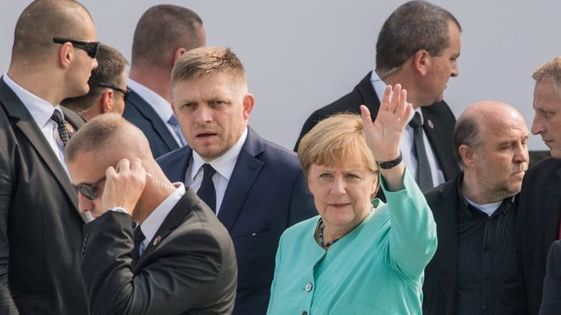
Bratislava EU meeting: Merkel says bloc in ‘critical situation’

The EU is in a “critical situation”, the German chancellor says, as leaders meet to discuss ways to regain trust after the UK’s vote to leave the bloc.

Source: www.bbc.com

Some of this article is focused on the micro-issues of the day, but the larger issues of what is the proper role for an economic supranational organization is front and center.  Should the EU have a military headquarters?  How should the member states respond to the underlying tensions in the Union?  Attached is a video showing residents of EU countries with a wide range of opinions about the organization and what it’s future should be and another video about the major topics on the table.  Given that the politicians there are balancing personal, national, and European interests, it is a sticky wicket (if British phrases are still allowed, even if they are the only member state not invited to the summit).   


Tags: Europe, supranationalism, economic, political, video.

Introducing ISIS

“The invasion of Iraq was supposed to turn the country into a democracy that posed no threat to the United States, or the rest of the world. Thirteen years later, Iraq has collapsed into three warring states. A third of the country is controlled by ISIS, who have also taken huge amounts of territory in Syria. VICE correspondent Ben Anderson gains exclusive access to the three front lines in Iraq, where Sunni, Shiite and Kurdish forces are fighting for their lives. Anderson visits with the Russian military forces in Syria, meets captured ISIS fighters in Kurdistan, and interviews US policymakers about how the situation in Iraq spun out of control.”

Source: www.youtube.com

Many young students are especially baffled at how a terrorist organization can seize control of large chunks of territory.  If you are looking for a good video introduction that explains how and why ISIS was able to gain power and than gain and maintain territory, this is it (it’s classroom safe despite the source). 


Tags: Syria, war, conflict, political, geopolitics, Iraq, devolution, terrorism, ISISMiddle East.

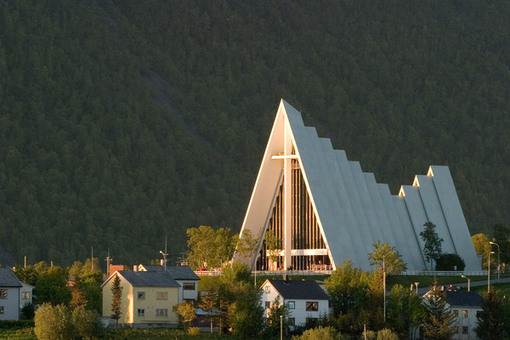
Thousands Leave Norwegian Church as Online Registration Backfires

“15,035 people have ‘unsubscribed’ from the church since Monday.”

Source: www.atlasobscura.com

Europe, the most developed region in the world, is also the most secular region today.  During colonial times, Europeans were spreading Christianity across the globe, but now Christianity is becoming more a part of Europe’s historical landscape.  Secularization can be seen as either the cause or the effect of several other European trends such as declining fertility rates.  Today Europeans have stopped attending mass en masse, and many cathedrals sit empty.  This example for Norway has an amusing twist, but it is rooted in a powerful cultural shift. 


Questions to Ponder: What are other signs of secularization on the cultural landscape?  What would you do with a former sacred site (and an architectural treasure) that is can’t be maintained?


Tags: culturepopular culture, religion, ChristianityNorway, Europe.

Why China and India face a marriage crisis

“What has lead to this marriage squeeze?  First, millions women have gone ‘missing’. A generation ago, a preference for sons and the greater availability of prenatal screening meant first Chinese couples, then Indian ones, started aborting female fetuses and only giving birth to boys. At its extreme, in parts of Asia, more than 120 boys were being born for every 100 girls. Now, the generation with distorted sex ratios at birth is reaching marriageable age. The result is that single men far outnumber women.”


Tags: gender, ChinaIndia, culture, population.

Source: www.youtube.com

Blog at WordPress.com.

Up ↑