Search

GEOGRAPHY EDUCATION

Supporting geography educators everywhere with current digital resources.

Author

sethdixon

I am a geography professor at Rhode Island College.

NatGeo’s APHG page

Resources from National Geographic Education to support teachers and learners of the Advanced Placement Human Geography course.

Seth Dixon, Ph.D.‘s insight:

The National Geographic Education Foundation works to assist teachers to promote the status of and quality of geography education.  In keeping with that mission they have recently revamped their AP Human Geography page, dividing all their resources according to the 7 major units of the course (in the “tags” section below, I have attempted to do the same):

  1. Geography: Its Nature and Perspectives
  2. Population
  3. Cultural Patterns and Processes
  4. Political Organization of Space
  5. Agriculture and Rural Land Use
  6. Industrialization and Economic Development
  7. Cities and Urban Land Use

Tags: APHG, unit 1, unit 2, unit 3, unit 4, unit 5, unit 6, unit 7.

See on education.nationalgeographic.com

NGS APHG

Discover Ancient Rome in Google Earth

See Rome as it looked in 320 AD and fly down to see famous buildings and monuments in 3D. Select the “Ancient Rome 3D” layer under Gallery in Google Earth. D…

Seth Dixon, Ph.D.‘s insight:

What happens whe you teach ancient historical geography using modern geospatial technologies?  Great things can happen and new perspectives on the world can open up for students and teachers alike. 

Tags: historical, google, virtual tours, Italy, geospatial, edtech.

See on www.youtube.com


How Wal-Mart Used Payoffs to Get Its Way in Mexico

Wal-Mart de Mexico was an aggressive and creative corrupter, offering large payoffs to get what the law otherwise prohibited, an examination by The New York Times found.

Seth Dixon, Ph.D.‘s insight:

Wal-Mart officials worked hard to ensure that zoning regulations were changed so that they could bring a store to a coveted location.  They built a Wal-Mart in the shadows of arguably Mexico’s most important world heritage site–the pyramids of Teotihuacán.  This investigative report uncovers the illegal steps that Wal-Mart took to force through their agenda. 

Questions to Ponder: Why would Wal-Mart be so keen on this particular location?  Why would some in Mexico oppose this project so fiercely?  Would Wal-Mart behave in such a manner in the United States?       

Tags: Mexico, industry, planning, culture, location, place.

See on www.nytimes.com

As Kurds Fight for Freedom in Syria, Fears Rise in Turkey

Watch As Kurds Fight for Freedom in Syria, Fears Rise in Turkey on PBS. See more from PBS NewsHour.

As Kurds Fight for Freedom in Syria, Fears Rise in Turkey of Following Suit

Seth Dixon, Ph.D.‘s insight:

Since the fall of the Ottoman Empire, the Kurds have been caught in other people’s plans for what the states of the Middle East should look like and are the largest ‘stateless nation’ in the world.  Divided between Iraq, Iran, Syria and Turkey, the Kurds have not been able to politically mobilize support for Kurdistan as they have been violently oppressed in these countries.  The Kurds in Iraq have been able to gain political autonomy with the fall of Saddam Hussein’s regime, and the Syrian Kurds are hoping to do the same if and when the Assad regime crumbles at the end of the civil war.  This make Turkey concerned that the Kurds in the southeastern part of Turkey will make renewed efforts to push for sovereignty.

UPDATE: This PBS feature explains the historic timeline of the important political events for the Kurds in Iraq.This article from the Economist focuses on the key reason that outside forces won’t leave the Kurds alone: oil.

Tags: Syria, ethnic, conflict, political, Turkey, culture, devolution.

See on video.pbs.org

Favela Images


I love these favela images by Fernando Alan.

Seth Dixon, Ph.D.‘s insight:

See on geographyeducation.org

Socket map of the world


Tags: cartography, technology, globalization, historical, regions, mapping, colonialism.

Seth Dixon, Ph.D.‘s insight:

This map might appear to be completely trivial and it probably is.  Still, there are interesting historical and colonial patterns that can be seen in this technological culture region map. 


Questions to Ponder: Will there one day be a single format?  When?  What are barrier to that happening?  What does this tell us about the extent of globalization?

See on tywkiwdbi.blogspot.fr

Chicago Under Fire

An examination of shootings and violence in Chicago. Includes interactive map of Chicago shootings and homicides.

Seth Dixon, Ph.D.‘s insight:

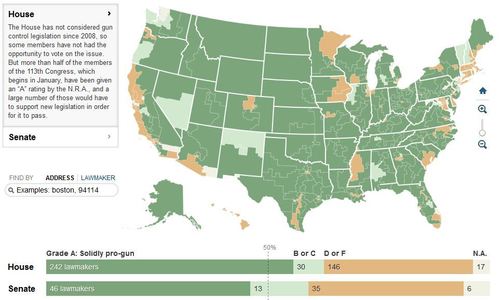
I know that many are thinking about mental illness and gun violence after the tragic incident in Connecticut.  I do not wish to use this as a platform to suggest any particular political course of action.  I do think, however, that this is an appropriate time to share more data that may help others to frame the discussion. 

Tags: Chicago, socioeconomic.

See on www.suntimes.com

Inside an Amazon Warehouse

Warehouse

Seth Dixon, Ph.D.‘s insight:

During the holiday season, online sales shoot up as distant relatives seek to ship gifts in time for Christmas.  Some have noted that online shoppers can stay at home and completely render the tradition physical storefront redundant.  Online shoppers, whether they think about it or not, hoping that the physical logistics behind the scenes will work efficiently and quickly.  This collection of images is a reminder that while it might appear that geography and location are eliminated with online communications, these virtual interactions in cyberspace are dependent on actual physical locations.

Tags: location, economic, space, industry, technology.

See on imgur.com

The No Good, Very Bad Outlook for the Working-Class American Man


The U.S. economy once worked like a finely meshed machine. Not anymore. The U.S. economy is still a powerful engine, but workers aren’t seeing the benefits, less-educated men are struggling, and the rich have disconnected from everyone else.

Seth Dixon, Ph.D.‘s insight:

The problems with the economy are not universally spread throughout society.  Certain segments are impacted more than others by the current struggles, especially when with look at axes of identity, such as class, gender and ethnicity.  While planning on a blue-collar job in the 1950s could have been a solid career plan for a young man in the United States, not so in the 21st century.

Tags: labor, gender, class, industry, education.

See on nationaljournal.com

Blog at WordPress.com.

Up ↑