Search

GEOGRAPHY EDUCATION

Supporting geography educators everywhere with current digital resources.

Author

sethdixon

I am a geography professor at Rhode Island College.

Remote Sensing Images

201211272011209418-2013-01BRevsStallmanFA

It’s already unlikely we’ll get a view as good as the ones collected in “Earth As Art…”

Seth Dixon, Ph.D.‘s insight:

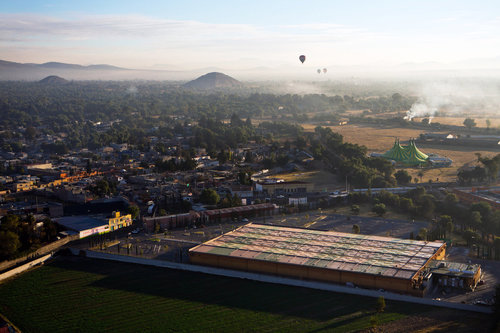
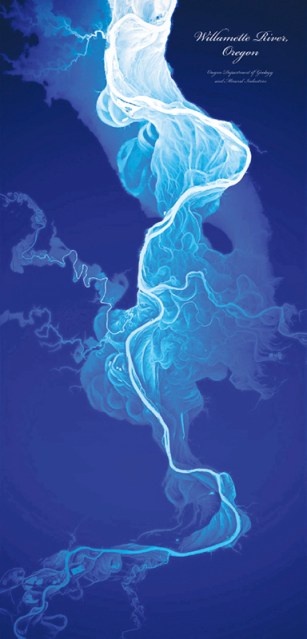
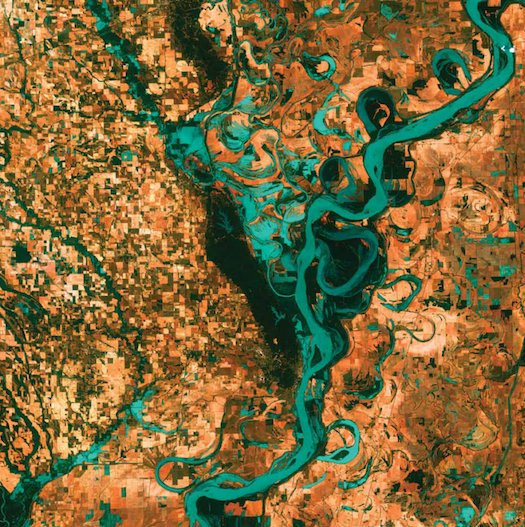
This article and the selected gallery is based on the free e-book “Earth as Art” which I’ve mentioned here before earlier.  This particular image is fantastic for teaching about geomorphology and river systems.  Students can ‘see’ the historical layers of a meandering stream winding it’s way across the landscape.  Connecting the physical geography to human geography, analyzing the flood plains can help explain the land use and settlement patterns in these images of the Mississippi Delta and Willamette River.

See on www.popsci.com

Remote Sensing

Time-Space Compression

In this age of fast travel and instant digital communications, we tend to forget that not so long ago, distances were subjectively very different.

Seth Dixon, Ph.D.‘s insight:

This series of maps shows the great leaps and bounds that were made during the 19th century in transportation technology in the United States.  This impacted population settlement, economic interactions and functionally made the great distances seem smaller.  This is what many call the time-space compression; the friction of distance is diminished as communication and transportation technologies improve.  

Questions to Ponder: When someone says they live “10 minutes away,” what does that say about how we think about distance, transportation infrastructure and time?  How is geography still relevant in a world where distance appears to becoming less of a factor?  

Tags: transportation, models, globalization, diffusion.

See on www.treehugger.com

The Italians who want to be Austrian

It is Italy’s richest province, and has been part of the country for almost 100 years – but some in South Tyrol just do not feel fully Italian.

Seth Dixon, Ph.D.‘s insight:

While the idea of everyone of the same nationality belonging to the same country might be considered an ideal situation, the world’s ethnic geography is too jumbled to create perfect nation-states.  South Tyrol is a part of Italy that is one of those places with mixed a ethnic, linguistic and political heritage.  By different criteria, many of the residents could be considered German, Austrian or Italian or a combination of the them.  Since the Euro Zone fiscal crisis, the push for political autonomy in South Tyrol has intensified, in part because this region has avoided the crisis and is economically fairing better than the rest of Italy.  

Questions to Ponder: How do political borders reveal and conceal “the truth” about places on either side of the line?  What elements are a part of a regions heritage?  Can regions have multiple, overlapping heritages?  How does devolution impact the whole country?  

Tags: Italy, states, autonomy, ethnic, language, devolution.

See on www.bbc.co.uk

Tyrol

Landfill Harmonic

Seth Dixon, Ph.D.‘s insight:

This video shows that the human spirit of beauty and joy can come shining through from the poorest of places.  Slums are not new, but rapid population growth coupled with rural-to-urban migration patterns have led to an increasing amount of slums.  Despite all the stereotypical images of destitute poverty, slums can also be places with a strong vibrant communities with residents filled with innovation, hope and ambition.  For more on this organization, see their Facebook page.   

Tags: urban, squatter, poverty, South America, community, Paraguay.

See on www.youtube.com

LandfillHarmonic

Middle-Earth gets a Geological Makeover


As if J. R. R. Tolkien wasn’t brilliant enough with his creation of Middle-Earth, it appears that using his numerous maps and illustrations provided, supplemented by observations from within the texts themselves, a geological reconstruction can be achieved! I recently came across this old article from the Proceedings of the J. R. R. Tolkien Centenary Conference, Oxford, England, 1992, and figured it was worth sharing.

Seth Dixon, Ph.D.‘s insight:

As many Lord of the Rings fans prepare for the release of the new Hobbit movie, I wanted to share two things that might be of interest.  First this article is linked to a geologic ‘reconstruction’ of Middle Earth.  Added to this is this fabulous Middle Earth Map Dress (complete with the traveling cloak collar, the Tengwar script on the belt and hem, and the matching clutch).  Why are do we study geography?  As Samwise Gamgee reminded us, “That there’s some good in this world, Mr. Frodo… and it’s worth fighting for.” 

See on fossilsandshit.wordpress.com

The Daily Mail Song


mp3 here: http://bit.ly/9zPBDi We’re aware this video won’t mean an awful lot if you’ve never heard of The Daily Mail (a British Newspaper), but on the plus side, you’ve never heard of The Daily Mail.

Seth Dixon, Ph.D.‘s insight:

As more of our students go searching for information online, we need to also teach our students how to assess the quality of a particular media outlet and develop a critical eye.  This great song is a humorous way to approach that topic.

Questions to Ponder: What makes a source reliable?  Can a source be reliable on some topics but not others?

Here’s an article about how an over-reliance on GPS (or Sat-Nav) can lead to the erosion of one’s mental map.  And yes, the article is from the Daily Mail (as the images on the side clearly demonstrate).  Does that change how you approach the information?

See on www.youtube.com

The Middle East’s Surprising Appetite for Oil

CFR experts examine the science and foreign policy surrounding climate change, energy, and nuclear security.

Seth Dixon, Ph.D.‘s insight:

Most everyone knows about the importance of Middle Eastern oil to the global economy and how that impacts geopolitics.  What isn’t well-known is the Middle East’s own demand for oil has been increasing as their wealth and standard of living has been rising.  This chart does not show the amount of oil consumption, but the “energy intensity.”  This is the amount of energy (often oil) used to produce a unit of GDP for a country’s economy.  

Questions to Ponder: How will this change oil-producing countries economic development in the future?  How does this make us re-assess these economies?  Does this impact how we think about climate change issues?


Tags: energy, resources, Middle East, development.

See on blogs.cfr.org

Hong Kong and China: Growing apart?

The BBC’s John Simpson reports from Hong Kong, where the former colony’s increasing independent-mindedness is worrying Beijing.

Seth Dixon, Ph.D.‘s insight:

When the rule of Hong Kong transferred from the UK to China in 1997, the Chinese government was careful to ease the fears of those in Hong Kong that they would not have their political and economic systems turned upside down.  “One country, two systems” was the famous slogan to sum up the policy that some felt would simply delay the inevitable.  Today, many of the youth in Hong Kong are demonstrating against what they feel are pressures to do away with their unique status.

See on www.bbc.co.uk

An Interactive Map of the Blitz: Where and When the Bombs Fell on London

The extent of the campaign is shocking.

Seth Dixon, Ph.D.‘s insight:

This map is just overwhelming when you consider that each data point represents a bomb dropped on the city. 

See on www.theatlanticcities.com

Create a free website or blog at WordPress.com.

Up ↑