Search

GEOGRAPHY EDUCATION

Supporting geography educators everywhere with current digital resources.

Author

sethdixon

I am a geography professor at Rhode Island College.

Mapping Coastal Flood Risk Lags Behind Sea Level Rise

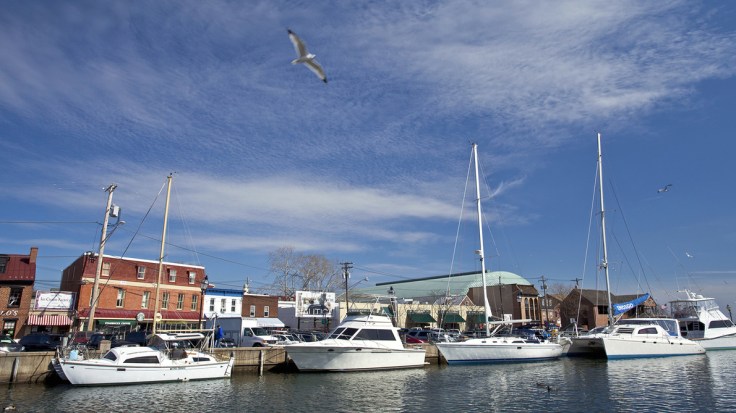
Federal maps help determine who on the coast must buy flood insurance, but many don’t include the latest data. Maryland is now making its own flood maps, so homeowners can see if they’re at risk.

Source: www.npr.org

Geographic themes are overflowing (it was an unintended pun, but I’ll just let that wash over you) in this podcast.  I suggest playing a game early in the year/semester called “find the geography.”  What geographic theme/content areas will your students find in this podcast? 


Tagspodcast, mapping, cartography, climate change, environment, watercoastal,  urban, planningurban ecology.

What on Earth Is Wrong With Connecticut?

Conservatives say the state has a tax problem. Liberals say it has an inequality problem. What it really has is a city problem.


Connecticut is losing rich companies (and their tax revenues) while it’s adding low-wage workers, like personal-care aides and retail salespeople. Yet it remains a high-tax state. That’s a recipe for a budget crisis.


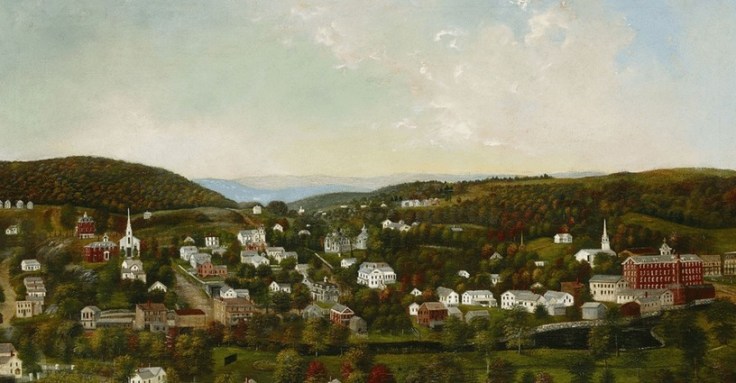
The rise and fall of Connecticut fits into the story of American cities. In the 1970s, American metros were suffering a terrible crime wave, and New York was dropping dead. That meant boom times for New York’s suburbs and southwestern Connecticut. But now many of those companies are moving back, lured by newly lower-crime cities and the hip urban neighborhoods where the most educated young workers increasingly want to live.


Finally, the hottest trend in American migration today is south, west, and cheap—that is, far away from Connecticut, both geographically and economically. Texas is growing rapidly, and seven of the 10 fastest-growing large metropolitan areas in 2016 were in the Carolinas and Florida. Of the 20 fastest-growing metros, none are in the northeast.


Tags: urban, regions, economic.

Source: www.citylab.com

The path of the solar eclipse is already altering real-world behavior

The highly anticipated event is casting a long shadow online.


The upcoming solar eclipse is poised to become the “most photographed, most shared, most tweeted event in human history,” in the words of one astronomer. Millions of people will watch it, potentially overwhelming the cities and towns along the eclipse’s path of totality.

According to Google, interest in the eclipse has exploded nationwide in the past few months, mirroring national media attention. The county-level search data above, provided by Google, paints a striking picture: Interest in the eclipse is concentrated in the path of totality that cuts through the middle of the country, receding sharply the farther you go from that path.


Tags: Sunspace, media

Source: www.washingtonpost.com

Jordanian parliament repeals rape law

“The Jordanian parliament voted on Tuesday to abolish a provision in the penal code that allows rapists to escape punishment if they marry their victims – a move that is being hailed as ‘historic’ by activists and locals. Article 308 permit[ed] pardoning rape perpetrators if they marry their victims and stay with them for at least three years.  The controversial provision has for decades divided Jordan between those who believe the law is necessary to protect women’s ‘honour’, and others who see it as a violation of basic human rights.”

Source: www.aljazeera.com

Cultural norms and political practices are so often intertwined that understanding local laws means that one has to understand the cultural context within which they were created, and in this case, the cultural processes that led to a political will to change them.  


Tagsculture, cultural norms, gender, MiddleEast, Jordan, political.

Great American Eclipse

“A total solar eclipse is coming to America on August 21, 2017. Find maps, videos, how to view, best places to go, eclipse glasses, and more.”


Tags: Sunspace.

Source: www.greatamericaneclipse.com

A Remote Paradise Island Is Now a Plastic Junkyard

Henderson Island is isolated and uninhabited—but its beaches are still covered in garbage.  


Henderson Island (article or podcast) is about the most remote place you can visit without leaving the planet. It sits squarely in the middle of the South Pacific, 3,500 miles from New Zealand in one direction and another 3,500 miles from South America in the other.  Henderson should be pristine. It is uninhabited. Tourists don’t go there. There’s no one around to drop any litter. The whole place was declared a World Heritage Site by the United Nations in 1988. The nearest settlement is 71 miles away, and has just 40 people on it. And yet, seafaring plastic has turned it into yet another of humanity’s scrapheaps.


Tags: pollutionOceaniawater, environmentsustainability, consumption.

Source: www.theatlantic.com

Why 80% of Singaporeans live in government-built flats

Lots of countries show off their public-housing projects, but few are quite as devoted to them as Singapore, where four-fifths of the permanent population live in subsidised units built by the government, most of them as owner-occupiers. The city-state’s suburbs bristle with HDB towers, painted calming pastel hues. This vast national housing system surprises visitors who think of Singapore as a low-tax hub for expatriate bankers and big multinationals. But HDB is a linchpin of economic and social policy and an anchor for the ruling People’s Action Party (PAP), which has led Singapore since independence. It is also a tantalising but tricky model for Singapore’s fast-urbanising neighbours to follow.

Source: www.economist.com

Singapore is such a fascinating case study.  Over 90% of the Singapore’s land is owned by the government and the American ideal of independent home ownership is seen as antithetical to cultural norms.  The government heavily subsidies young couples to live near their parents and create tight-knit communities with homelessness was eradicated (that’s the optimists’ perspective).  This is all well and good for young, straight couples that choose to support the ruling political party, but critics often point out that the housing focus has also created a paternalistic component to the government that is much stronger in Singapore than in other countries.  This article nicely goes with the 2017 APHG reading professional development talk entitled “The Geographies of Home” that focused on Singaporean and Japanese examples.    


Tag: Singapore, urban, neighborhood, economicplanning, housing, cultural norms.

With only one left, iconic yellow road sign showing running immigrants now borders on the extinct

Only one of the 10 iconic Caltrans caution signs emblazoned with the image of an immigrant father, mother and daughter running for their lives remains. They once dotted Interstate 5.

Source: www.latimes.com

As a child of the border (I grew up 8 miles from the U.S.-Mexican border with family on both sides of the line), the cultural, political and economic impacts of this line were very tangible in my life, but to mention family.  This sign was a symbol of mass migration and cultural change in Southern California and I would pass one on the way to my grandmother’s house.  As a fixture of the cultural landscape, it also became a visual talking point that served as a lightning rod in the political landscape.  During the 80’s and 90’s, immigrants from Mexico were coming in to the United States is large numbers, but since the 2000, that dominant stream has dried up, rendering this sign no longer necessary near freeways crossings.  Mexican migration to and from the United States is a contentious topic where political ideology can be louder than the actual statistics.  Since 2009, more Mexicans have been leaving the United States than entering it (PEW Research Center).  Economic and demographic shifts in both countries have led to this reversal.    


Tags: Mexico, migration, political, landscape, California, borders.   

Same again: Turkey’s emergency rule

​The state of emergency in place since last summer’s coup attempt against President Recep Tayyip Erdogan resumes today for another three months, following a decision by the country’s security council. Emergency rule has now been extended four times. Over its course, more than 50,000 people have been arrested, and twice as many sacked from government jobs, including over 7,000 dismissals over the past week. On the anniversary of the coup Mr Erdogan said emergency rule would lapse only when “we no longer need to fight terrorism”, and vowed to reinstate the death penalty and “rip off” the coup plotters’ heads. Using the crisis as cover, the government has already locked up leading Kurdish politicians; the secular opposition may be next. Mr Erdogan accuses its leader, who recently led the biggest protest in years, of siding with Turkey’s enemies. The failed coup increasingly resembles a successful one—for the other side.


Tags: politicalMiddleEast, Turkey.

Source: espresso.economist.com

Blog at WordPress.com.

Up ↑