Via Scoop.it – Geography Education
With #stopkony trending on twitter, there is growing interest in the concept of child soldiers. This is a great video to discuss the issue beyond Central Africa and other international efforts to end the use of child soldiers.
Via www.youtube.com
Via Scoop.it – Geography Education
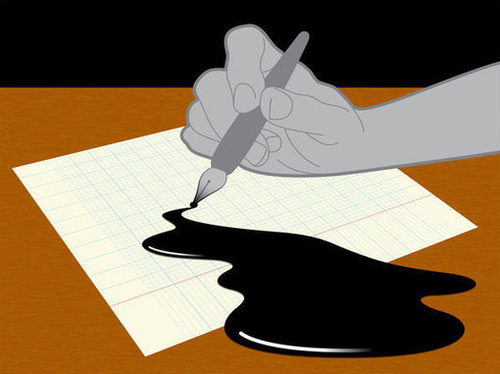
This site has several infographics showing the impact of the BP oil spill in the Gulf of Mexico.
Via inspiredm.com
Via Scoop.it – Geography Education
One of the focal points of the protests raging in Zuccotti Park and around the world is the sizable gap between the rich and everyone else. This link below shows graphics that demostrate that there are many different levels of wealth among even the richest of the rich.
Via www.huffingtonpost.com
Via Scoop.it – Geography Education
KONY 2012 is a film and campaign by Invisible Children that aims to make Joseph Kony famous, not to celebrate him, but to raise support for his arrest and set a precedent for international justice.
This needs to be included for many reasons. 1) The geopolitical problem of child soldiers and endemic warfare in Sub-Saharan Africa needs to be analyzed from a spatial and geographic perspective. 2) The social media aspects of this campaign highlight many of the traits of globalization. 3) This would be a perfect opportunity to have a political activist moment in your class (seriously, who is not opposed to mass murder?). 4) We can teach our classes that geographers are not just going to learn about all the crap that is wrong with our Earth…we are going to fix it and use our resources to improve the human condition. The site mentioned in the video is: http://www.invisiblechildren.com
For a cultural analysis of the this video, see this NPR article. Yes the video is filled with oversimplifications and a poor cultural lens, but it has started a conversation and that is a conversation with students that I feel is worth having.
Via vimeo.com
Personal Opinions of the Video: The video is full of “white man’s burden” motifs and (admittedly) the cultural representations of Africans as helpless victims that American’s as the sole agents of change is more than just annoying but reinforces bad stereotypes. So I’m deeply ambivalent about the video since it truly is a mixed bag. I was visiting a middle school recently and students are telling the teachers that they want to learn about Uganda and understand the situation better. What I love about the video is that it has started a discussion where there previously was not. True there were discussions elsewhere, but not between middle school students—and the students were asking for MORE African content to be infused into the curriculum and the teacher wisely obliged.
The teacher was smart enough to know that the video is propaganda for an NGO (no bracelets or ‘Action kits’ here!), that was advocating particular military policies (which we both repudiated). The Political action as outlined in the video is lame. But that is the rub. The “everyone join us and the movement” component is hokey and condescending, but the “do something” and “be aware” portion is the true take-home message for me. This video, in isolation isn’t enough…but I see it as a starting point, since all the college student is my class heard about it, what better portal for discussing the historical concept of ‘white man’s burden’ (which would’ve been covered either way) with the relevant topic of the moment?
This literally gives educators the chance to educate as students are interested in learning. While there certainly are oversimplifications of the ethnic and geopolitical situation in the video with paternalistic overtones, I think it has enough merit to take the good with the bad. The single “bad man” narrative is also ridiculously problematic, since the economic and political landscape creates the environment that has allowed Joseph Kony to operate in that manner. All in all, I’m grateful that there is more awareness of the issue and am hoping to use it as a teaching moment to essentially correct the misconception that could be perpetuated with that type of discourse. While it is tough to isolate the good from the bad, the message from the messenger, these are the raw materials with which we must work, and I’m glad for these flawed materials to be on the table.
Via Scoop.it – Geography Education
Scientists model where and when the debris from the March 2011 Japanese tsunami will be, and the possibility that it will reach the U.S. west coast.
Via www.nature.com
Via Scoop.it – Geography Education
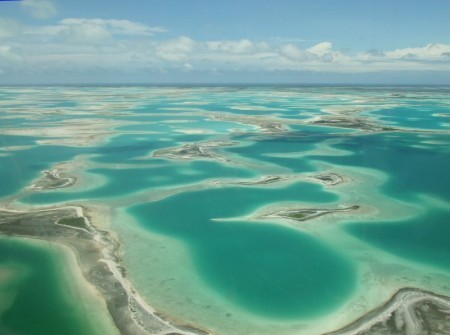
The insect is so large — as big as a human hand — it’s been dubbed a “tree lobster.” It was thought to be extinct, but some enterprising entomologists scoured a barren hunk of rock in the middle of the ocean and found surviving Lord Howe Island…
Island Biogeography is endlessly fascinating and provides some of the most striking species we have on Earth. The physical habitat is fragmented and the genetic diversity is limited. Within this context, species evolve to fill ecological niches within their particular locale. This NPR article demonstrates the story of but one of these incredible species that never could have evolved on the continents. In modern society, more extinctions are happening on islands than anywhere else as ‘specialist’ species are in greater competition with ‘generalists.’
Via www.npr.org
Via Scoop.it – Geography Education
On a winter day in Yellowknife, Northwest Territories, Canada, I boiled water and threw it in the air where it “evaporated”…
Okay, the water did not actually ‘evaporate’ in -30C temperatures as stated in the video. As mentioned on G+, “upon being dispersed into the air, the latent heat in the water’s mass dispersed more easily and thus more quickly, rapidly cooling it to the outside temperature and causing the droplets to become tiny crystalized ice, or plainly put, powdered snow, light enough to be carried away in the wind.” What a great demonstration of the properties of water!
Via www.youtube.com
Via Scoop.it – Geography Education
Sanjay Wijesekera: This achievement shows that where there is a will, it is possible to truly transform the lives of hundreds of millions of people for the better.
The MDG (Millennial Development Goal) to cut the global population that does not have access to clean drinking water was cut in half, and five years ahead of schedule. The World Health Organization and the United Nations are very pleased with this achievement, but it is a timely reminder of the developmental problems of poverty and access that still exist. For example, 783 million people still do not have access to clean drinking water. 3,000 children die each day from diarrheal diseases (usually from bad drinking water and poor sanitation). Although some success should be celebrated, the world, in the currently constituted social, economic and political framework, still does not provide the most basic of requirements for a sizable portion of humanity.
Via www.guardian.co.uk
Via Scoop.it – Cultural Geography
“Nearly 200 years after his death, Napoleon Bonaparte is finally getting the greatest honor our age can bestow: his own theme park. Napoleonland — stop laughing — was concocted by a former French minister to rival Disneyland in its immersive fun and totemic cultural status. Shopping! Dining! Re-enactments of the Battle of Austerlitz! Not a bad rehabilitation for an all-conquering megalomaniacal exiled emperor.”
Culture and heritage are packaged in places such as theme parks as a commodity–what should we make of these spaces? What do they say about the society that creates them? What are the economic, cultural and political motives for creating such as space?
Via www.foreignpolicy.com