Search

GEOGRAPHY EDUCATION

Supporting geography educators everywhere with current digital resources.

Author

sethdixon

I am a geography professor at Rhode Island College.

New Urbanism

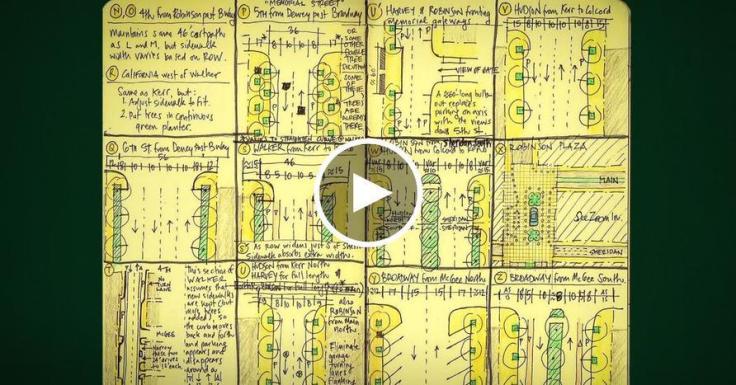
New Urbanism is a planning and development approach based on the principles of how cities and towns had been built for the last several centuries: walkable blocks and streets, housing and shopping in close proximity, and accessible public spaces. In other words: New Urbanism focuses on human-scaled urban design.”

Source: www.youtube.com

As the 2017 APHG exam has ended, some people have asked for more resources on new urbanism.  Here is information from New Urbanism (dot org) the Congress on New Urbanism for teachers and students that are reassessing the Free Response Questions. 


Tagsplace, neighborhood, urban, planning, urbanism, scale

Maps of racial diversity in the United States

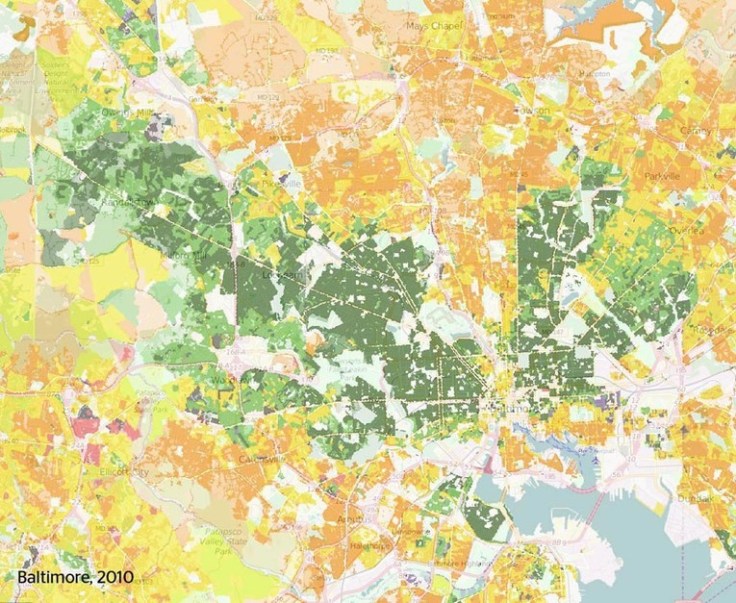
“Repurposed NASA maps show the racial diversity (and segregation) of the United States in more detail than ever before.”

Source: geographical.co.uk

This interactive map of population density in the United States also shows ethnic categories as defined by the U.S. census.  Please explore this map at a variety of scales and in distinct locales.   


Questions to Ponder: Is this a map of ethnic diversity patterns or is it a map of racial segregation?  How come?  Is there additional information that you would need to decide?  This review of the map on Wired and Atlantic Cities described this map as a map depicting segregation: why would they say that? 


Tags: mapping, density, ethnicity, race.

Making cities sustainable with urban agriculture

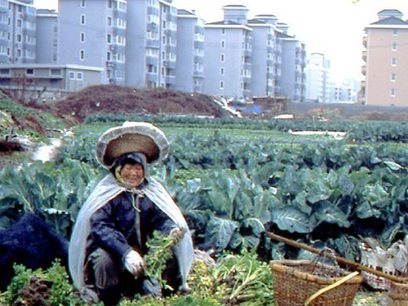
To reduce the pressure on the world’s productive land and to help assure long-term food security, writes Herbert Girardet, city people are well advised to revive urban or peri-urban agriculture. While large cities will always have to import some food, local food growing is a key component of sustainable urban living.

Source: www.theecologist.org

Urban agriculture is right at the perfect intersection for human geographers who focus on both urban networks and food systems–clearly this is an important overlap that deserves a more detailed look. 


Tags: food, consumption, sustainability, socioeconomic, food desert, food, urban, unit 5 agriculture

What if the British Empire Reunited Today?

The British Empire was the largest Empire to have ever existed in our history. So what would things look like if the empire reunited today?

Source: www.youtube.com

This is interesting perspective of the strength of the old British Empire as well as some of the inequalities that are part and parcel of empire. 


Tagsempire, UK, historical.

From Risking His Life To Saving Lives, Ex-Coal Miner Is Happy To Take The Paycut

The “Brave New Workers” series tells stories of Americans adapting to a changing economy. This week: after years working in the coal mines of West Virginia, a miner charts a new career in health care.

Source: www.npr.org

This series, Brave New Workers, is all about workers adapting to the shifting economic geographies.  Some industries are seen as foundational to a community and there is much angst about the loss of particular jobs.  New technologies are disruptive, and the process of job creation/job loss is sometimes referred to as creative destruction.  My uncle, once about a time, was a typewriter repairman.  Clearly, the personal computer was going to render his niche in the economic system obsolete so he became a web developer.  Not everyone successfully makes a seamless transition, but this collection of stories is emblematic of the modern American worker, needing to nimbly adapt to the labor market.


Tagspodcast, industry, manufacturinglabor, economic, USA.  

Why geography matters for students now more than ever

Students need to know human geography; they need to understand the relationships that exist between cultures.

Source: www.pbs.org

This is more example of me preaching to the choir, but I hope that this will arm you with resources to use in discussions with administrators and colleagues in the fight against geographic ignorance.  This is a great article to put into my new tag of article that discuss why geography matters.   


Tagseducation, K12geography education, geography matters.

Venezuela Is Starving

Once Latin America’s richest country, Venezuela can no longer feed its people, hobbled by the nationalization of farms as well as price and currency controls. The resulting hunger and malnutrition are an unfolding tragedy.

Source: www.wsj.com

Widespread famines are very rare in democracies and are much more prevalent in authoritarian regimes.  This is because food production is but a small part of a larger picture; the system of food production and distribution in Venezuela has been decimated by the nationalization of private farms.  Individual farmers can’t make a profit in the new political economy and consequently are going to stop producing for the market.  This vicious cycle is political in nature more so than in is agricultural. 


Tags: food, poverty, Venezuela, South America, economic, political, governance, agriculture, food production.

Anti-vaccine activists spark Minnesota’s worst measles outbreak in decades

In Minnesota, the Somali American community has been hit hard, with a fourth of the young patients hospitalized.

Source: www.washingtonpost.com

I had measles as a child. I am so disheartened to see this now-perfectly preventable disease that nearly killed me resurface in the United States because of a fear-baiting, anti-intellectual movement.  The spread of any disease carries spatial component that interests geographers, but there is also cultural geographies that help to understand, explain, and (hopefully) combat this issue.  Please vaccinate the ones you love.   


Tagsmedicaldiffusion, culture, mortality, development, cultural norms.

Short Film: How Water Gets From The Nile To Thirsty Refugees

Hundreds of thousands of refugees have fled the civil war in South Sudan and resettled in Uganda. This 12-minute documentary shows the daily struggle to get water.

Source: www.npr.org

Next to nothing in this video will make you happy about the way things operate for refugees in Northern Uganda who have fled from South Sudan.  We all know the about the dire conditions that refugees face, but knowing about the specifics, and hearing stories from the refugees about their lives and living conditions is powerful.  A huge influx of refugees can tax local resources, especially water.  Food can be shipped in, but water a much more locally variable resource.   The UN refugee camps recommend at least 15 liters of water per person be made available each day, but often it is more like 4-8 liters in these camps.  Dedicated wells (or boreholes) are more effective, but costly.  Trucking in water from the Nile River is the preferred method to simply keep these drowning people’s heads above water.    

Questions to Ponder: Consider how much water you drink, use for cooking, bathing, etc. per day in your household.  How difficult would it be to live on 4 liters of water a day?  What about your lifestyle would be changed? 


Tags: Africa, development, Uganda, migrationrefugees, environment, water, sustainability, resources.

Create a free website or blog at WordPress.com.

Up ↑