Search

GEOGRAPHY EDUCATION

Supporting geography educators everywhere with current digital resources.

Category

Uncategorized

City of Endangered Languages

“New York has long been a city of immigrants, but linguists now consider it a laboratory for studying and preserving languages in rapid decline elsewhere in the world.”

Source: www.youtube.com

This is an excellent video for showing the diffusion of languages in the era of migration to major urban centers.  It also shows the factors that lead to the decline of indigenous languages that are on the fringe of the global economy and the importance of language to cultural traditions.   Here is the article related to the video as well as a BBC article that calls NYC a ‘graveyard of languages.’  In a curious twist on the topic of endangered languages, there is a group of Native Americans in Northern California that wouldn’t mind seeing their language die out with this generation.  


Tagslanguage, folk cultures, culturediffusionNYC, video.

How to Interpret a Satellite Image: Five Tips and Strategies

What do you do when presented with a new satellite image? Here’s what the Earth Observatory team does to understand the view.

  1. Look for a scale
  2. Look for patterns, shapes, and textures
  3. Define the colors (including shadows)
  4. Find north
  5. Consider your prior knowledge

Question #2: READ TO ANSWER FOR MORE INFO ON THE FIVE TIPS: earthobservatory.nasa.gov

Question #3: Also search through NASA’s Earth Observatory (Images or Articles) and the Jefferson Grid Instagram account..

Aerial photography can be quite beautiful, as can satellite imagery. These are more than just pretty pictures; interpreting aerial photography and satellite imagery is not easy; here is a great article that gives an introduction on how to interpret satellite imagery. With a little training, satellite images become rich data sources (instead of some visually meaningless data).  Using Stratocam, you can explore and tag some of the amazing place on Earth. 

Source: earthobservatory.nasa.gov

Tags: mapping, perspective, remote sensing, geospatial, unit 1 Geoprinciples.


The Berlin Wall fell 25 years ago, but Germany is still divided

Stunning satellite images and maps show how east and west differ from each other even today.

Source: www.washingtonpost.com

These two maps (unemployment on the left and disposable income on the right) are but two examples in this article that highlights the lingering distinctions between the two parts of Germany that were reunited 25 years ago.  The social geographies imposed by the Iron Curtain and the Berlin  Wall are still being felt from this relic border and will for years to come. 

Tags: Germany, industry, laboreconomichistorical, politicalborders.

The Strategic Importance of the Caspian Sea

“Stratfor Eurasia Analyst Eugene Chausovsky examines the Caspian Sea’s large energy reserves and its conflicting maritime boundaries.”

Source: www.youtube.com

After the collapse of the Soviet Union, the world’s largest lake went from having just two countries on its shores to five. Dividing the maritime borders has been especially difficult since the Caspian Sea has rich energy reserves and this lake will remain a place of strategic interest for many regional powers.  This video has been added to my ESRI StoryMap that spatially organizes place-based videos for the geography classroom.    

Tags: borders, political, geopolitics, Central Asia, energy, resources, Kazakhstan, Azerbaijan, Iran, Russiaeconomic, water.

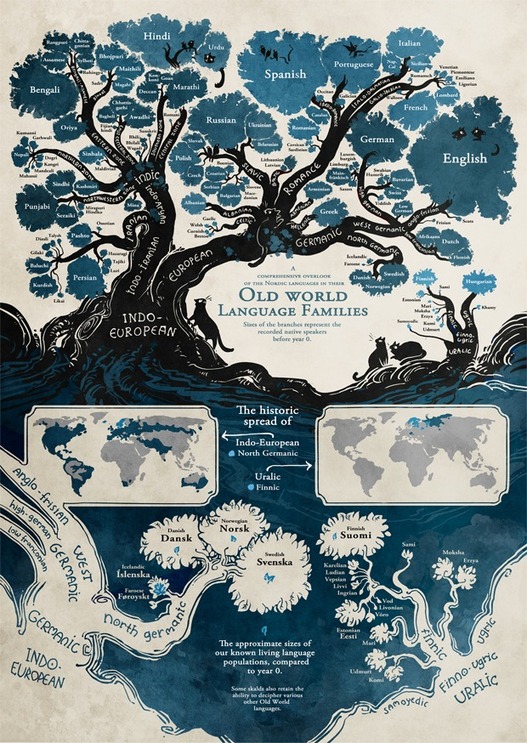
Linguistic Family Tree

“When linguists talk about the historical relationship between languages, they use a tree metaphor. An ancient source (say, Indo-European) has various branches (e.g., Romance, Germanic), which themselves have branches (West Germanic, North Germanic), which feed into specific languages (Swedish, Danish, Norwegian).  Minna Sundberg, creator of the webcomic Stand Still. Stay Silent, a story set in a lushly imagined post-apocalyptic Nordic world, has drawn the antidote to the boring linguistic tree diagram.”

Source: mentalfloss.com

Languages are interconnected and often share common roots and ancestries.  This artistic rendering of the Indo-European language tree (Hi-Res) is an attempt to visually show the linguistic connections between languages and language families.  


Tags: languageart, culture, infographic.

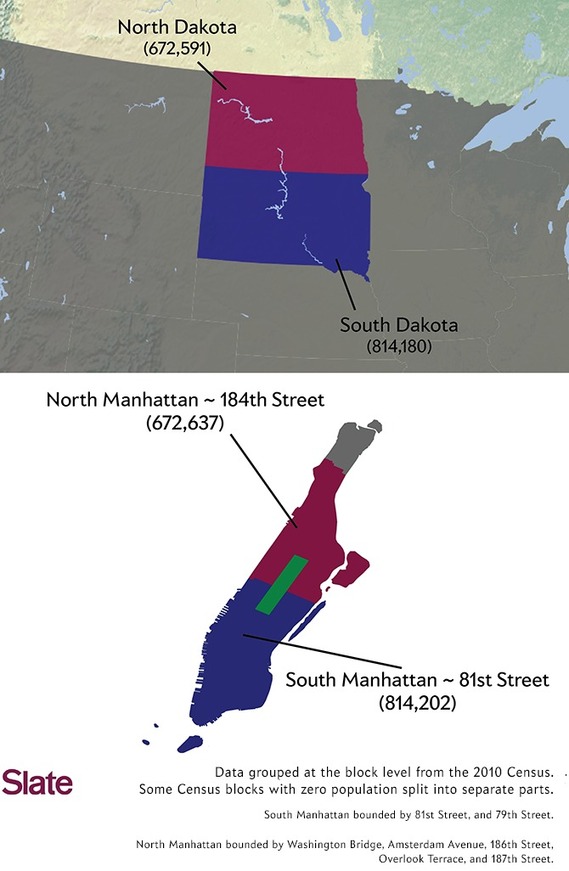
State Borders Were Drawn in the Distant Past. Is It Time to Reimagine Our Map?

“Most state borders were drawn centuries ago, long before the country was fully settled, and often the lines were drawn somewhat arbitrarily, to coincide with topography or latitude and longitude lines that today have little to do with population numbers.  Most state borders were drawn centuries ago, long before the country was fully settled, and often the lines were drawn somewhat arbitrarily, to coincide with topography or latitude and longitude lines that today have little to do with population numbers.”

Tags: cartography, mapping, visualizationregions, gerrymandering, political, mapping, census, density.

Source: www.slate.com

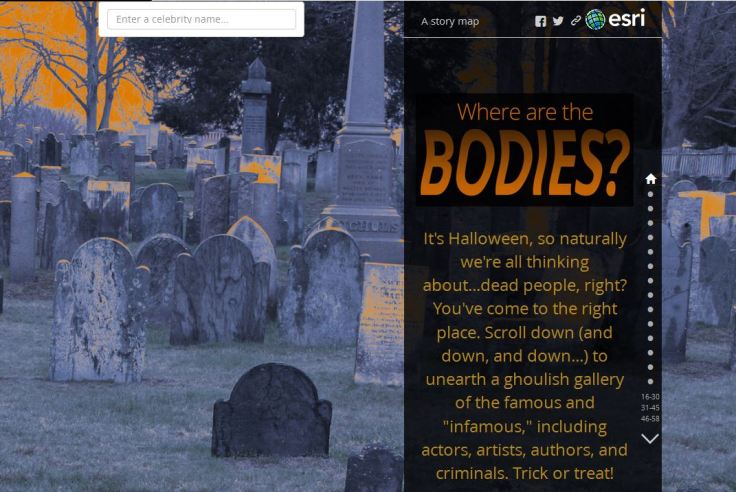
This Grave Atlas Shows Where to Find the Distinguished Deceased

We know where the bodies are buried … take a virtual tour of world cemeteries that host famous artists and rogues

Tag: cemetery.

Source: www.smithsonianmag.com

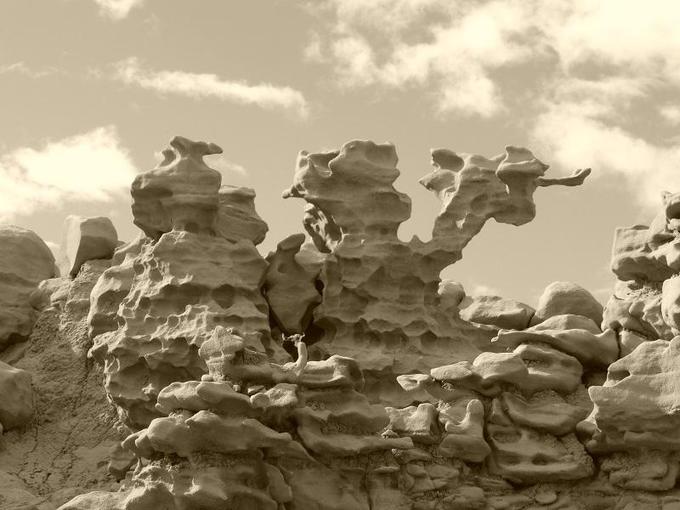
Eerie Landforms

Utah’s Fantasy Canyon features mudstone eroded into bizarre shapes. This one’s called “Flying Witch”. #Halloween

Tags: physical, geomorphology, erosion, landforms, Utah.

Source: twitter.com

Decoding The Food And Drink On A Day Of The Dead Altar

“The Mexican tradition celebrates the dead and welcomes their return to the land of the living once a year. Enticing them to make the trip is where the food, drink and musical offerings come in.”

Source: www.npr.org

Like many things in Mexico, the celebrations around the Day of the Dead are a combination of indigenous and Spanish traditions that collide to make something that is uniquely Mexican.  This podcast goes through the symbolism in the cultural artifacts that are such a vibrant part of the festivities.   

TagsMexicofolk culture, culture, podcast.

Blog at WordPress.com.

Up ↑