I found this image on social media from a great geography teacher (link to his site–looking for APHG group activities? Try this). This picture taken at the Jewish Community Center (JCC) in Memphis, TN shows an intrguing linguistic combination that I had never imagined before. This is referred to as cultural syncretism, where two or more cultures or cultural traits combine together to make something new. Globalization and migration are making more cultural combinations than we’ve ever seen before in this human mosaic we call home.
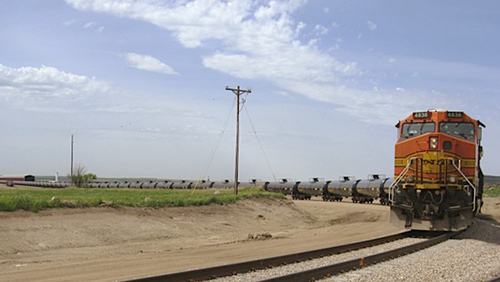
The railroad industry is eager to be the go-to oil shipper, but some worry it’s moving too fast.
Seth Dixon‘s insight:
Many hoping to stop environmental degradationof Canada’s Tar Sands and the Dakotas “Kuwait on the Prairie” have opposed the construction of the Keystone XL pipeline. It’s been decades since crude oil has been shipped by rail in the United States but fracking technologies have opened up areas without oil pipelines to become major producers. As demonstrated in this NPR podcast, the railroad industry has seized on this vacuum and since 2009 has been supplying the oil industry the means to get their product to the market.
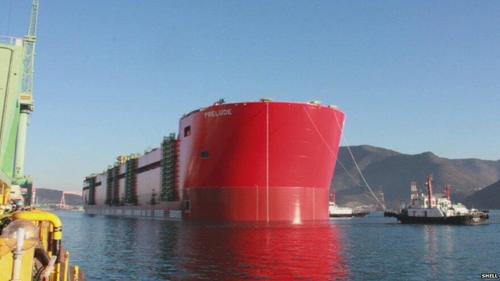
“A floating vessel that is longer than the Empire State Building is high has taken to the water for the first time. Despite appearances, Prelude cannot strictly be described as a ship as it needs to be towed to its destination rather than travelling under its own power.”
Seth Dixon‘s insight:
This is a floating testament that economies of scale will continue to push the limits. Today, the largest of the massive cargo ships are simply too big to get through the Panama Canal and have to travel down around the tip of South America. This is one reason why Nicaragua is planning to construct a canal to rival Panama’s (Maps 101 readers can read more about the geographic implications of Nicaragua’s plans in this article co-authored by myself and Julie Dixon or you can sign up for a free trial subscriptionto see what Maps 101 has to offer).
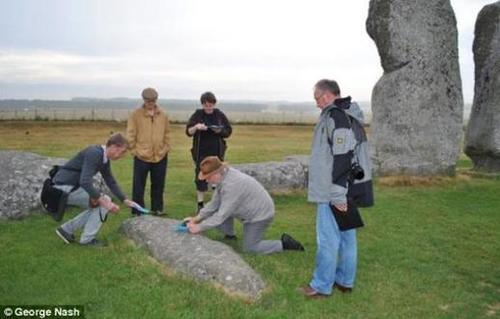
A team of researchers from London’s Royal College of Art (RCA) have discovered that the stones used to construct Stonehenge hold musical properties and when struck, sound like bells, drums and gongs.
Seth Dixon‘s insight:
Some ancient mysteries capture the imagination and Stonehenge has always been that great unknown. This might explain why the builders worked so hard to bring the stones over 150 milesto this location.
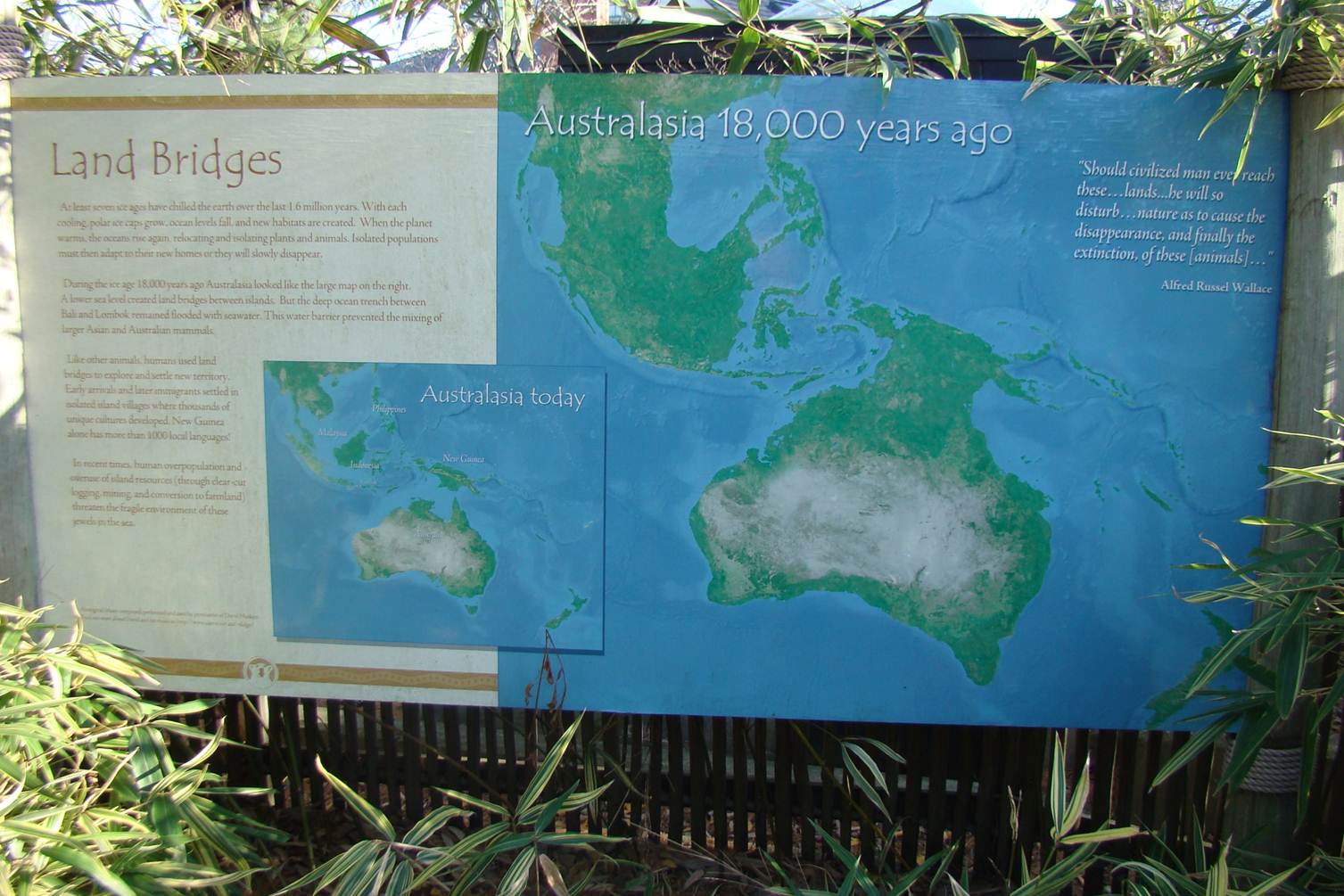
Part I, island biogeography in a World Regional context…click here to watch part II, why island biogeography matters in places that aren’t on islands.
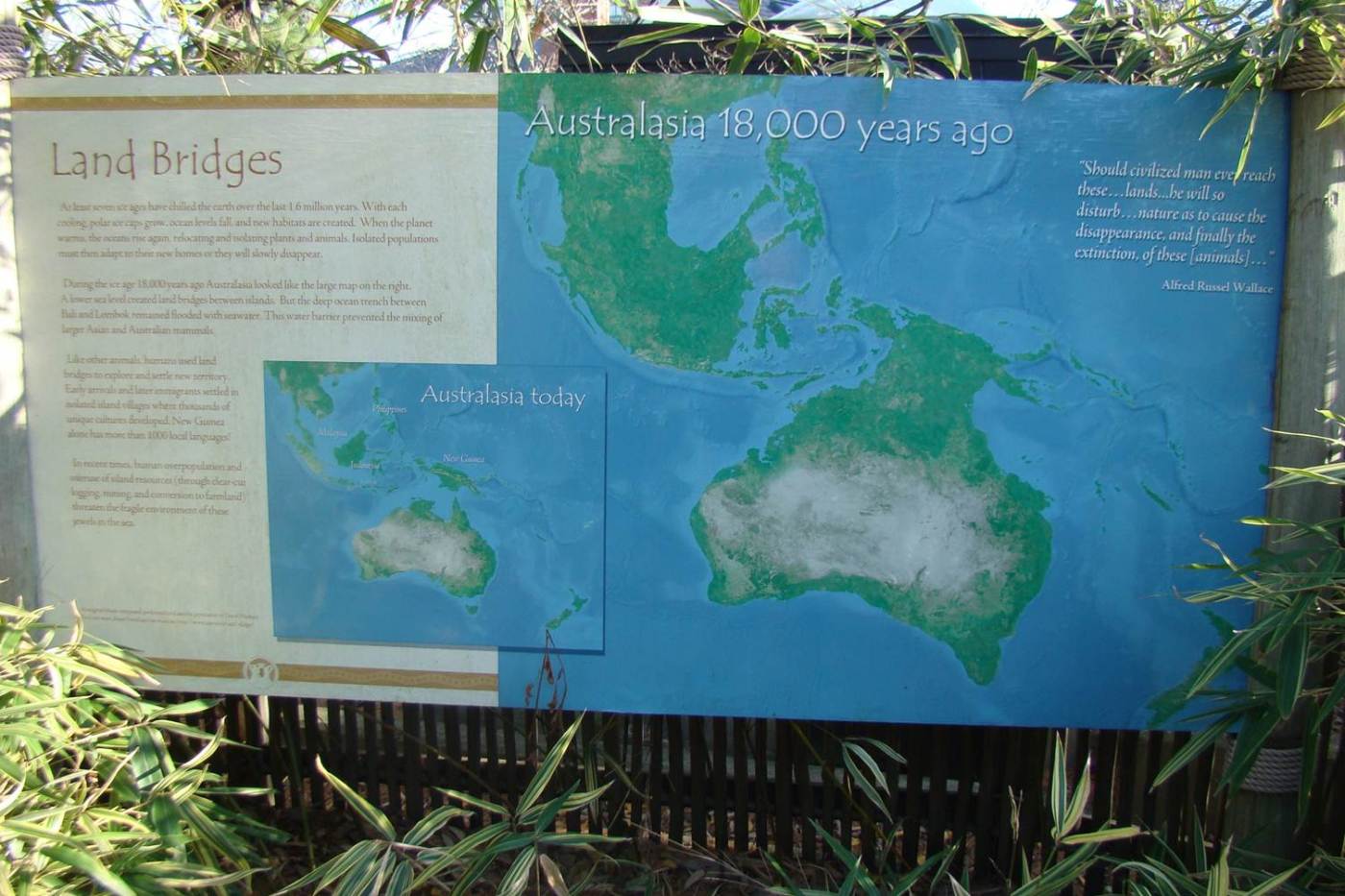
Island biogeography operates on different principles than we see on the continents. Some extraordinary creatures such as the komodo dragon and thylacine can be found in isolated places removed interactions with more generalist species. Alfred Russel Wallace made some extraordinary discoveries combining biology and spatial thinking.
Island biogeography is pertinent today since habitat fragmentation (from urbanization and agricultural land uses) has rendered ‘islands’ out of the wilderness that isn’t being used by humanity. Some animals such as the cougar are locally extinct from their historic ranges (extirpation).
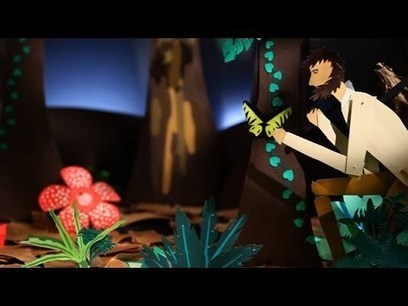
Some of the greatest discoveries in biology began as spatial discoveries. Alfred Russel Wallace made some amazing advances in biogeography and discovered the appropriately named Wallace Line. The video above is a paper-puppet animation celebrates the life of Alfred Russel Wallace, who is co-credited with Charles Darwin for the theory of natural selection. Read the New York Times story here.
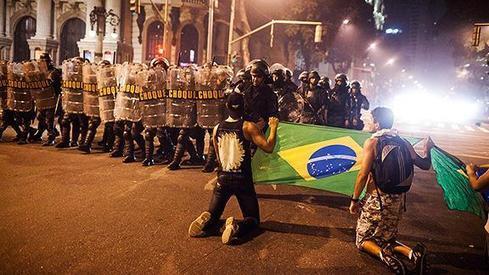
Fury, anarchy, martyrdom: Why the youth of Brazil are (forever) protesting, and how their anger may consume the World Cup.
Seth Dixon‘s insight:
Protests in public spaces are colliding with the Brazil’s World Cup/Olympic dreams. The government wants to show the world the best that the country has to offer and protestors are using this moment to highlight the social ills in their country and some of the collateral damages of these major sporting events. This may not seem like a sports issue per se, but one of social unrest that happens to be more highly publicized because of the coming international sporting events to Brazil. Many see the money that went to constructing massive stadiums as money that bypassed those that needed it most and the poor neighborhoods (favelas) that were demolished to make way for an ‘ideal city’ that the world would see. The world’s eye is on Brazil and both sides know it.
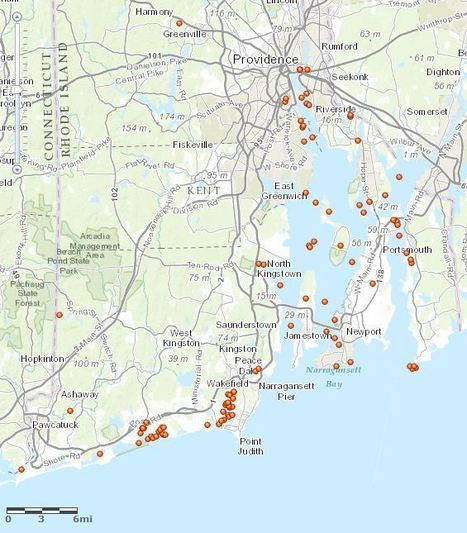
I recently received this question and immediately thought that this is a great geographic question, but one that geographic tools can be used to find the answer. I downloaded all the Rhode Island toponymns (place names) listed by the United States Board on Geographic Names and filtered out all the listed Islands (108 is the answer!!). A spreadsheet of the data didn’t help to visualize this data so I created this interactive map. Only 1 of the locations didn’t have coordinates, some are scarcely more than rocks, and this is only according to the the U.S. Board on Geographic Names, but this is the most complete map of islands in the state of Rhode Island that I could produce. Additionally, here is an article about some sailors who sought to explore every island of the Narragansett Bay.
This paper-puppet animation celebrates the life of Alfred Russel Wallace, who is co-credited with Charles Darwin for the theory of natural selection. Read the story here: http://nyti.ms/1fhBbGw
Seth Dixon‘s insight:
Some of the greatest discoveries in biology began as spatial discoveries. Alfred Russel Wallace made some amazing advances in biogeography and discovered appropriately named Wallace Line.