National Geographic posed one simple question on Twitter, with a link to the resources to answer it: Why should we learn about human migration? ow.ly/gCai8
See on twitter.com
National Geographic posed one simple question on Twitter, with a link to the resources to answer it: Why should we learn about human migration? ow.ly/gCai8
See on twitter.com
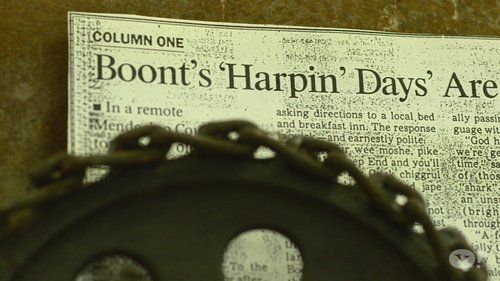
Watch the video Boontling: A Lost American Language on Yahoo! Screen
In Booneville, CA, local residents literally created their own language over 150 years ago and had it was locally accepted enough to be taught within the school district. This language of Boontling (Boont Lingo) but one that the younger generation has not fully adopted, but is still spoken by the older residents.
Tags: folk culture, language, culture, rural, unit 3 culture.
See on screen.yahoo.com
China wants a railroad linking it to Thailand and on to the Bay of Bengal in Myanmar, but some international groups warn that it may put a big burden on Laos.
Economic analyst noted in this article, “Southeast Asia is geostrategically and economically important to China, an increasingly important partner from both the trade and investment perspectives.” As China expands its influence, the benefits will probably be one-sided for rural, less developed neighbors such as Laos.
See on www.nytimes.com
The riots linked to flag protests in Northern Ireland are causing “significant damage” to the economy, the secretary of state warns.
Flags are tangible symbols of communal identity and political power. If the meaning behind these identities are unresolved, the symbols of these identities in public spaces becomes all the more there is contentious. Currently, the Union Jack is a lightning rod for controversy in Northern Ireland and the riots stemming from this are harming the local economy.
Tags: Ireland, political, conflict, devolution, autonomy, economic, Europe, unit 4 political.
See on www.bbc.co.uk
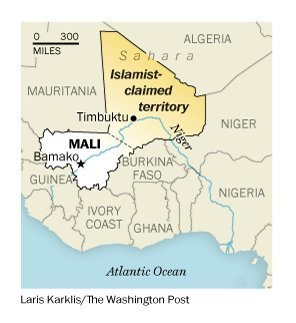
France is ready to stop Islamist militants who control northern Mali, the French president says, following a plea for help by his Malian counterpart.
In April 2012, Islamist rebels seized power in Northern Mali and have declared independence, proclaiming this region The Islamic State of Azawad. Recently they have begun to amass armies on the southern limits of their territory and presumably are seeking to topple all of Mali. The former colonizer, France is being called upon to assist as is the United Nations. This area is part of a region known as the Sahel, the transition from a dry North Africa to tropical Sub-Saharan Africa, from a Muslim/Arab north to a Christian/Animist/Black region of Africa. The human and physical geographic divisions in this region plays a major role in this conflict.
See on www.bbc.co.uk
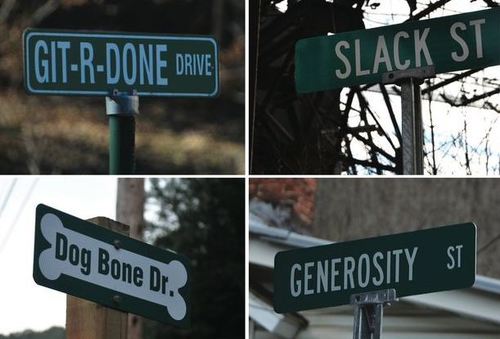
West Virginia aims to put its residents on the map
While this article does occasionally play off of the country bumpkin stereotypes we’ve all heard about West Virginians, there are some important concepts lying under the surface in the article. All places have a location (both absolute and relative), but not one that is easily discernible to an outsider unfamiliar with the area. Many emergency responders rely on geocoded addresses and GPS systems to location those in need, and the state of West Virginia is trying to ensure that even the most rural of residents is on the grid. Many location-based technologies lose their value as soon as you leave a named road.
See on www.theatlantic.com
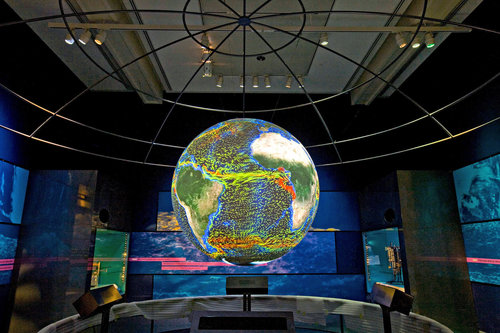
Their expense has so far made them rare, but with prices coming down, these glowing, programmable spheres are set to become more common.
Due to the expense, only science centers and major museums could afford these digital globes that we see in futuristic movies. However, as with all new technologies, the price will drop as it is refined and made available for larger market, even if that time is still a ways off. If this were available in your classroom, it would be splashy, but how much added value would it bring? What kind of lessons could you teach with this?
See on www.nytimes.com
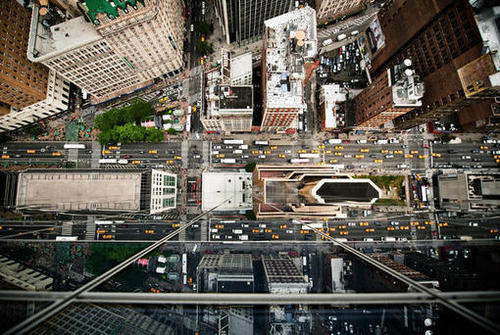
The winners have been named in the 2012 National Geographic Photography contest. As a leader in capturing the world through brilliant imagery, National Geographic sets the standard for photographic excellence.
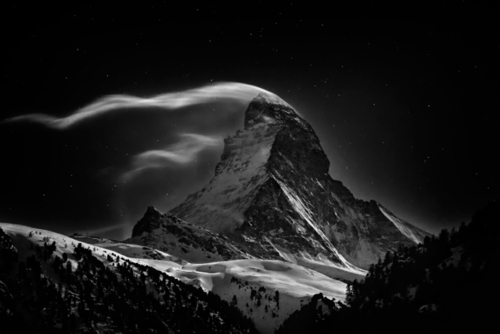
This image of the Matterhorn was the 1st place winner in the “places” category in the National Geographic’s 2012 competition.
See on www.boston.com