Some experts argue overemphasis on reading and math tests is to blame for narrowing of content curriculum, reducing motivation to learn and breadth of knowledge.
The U.S. government report on 8th grade geography is not a ‘pick-me-up’ but a sobering reminder of the task that lays before us. This article quotes a few alliance coordinators on the current situation and how to change it.
Do you speak African? Well, neither do the 1 billion people on the continent.Africa is home to 54 different nations, more than 2,000 languages and four of the world’s 10 fastest growing economies, but is often painted with a sweeping stroke of doom and gloom. In this week’s Reality Check, Mehdi Hasan exposes popular misconceptions about the African continent.
This short video is full of with examples and statistics that show that many of the ‘doom and gloom’ perspectives and ways of thinking about Africa are outdated (at best). Here are some good facts to update how we talk about Africa.
While this is hardly common in Australia, and most people don’t speak this way, it only makes sense if you know Australian culture well. There are so many jokes, phrases, and words that don’t make sense if you don’t understand the cultural context. Just to help you start to make sense of this: busted pluggers = broken flip-flops.
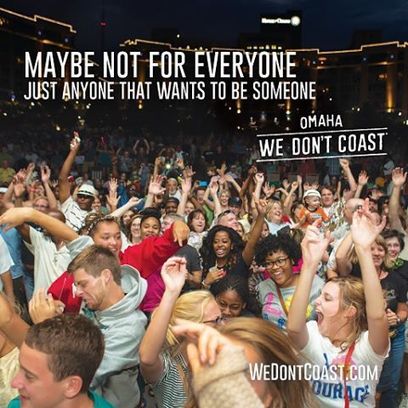
This website is a great example a city selling it’s regional distinctiveness to create a sense of civic pride, promote tourism, and attract more businesses. Often Omaha’s distance for the coasts is portrayed as a major weakness, but in a clever play on words, the weakness is acknowledged and reformed into a strength.
Questions to Ponder: How would you promote your own city/region/state? What would be highlighted on a similar page for your city? What slogan would you use?
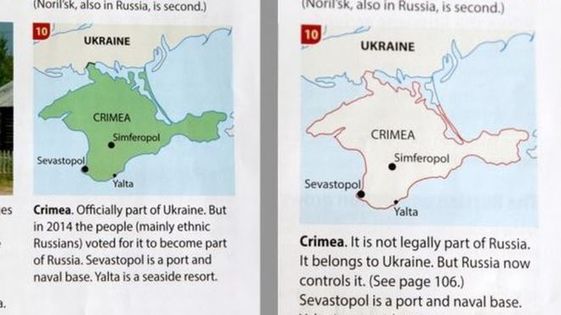
How we describe and categorize geopolitical shifts matter, and can ocassionally ruffle some feathers. More important than the ruffled feathers is the fact that how we present the issues helps to shape students’ perspectives. In a somewhat related article, the Russian annexation of Crimea has magnified internal divisions in Kazakhstan.
“The Whitney Plantation near Wallace, Louisiana, is the first and only U.S. museum and memorial to slavery. While other museums may include slavery in their exhibits, the Whitney Plantation is the first of its kind to focus primarily on the institution. John Cummings, a 78-year-old white southerner, has spent 16 years and more than $8 million of his own fortune to build the project, which opened in December of last year.
Cummings, a successful trial attorney, developed the museum with the help of his full-time director of research, Ibrahima Seck. The duo hope to educate people on the realities of slavery in its time and its impact in the United States today. ‘The history of this country is rooted in slavery,’ says Seck. ‘If you don’t understand the source of the problem, how can you solve it?'”
“Stratfor explains Jordan’s geographic challenge: governing its diverse population and managing its limited natural resources.” For more of these videos, visit http://arcg.is/1IeK3dT
Stratfor produced a new video in their “Geographic Challenge” series. I’ve updated my map which spatially indexes 70+ of their videos that are especially relevant to geography teachers. These videos are great starting points for students that are researching a particular country.
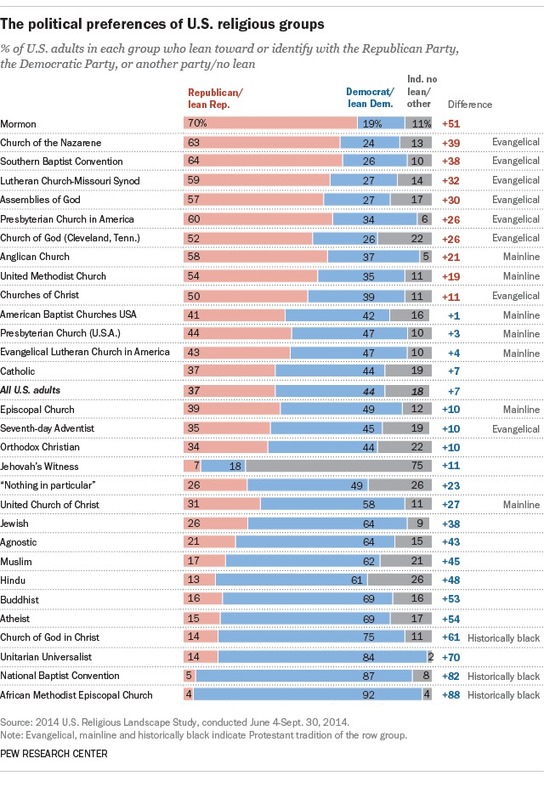
“Mormons are the most heavily Republican-leaning religious group in the U.S., while a pair of major historically black Protestant denominations – the African Methodist Episcopal (AME) Church and the National Baptist Convention – are two of the most reliably Democratic groups, according to data from Pew Research Center’s 2014 Religious Landscape Study.”
Happy Super Tuesday. While there are people of all political stripes within any given religious affiliation, the geography of religion really matters in electoral geography as well.