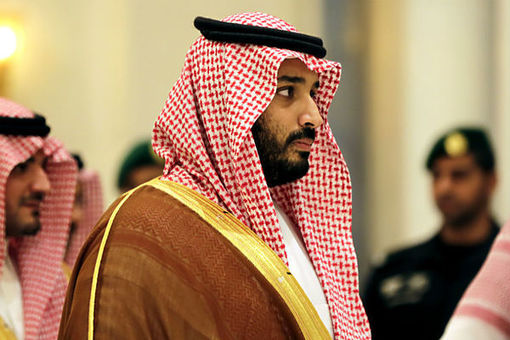
The new counterterrorism coalition includes nations such as Pakistan, Turkey and Egypt as well as war-torn countries with embattled militaries such as Libya and Yemen.
This is too new for me to speculate as to the effectiveness or support that this new alliance will have. What are the national, regional, and global motives of each of these 34 states? I think we will all keep an eye on this moving forward.
“From treasure maps to smart phone apps, geography makes sense of our world by describing locations, patterns and relationships of the Earth’s natural and social systems — both past and present. Canadian Geographic’s editors, along with the help of a number of Fellows of The Royal Canadian Geographical Society and other experts, compiled this ultimate Canadian geography quiz to truly test you. Think you’re a geo genius? Prove it!”
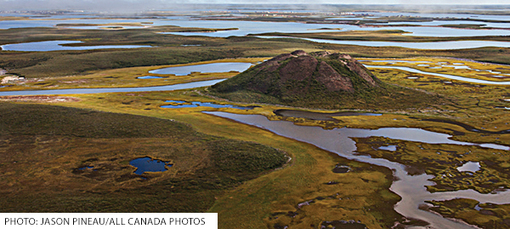
These are 50 HARD questions (any student not from Canada that gets over 50% right should pat themselves on the back). I will only give you one of the 50 answers since most of you have never been to the explore the frozen tunda; pictured above is a pingo. Pingos form when groundwater is pressurized and forced upward in a concentrated area by advancing permafrost. This groundwater-saturated sediment freezes and expands as it’s driven toward the surface, causing the earth above to bulge and eventually break open.
“On Saturday 12 December people in Saudi Arabia go to the polls. This is a rare event in itself, but on this occasion women in the country will be voting and standing for office for the first time in history. Voting for the municipal elections take place across Saudi Arabia, but we managed to speak to the first women to register to vote in the capital Riyadh.”
Tomorrow, Saudi women will have their first opportunity to vote. Voting power in this kingdom is limited but time will tell if this was merely a symbolic gesture of appeasement or the beginning of greater social changes.
In the unit on the political organization of space, one of the items listed to understand is the various forms of governance, including unitary, federal, and confederations.
Questions to Ponder: What are the advantages and disadvantages of each system? How do this impact the human geography and how does the human geography help to shape these governance systems? What real world examples can you think of for these categories?
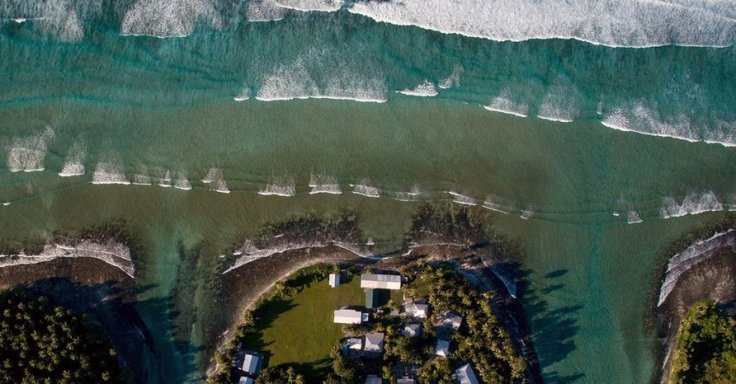
Most of the 1,000 or so Marshall Islands, spread out over 29 narrow coral atolls in the South Pacific, are less than six feet above sea level — and few are more than a mile wide. For the Marshallese, the destructive power of the rising seas is already an inescapable part of daily life. Changing global trade winds have raised sea levels in the South Pacific about a foot over the past 30 years, faster than elsewhere. Scientists are studying whether those changing trade winds have anything to do with climate change.
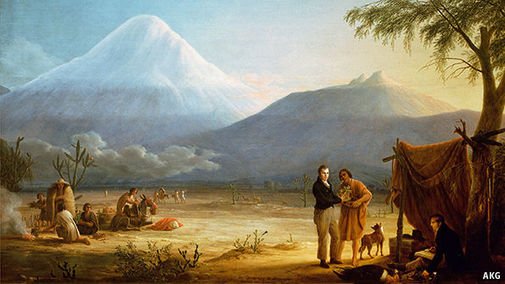
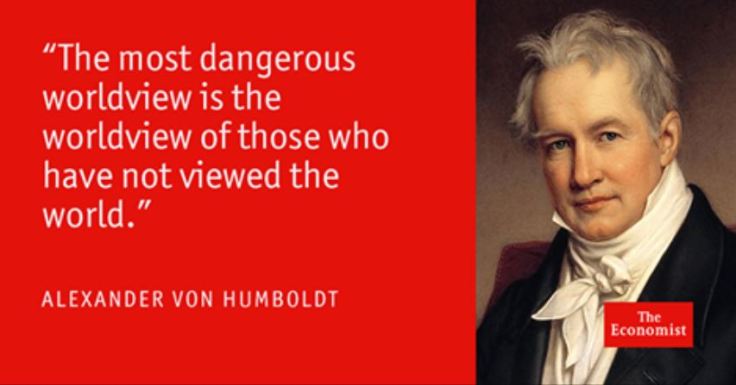
“On why a Prussian scientific visionary should be studied afresh…In a superb biography, Andrea Wulf makes an inspired case for Alexander von Humboldt to be considered the greatest scientist of the 19th century. Certainly he was the last great polymath in a scientific world which, by the time he died in Berlin in 1859, aged 89, was fast hardening into the narrow specializations that typify science to this day. Yet in the English-speaking world, Humboldt is strangely little-known.”
Alexander von Humboldt has been described as the last great ancient geographer concerned with understanding an eclectic cosmography as well as the first modern geographer. He is honored far and wide throughout Latin America and Europe, but given that intellectually people are confused as how to categorize him and classify his contributions, today he is under-appreciated. Geographers need to reclaim his memory and call his extensive, globetrotting work on a wide range of subjects ‘geography.’ Here is another article and TED-ED video on the most influential scientist that you might not have heard of (at least until today).
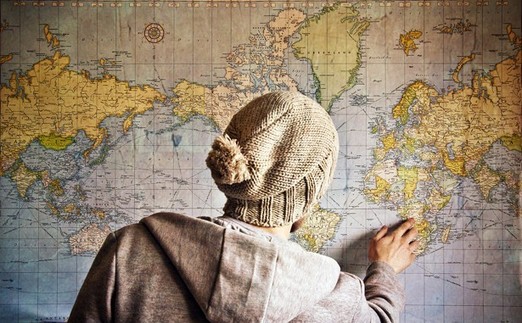
American education is largely limited to lessons about the West.
When I turned 15, my parents sent me alone on a one-month trip to Ecuador, the country where my father was born. This was tradition in our family—for my parents to send their first-generation American kids to the country of their heritage, where we would meet our extended family, immerse ourselves in a different culture, and learn some lessons on gratefulness.
My family’s plan worked. That month in Ecuador did more for my character, education, and sense of identity than any other experience in my early life.
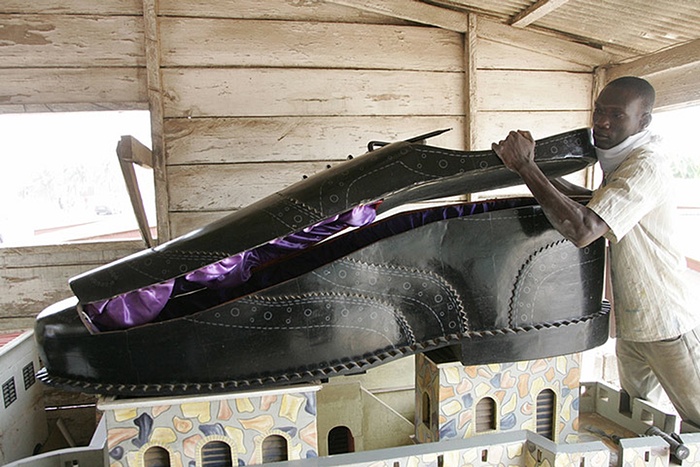
“Amid calls for a three-day weekend in Ghana to allow residents to attend more funeral parties (with the emphasis on party), here’s a look at some of the country’s famous customized coffins.”
Cultural practices surrounding death are designed to honor the departed and are deeply situated in the local customs. Some people from a different cultural setting might find the cultural practices of Mexico’s Day of the Dead startling.
Questions to Ponder: Do you this as having elements of popular culture or folk culture? Would these coffins ‘work’ in other places? Why or why not? What other cultural traits and attitudes need to be in places for this to be cultural acceptable?
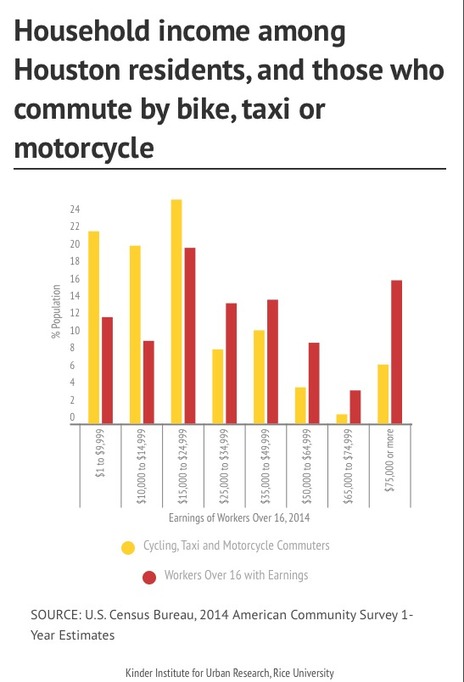
“Urban planners are noticing a cultural gap between bike advocates and others who bike. Planners see a particular type of cyclist: a working-class person – usually a minority and often a recent immigrant – riding to work on whatever type of bike he can get his hands on. Those cyclists are men and women for whom biking isn’t an environmental cause or a response to an urban trend but a means of transportation that’s cheaper than a car and faster than walking.”
Those that fight for bike lanes are not representative of all the cyclists. These invisible cyclists are show that the cycling is an economic strategy for many of the urban poor, just as it can be a social statement for wealthy bike riders.




 GEOGRAPHY EDUCATION