Search

GEOGRAPHY EDUCATION

Supporting geography educators everywhere with current digital resources.

Category

Uncategorized

Revisiting the Soviet Union

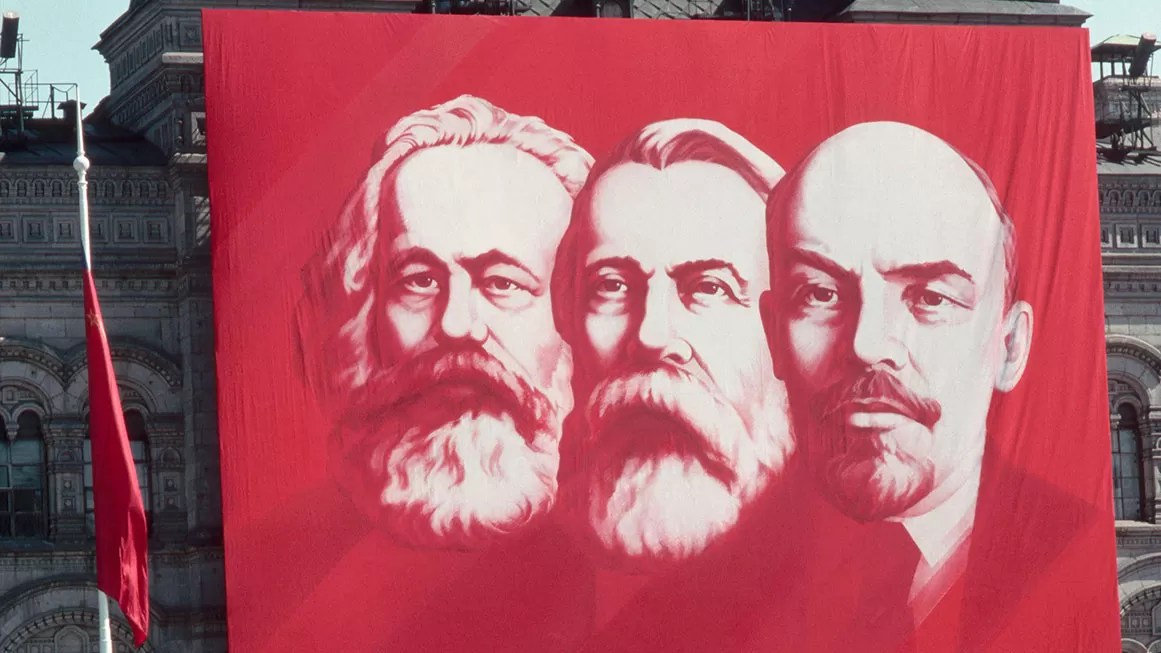
Yes, It Was An ‘Evil Empire’: Nearly every form of Soviet nostalgia gets the facts wrong.

“In 1983, the 61-year-old empire looked like it would be eternal. In just a few years, Soviet communism was relegated, just as Reagan had predicted to much ridicule, to ‘the ash heap of history.’ The leaders of the new Russia that emerged in its place themselves echoed the language of ‘evil empire’ when they spoke of the Soviet past: During the 1996 elections, President Boris Yeltsin told supporters at a campaign rally they had to win ‘so that Russia can never be called an evil empire again.’ An idealized image of Soviet communism also bubbled back up among progressives in the West, especially after the reputation of democratic capitalism was left tarnished by the war in Iraq and the Great Recession.” SOURCE: Reason Magazine

The quoted article is by Cathy Young, an American journalist who lived her first 17 years in the Soviet Union. Her perspective than is hardly neutral and dispassionate. For the goal of reevaluating the legacy of the Soviet Union, especially for young people how weren’t alive during the times of the USSR, I think that her background is incredibly helpful to understand what is life behind the Iron Curtain during the Cold War.

Bread Around the World

“Bread is known to be convenient, nutritious, and, of course, delicious. From naan in India to the French baguette, we take a look at 29 types of bread around the world.” SOURCE: Insider Food

Of course geographers love videos that highlight places around that world that give you the feeling of leaving your homeland to travel to a different cultural context in new place. Videos like this that give a quick tour around the world so you can sample from the visual delights, even if the culinary ones are off the table.  This Travel Insider video channel has a few great examples that show how distinct regional variations in food production create cultural distinct local customs.  Food production is inherently cultural, and these videos show how local flavor creates a series of regional variations.  Linked as well here is a great article showing the amazing diversity of breads around the world.

While I’m a fan of the “cheese around the world” video, I’ll include one other on the food theme–sandwiches from around the world–is embedded below.   

GeoEd Tags: culture, place, video, food, food production, agriculture, worldwide

Don’t be a Doomer

“I’m not trying to cheer anyone up, least of all the doomers themselves. What I really want is for people to refocus on the problems that matter most, and to stay motivated to fight those problems. I cannot give you any set of facts or statistics or charts that tells you whether you should be optimistic or pessimistic about the world; that is a matter of opinion. But what data can do is to make you better able to calculate the relative importance of the various threats, risks, and trends in the world.” SOURCE: Noahpinion on Substack

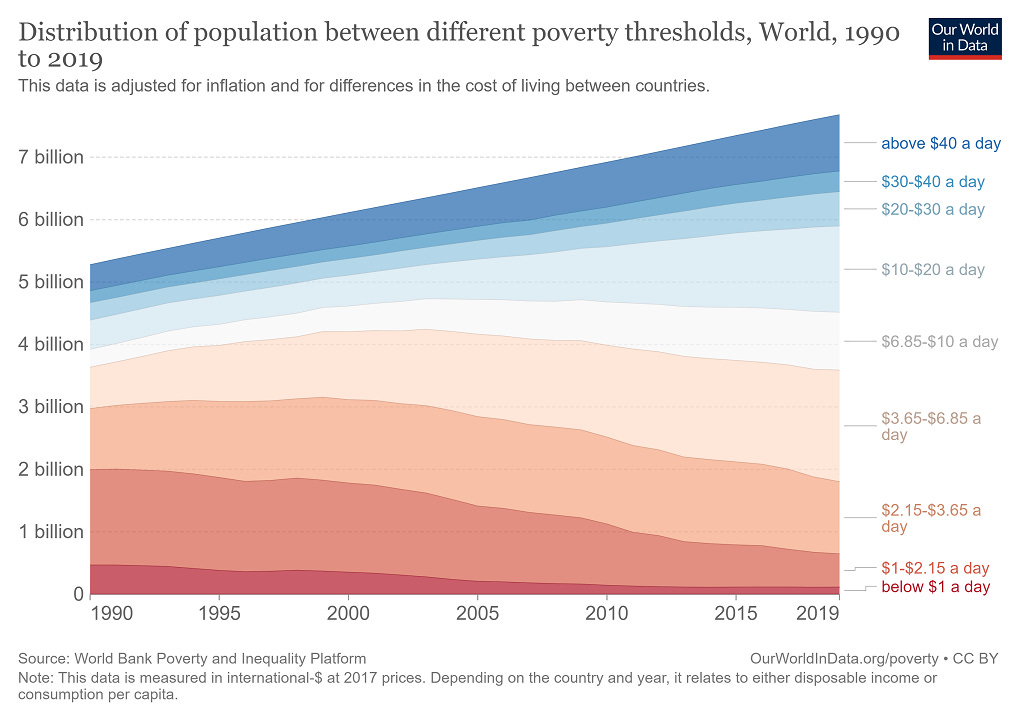
Long-time readers and observers of this page will have seen that a recurring theme of mine is to resist the prevailing notion that the world is continually sliding into apocalyptic doom and we need to really freak out about it.  A corollary of the doomer mentality is at that acknowledging human progress might be harmful because it might foster political apathy, reduce activism, and is therefore not a “helpful” framework for education, journalism, or research. Dan Gardner notes that the conversation around population/resources fails to note the changes of the last 30 years.   This article by Noah Smith, an economist, is a healthy reminder that pessimistic headlines garner greater attention, the story of the last 200 years, as well as the last 50 years, is one of overwhelming progress. Also, Hannah Ritchie from Our World in Data shows how creating a more sustainable future needs framework where a better future is achievable.

As a member of Heterodox Academy, I think that fostering viewpoint diversity in the academy matters, and that higher education should have truth seeking as its highest purpose.  I’m of the perspective that an honest portrayal of objective truths is what society needs.  Obviously, this is difficult if not impossible to achieve, but an essential norm to strive for if we are going to have a healthy worldview.      

Past posts on the topic:

The world is far from perfect, but it is getting better for more people

Moving Rivers, Moving Borders

SOURCE: BBC on Youtube

“In 1967, the residents of US-Mexico border town Rio Rico discovered they weren’t Mexican citizens but were actually American. For years it was assumed Rio Rico was part of Mexico, because it lay south of the river that forms the US-Mexico border. During the Prohibition era, the town became known as a place US citizens could go to freely drink and gamble. However, prior to 1906, Rio Rico actually lay to the north of the river and was therefore American territory.”

Rivers, mountains, and deserts around the world act as border between countries. But what happens when the river changes course? Large changes are rarely, but an example like the Chamizal in Texas has changed hands based on the the river channel deviating its course.

The border changes as the river changes, with a big exception. The exception being when the river flow is unilaterally altered…and that is exactly what happened with Rio Rico. This great historical map shows the meanders and the Horcon tract (419 acres) that was artifically cut off from the United States by a U.S. irrigration that never told the residents of reposted the old markers for the border. This lead to fascinating little history as told in the video above.

The giant bend in the old river on the southern edge of the map is were Rio Rico is today.

Turning the Sahara into Farmland

In the African Sahel, a country called Niger bordering the Sahara Desert, the largest desert in the world, is stopping desertification and turning is deserts into an Oasis. Regenerative Agriculture is leading the way with a technique called Farmer Managed Natural Regeneration (FMNR).  The innovative technique has been adopted by local farmers through peer-to-peer learning making it cost effective and easy to implement. Over the last 40 years the visual results and the data have shown FMNR has been extremely successful in turning desert into farmland. It has regenerated 5 million hectares of degraded land; 200 million trees have been restored and has benefited 2.5 million people increasing household income by 18-24%. The available arable land has doubled since the severe droughts of the 1970s and tree density has 10x since its all-time low in the 1980s. This is an extraordinary achievement considering Niger only receives on average 6.5 inches of rainfall a year and 80% of the country is considered a desert.” SOURCE: Leaf of Life on YouTube  

This video highlights the effort that Niger has made to prevent the desertification.  The Sahara could easily spread further south into the Sahel given the right (or wrong conditions).  Overgrazing on marginal lands with little precipitation can easily lead to the expansion of the desert.  Once of the strategies used by local communities in the Sahel is known as farmer-managed natural regeneration (FMNR). 

This strategy of having farmers manage the land is seen as an effective way to promote sustainable environmental, economic, and developmental goals.   In dry ecosystems on the edge of a desert like the Sahel in Niger, FMNR can reverse tree loss and biodiversity

TAGS: Niger, Africa, development, agriculture.

Selling Place

I’m a San Diego kid originally and loved recognizing some of the iconic locations in the tourism video promoting the San Diego region.  Travel and tourism boards often need to promote local geographic characteristics and among those is a distinctive cultural landscape with prominent landmarks.  In this video, what are the elements of the cultural landscape that they used?  How is “place” being sold to a broader audience? 

Not every place can be have San Diego beaches, weather, and carne asada, but the beauty of geography is that they don’t have to be.  Omaha, Nebraska stand is stark contrast to is in many ways (definitely landlocked without the nice coastal breezes).  Omaha doesn’t try to be San Diego; in fact, they open admit their lack of a coastline in their tagline for their local Chamber of Commerce, “We Don’t Coast.”  This major city in a fly-over state knows it’s not like coastal America, and it leans into their difference as an asset.    

Questions to Ponder: How does a city/place close to you advertise it’s regionally distinctive cultural landscape? What types of characteristics get highlighted?  

This video shows Israel’s selling of geographic distinctiveness.

Agribusiness Machines

All 15 machines are probably too much too show in one sitting, but try one or two relevant to your students.

The individual machines that are shown in this video aren’t so important to our geographic inquiry, but the scale and the scope of mechanization on the agricultural sector is absolutely the point here.  Agricultural production has increased exponentially (dare I say geometrically?) since the Industrial Revolution and machines (and increasingly sophisticated machinery) are the reason why.  Our collective capacity to grow grow more food has many reverberating implications, and I’ll mention a few of them here:

  • Population growth has never faced the feared Malthusian limits. 
  • The prices of most commodities (relative to the time in takes to earn the money) has dropped in the last few decades.
  • Less land is used for agriculture now than 20 years ago (Our World in Data).   

One of the reasons for the importance of the uniform agricultural landscape (i.e.-evenly spaced rows) is that the mechanization process requires a degree of precision that only works with a highly uniform landscape.  The vast majority of these machines rely of fossil fuels and not so easily replaced with commercial electric vehicles given their power requirements and need to be away from recharging stations.    

Tags: agriculture, agribusiness.

Good News Stories you Probably Missed

Every New Year, I look forward to seeing this list. I love seeing this since small, incremental improvements that are norm rarely make the news, but unrepresentative catastrophes gobble up the headlines. FutureCrunch put together a list of 99 positive stories that they see as representing human progress but that don’t get much publicity. They categorize these stories into six categories:

  • Human Rights
  • Conservation
  • Global Health
  • Decarbonization
  • Development
  • Animals

These stories all focus on global progress that occurred in the year 2022. Gradual, small improvements aren’t new: here are the FutureCrunch lists of 99 good stories from 2021, 2020, and…you get the point. Every year there are setbacks, but the incremental gains are the main trend. For my students, do some added research on some of these 99 stories of 2022 that interest you.  

Assignment:

  1. Identify 6 changes that surprised you and explain why you found the new information surprising.  Bonus points for exploring a story from each of the listed categories.  Label them A-F.   
  2. How do these stories impact your perspective or worldview?

Post-script: While preparing this post about an article on the positive, surprising news, unsurprisingly, I stumbled upon its exact opposite, a New Year’s Day. 

We are filled with negativity in social media that is often intended to exacerbate partisan divides and stoke animosity.  This is nothing new, but at the start of a New Year, a symbolic chance for rebirth, seeing 60 minutes interview Paul Ehrlich was disheartening for me (he’s both a long-discredited doomsday prophet but also a Stanford ecologist that the media loves since his message taps into our primal, existential fears that drives engagement).   

Ehrlich’s interview is from 3:00 to 5:00 in the above clip.

This article from Human Progress is an excellent, quick rebuttal to the positions advanced by Ehrlich in the interview.  Over 50 years of horrendous predictions that shows that his environmentalism prioritizes alarmism and activism over data and intellectual integrity.  Saying that the world is getting better (as I did in my TEDx talk) isn’t just optimism, it’s a recognition of reality.  Sure, there are real, profound problems, but that doesn’t negate the progress that has been made.  We need more incremental progress in the new year and should keep pushing for progress every year for the rest of our lives.     

The World’s Newest Republic

How one nation’s sovereignty movement is setting off a chain reaction among former British colonies in the Caribbean.

Though Barbados gained its independence as a constitutional monarchy in 1966, only last year did the nation formally sever ties with Britain—removing Queen Elizabeth II as its head of state and electing the nation’s first president in the process. Removing the Queen as head of state is not a political endpoint, then, but one step toward reasserting Black Barbadian identity and sovereignty.” SOURCE: The Atlantic

What is the difference between the United Kingdom, Great Britain, and England?  Or what about the distinction between the Commonwealth, possessions of the Crown, and the British Empire?  It is easy stay out of the complicated nature of these questions, but many people in former parts of the British Empire are starting to delve into these questions; the death of Queen Elizabeth made many of these conversations more on the forefront of the public consciousness. Some Commonwealth countries like Barbados have distanced themselves from what they see as vestigial remains of a complex colonial heritage, and countries like Jamaica are seriously considering following suit.

Questions to ponder: What old forces have kept political connections between the UK and former colonies in place for so many decades?  What new forces are reconfiguring political and cultural institutions in the Caribbean?

TAGS: Barbados, colonialism, Middle America, political, sovereignty.

Create a free website or blog at WordPress.com.

Up ↑