Search

GEOGRAPHY EDUCATION

Supporting geography educators everywhere with current digital resources.

Category

Uncategorized

Donbas: The heart of the Russian/Ukranian war

This map can go a long way towards explaining what the Donbas region is, and why it is seen as strategically important to both Russia and Ukraine. This BBC article makes a strong argument that capturing all of the Donbas region would now be Putin’s primary objective. What “winning” this war has meant for Russia has changed; especially now given that a quick takeover of the entire country of Ukraine is impossible. I see 4 reasons why Ukraine has done better in the first month of this war than some expected: 1) the government did not collapse under pressure, 2) the Ukrainian people took up the cause with patriotic fervor, 3) the Russian military was not the power that many expected, and 4) the international sanctions were more impactful in an integrated, global 21st century economy than they would have been just 50 years ago. At the start of the war Russia had (IMHO) much grander ambitions on what would have constituted a victory, but now, control of the entire Donbas region is still the prize that they’ve coveted and would represent an new idea victory. SOURCE: BBC
Tags: Ukraine, Russia, conflict.

Mapping the smallest circle around the largest population

My students have seen this image ever since I found this on social media. I’ve used it as a way to help students assess the validity of online resources (wait, you mean that not everything on the internet is true?!?) We often find what looks like a great maps or resource online that don’t have any reference to the data, author, date, or any other type of metadata.
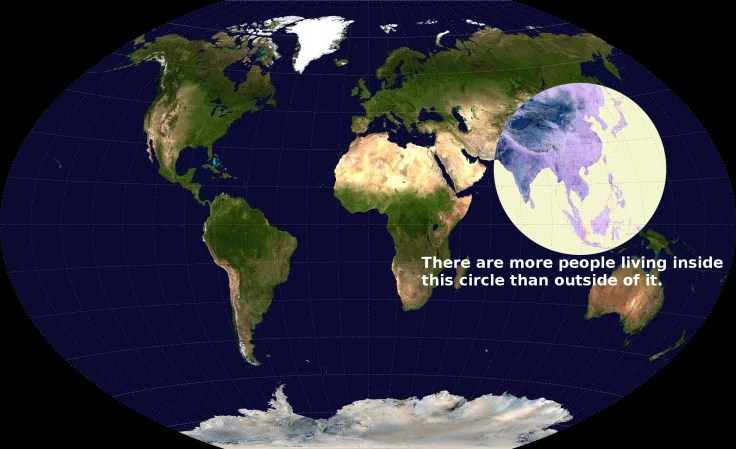
This map called the Valeriepieris Circle became famous about 9 years ago after garnering a ton of attention on Reddit. A cartographer did a deep dive into mapping the smallest circle around the largest percentage of the the global population. The result was dozens of maps, include the Yuxi Circle depicted below. This is such a powerful way to convey how uneven the distribution of global population actually is and opens the door to explore the consequences of population density.

SOURCES: Visual Capitalists, Stats Maps n Pix (deeper dive).

TAGS: cartography, mapping, density, population.

Russia’s Geopolitical Strategies

This video is one analysts take on Russia’s goals. One of the key ideas focuses on the Heartland Theory by Mackinder, which many thought was irrelevant at the end of the Cold War. While I don’t agree with all the opinions, they are all reasoned, informed perspectives.

Sanitation Struggles in India

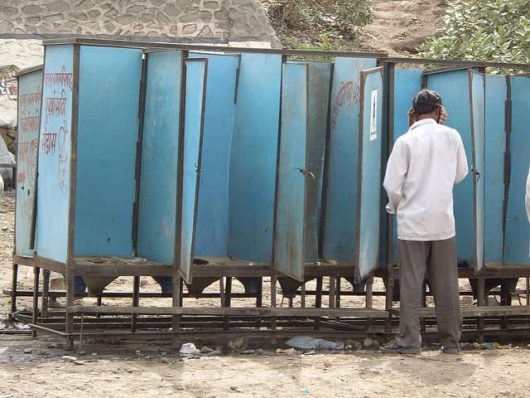
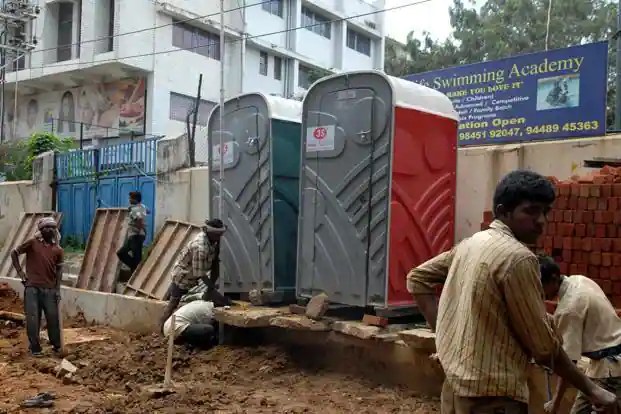
I’ve been teaching about the lack of toilets, open defecation, and adequate sanitation in India for years now, but over the pandemic, some of those articles I referenced became outdated (2016). So today I wanted to refresh my teaching materials. While the statistics have improved, it is still a serious health issue that remains a major impediment to economic and social development. The government proudly states that 100% of Indians have access to toilets, but a national survey found that 10% of the rural areas still defecate in the open (with other estimates much worse). Below are some good articles to get a sense of the current situation.

–CNET: India spent $30 billion to fix sanitation woes to mixed results

–CNN: India added 110m new toilets, but will they be used?

–BBC: Is India’s lack of toilets a cultural problem? (old article)

Assessing The Russian Geopolitical Position in Ukraine

This video is a good assessment about the some of the geopolitical threads that are emerging after the first three weeks of the Russian-Ukrainian War. While it is unsure what will happen in the future, I think the musing of this are not just guesses, but solid analysis given the information that we have at the moment. Below are a few of my favorite articles that I’ve read that give some insight into the conflict:

–Foreign Affairs: The End of Globalization? What War means for the World Economy

–The Geopolitics of Names and Spellings: Is it Kyiv or Kiev?

–Anything by Anne Applebaum, but here’s one: Ukraine Must Win

The video below focuses on Kyiv specifically, with an eye towards defense of the capital.

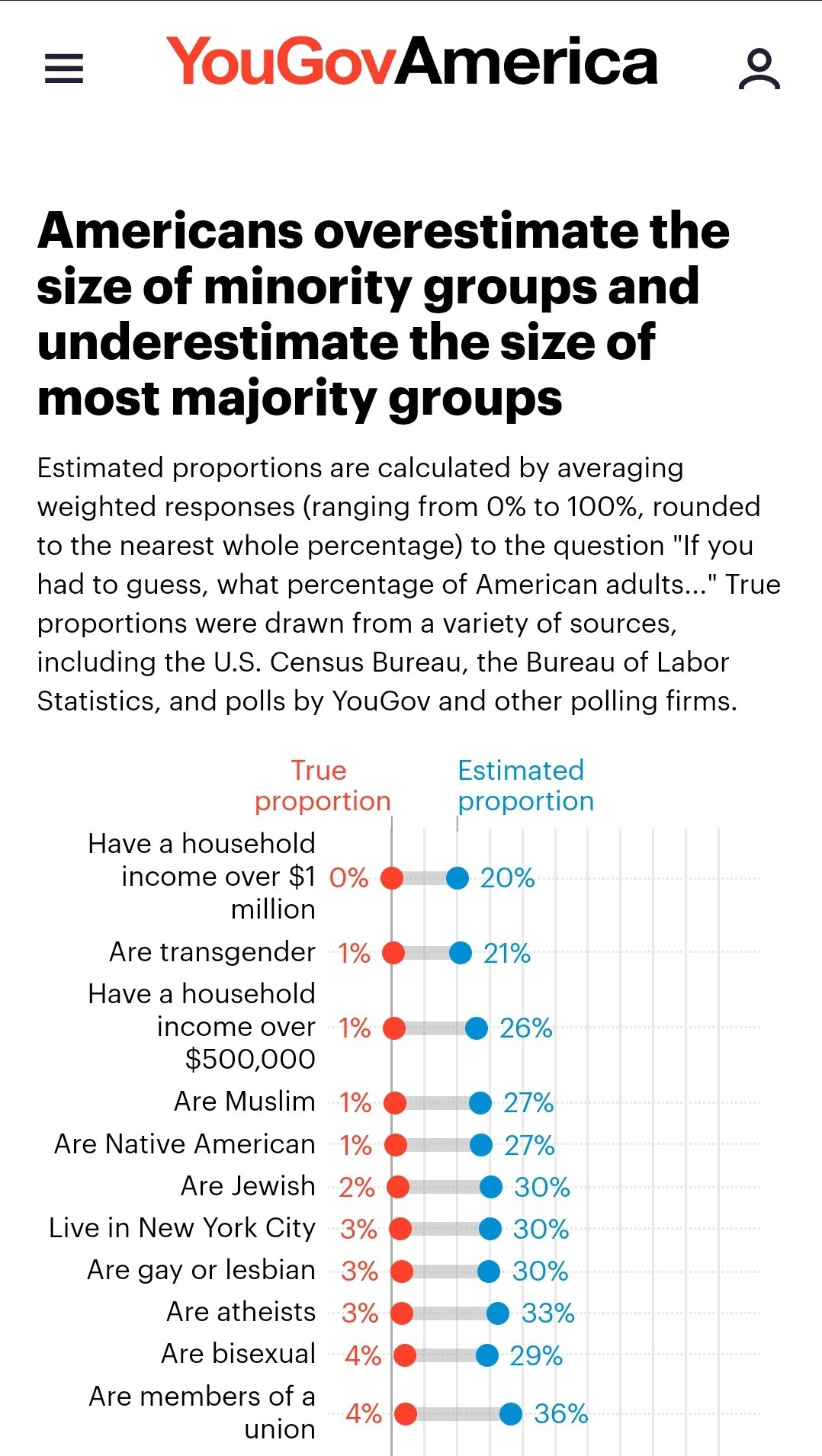
Can You Guess the Percentages?

SOURCE: YouGov

Questions to Ponder:

  • Which low number surprised you by how low it was?  How come?
  • Which high number surprised you by how high it was?  How come?
  • Is there are results that makes you question the validity of the survey for that question?  How come?  After doing some online research, how close was the original survey to other estimates?
  • Explain TWO reasons as to why we are so inaccurate with our guesses.

Exploring Ukraine through Maps

I created this ArcGIS Storymap using online maps circulating in the news and social media, but especially with the assistance of a map created at Lurgan College. While this StoryMap was intended for my students in my cartography, regional geography, and education courses, I hope that others might find it useful. I specifically went light on the analysis as I hope my students will use these materials to draw their own conclusions. I also posted the materials in several formats to highlight the advantages and disadvantages of several presentation strategies. If you have an ArcGIS account you can use these layers to create your own customized map. There are many other digital resources that students can use on projects to create a country report.

SOURCES: 1–ArcGIS Map. 2–ArcGIS StoryMap. 3–Tools for Student Projects, 4–Costa Rica Example.

Map Projections: Sea Chase

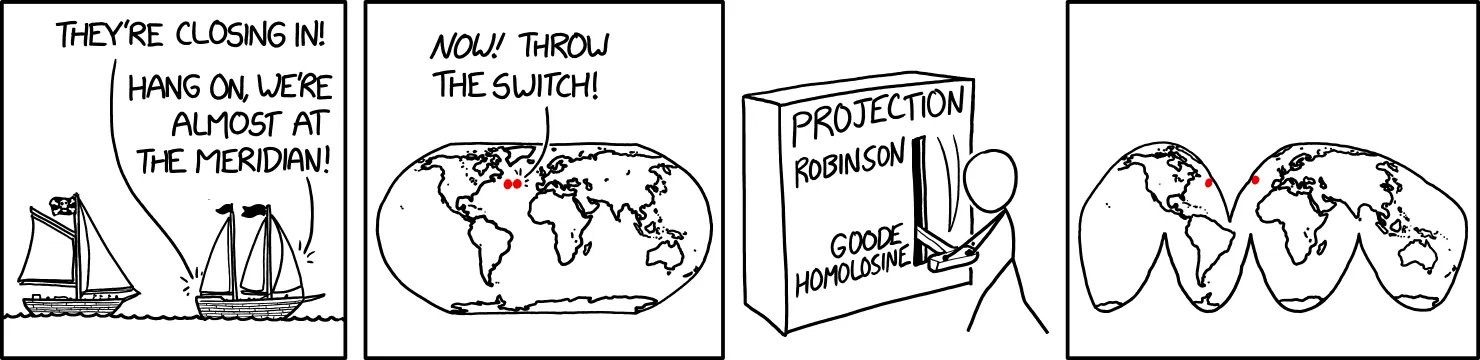
SOURCE: XKCD

This is a fantastic comic strip that shows how map projections are perfect representation of planet Earth, but a 2D rendering of a 3D world. A map projection is like a personal perspective or worldview. There is no single perfect map projection (or perspective or worldview), but there are some strengths and limitations to organizing geographic and spatial information in any given system.

TAGS: map projections, XKCD, fun.

Globle and Worldle: Newest Online Geography Games

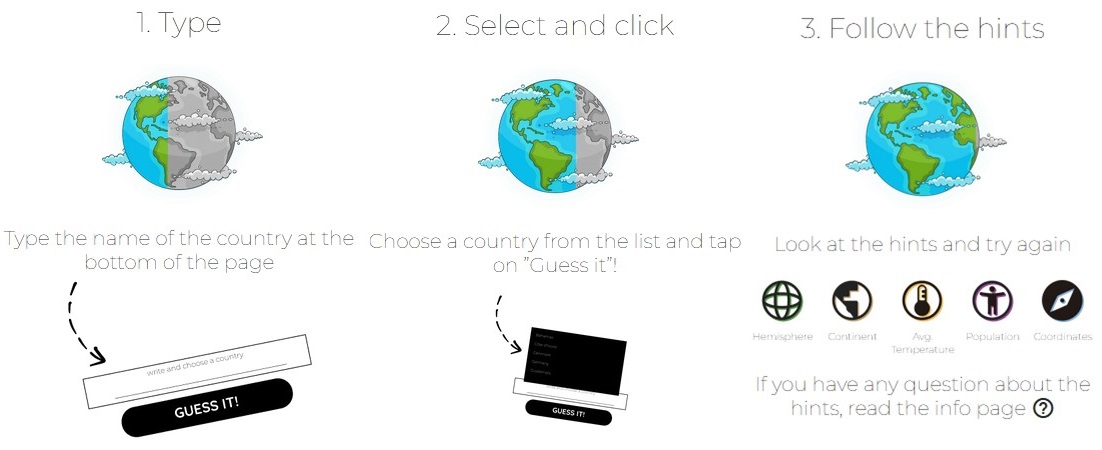
NEW UPDATE: Countryle. This is the one that relies most on geographic information since the hints are focus on real data. You guess any country, and the hints will tell you if the actual mystery country has a larger or smaller population, a warmer or colder climate…so that is the guesses aren’t just based on luck or hunches, but some evaluation.

UPDATE ANOTHER GEOGRAPHY GUESSING GAME!! Worldle (not misspelled, although I would forgive your mind for auto-correcting and not noticing that there is not just one L, but two L’s). This one shows an outline of the a given country, and will tell you the distance away from the actual country to help inform further guesses. The better you know the world map, the less “guessing” there is, but still fun. SOURCE: WORLDLE

THE ORIGINAL: I love online geography games (I know, huge surprise).  This newest one, The Globle Game, is riffing off Wordle which took the internet and social media by storm recently and I’m hooked. 

SOURCE: Globle-Game

The game is quite simple but don’t let that fool you into thinking that it will be easy.  Like the old game where one player searches for an item in the room, with the other players calling out “hot” or “cold,” until the player finds the object, this website shows a globe, and it will color your choice based on how accurate your guess is with a red color ramp (white=ice cold, deep burgundy=red hot).  Each day, they have a new mystery country for you to guess, but the globe that it displays does not show international borders.  This fun new guessing game requires a strong mental map as well as getting a little bit of luck…something to get the students’ brains fired at the start of class, especially for the competitive types.  For fun, there is as a “Night mode” with a purple color scheme, and a CITY version is forthcoming. 


TAGS: trivia, fun.

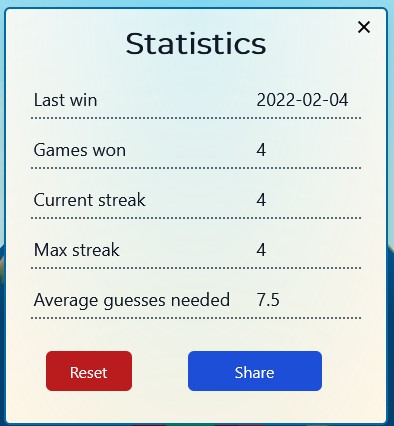
Can you beat my average? Go for it!!

Blog at WordPress.com.

Up ↑