Search

GEOGRAPHY EDUCATION

Supporting geography educators everywhere with current digital resources.

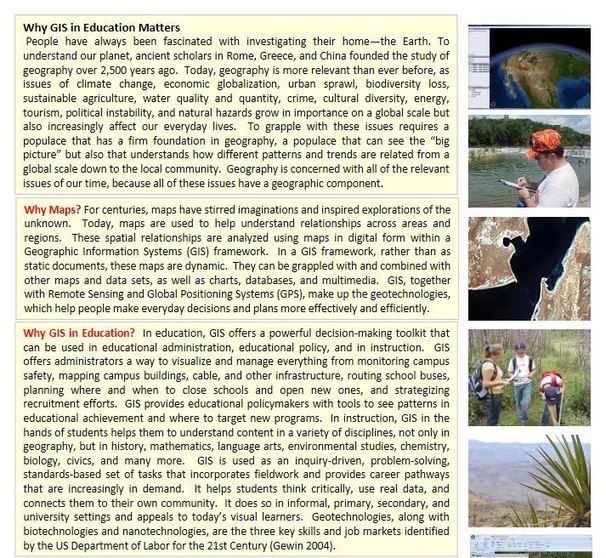
Why GIS in Education Matters

“I have recently updated a document entitled “Why GIS in Education Matters” and have placed it online.  It represents my attempt to provide the most compelling and important reasons to teach and learn with Geographic Information Systems in a concise document that takes up no more than both sides of a single page.  While we have discussed other documents, messages, lessons, and videos in this blog over the years that are tailored to specific educational levels, needs, and content areas, this document contains the “essentials” that I have found resonate with the widest group of educators.  These essentials include critical thinking, career pathways, spatial thinking, the whys of where, asking good questions, sustainability and green technology, and mapping changes over space and time.”

Tags: GIS, ESRI, mapping, cartography, geospatial, edtech, geography education, unit 1 GeoPrinciples.

Source: blogs.esri.com

Overpackaged Foods

Tagsfoodeconomicfood production, agribusiness, agriculture, unit 5 agriculture,

Source: instagram.com

Internal Migration in Mexico

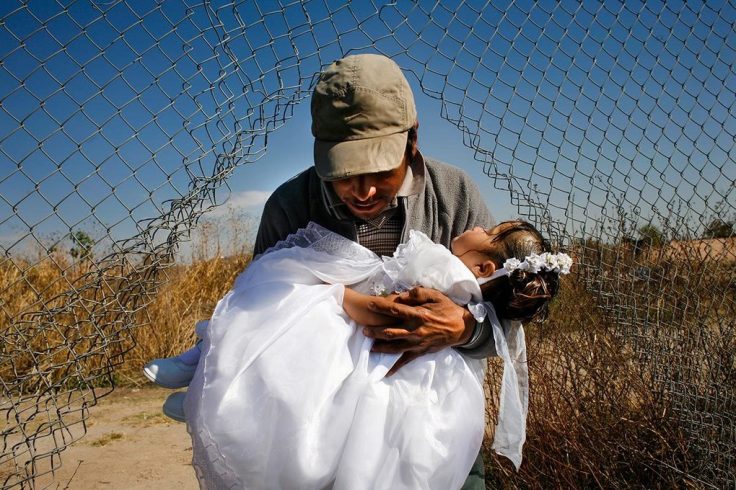
Mexico’s cities are ballooning in population while rural and indigenous communities, where there are still over 60 indigenous languages other than Spanish spoken, are disappearing. For many indigenous families, illiteracy and the powerful forces of racism and discrimination can often offset the lures that brought them to migrate to urban centers.

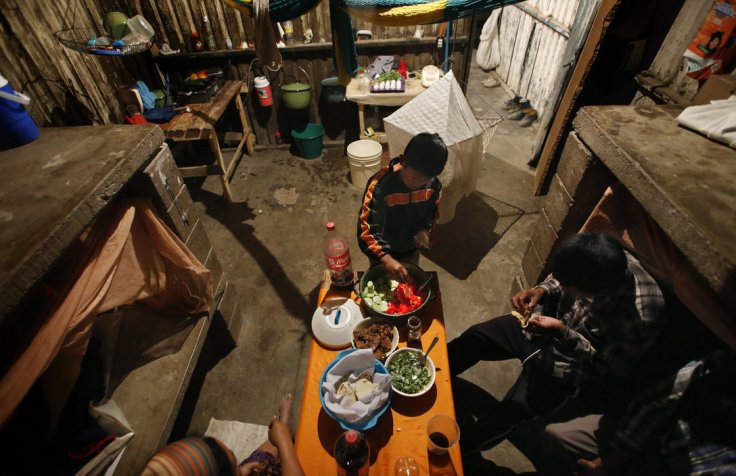
The northern border with the United States is not the only destination for Mexican migrants. For millions, the bustling cities, which offer hopes of better jobs and education lure many from their traditional rural, and often indigenous communities. What they find in the cities is a mix of hope and hardship.


TagsMexico, indigenous, economic, development, migration.

Source: migration.joshmeltzer.com

This interactive with over 20 video vignettes paints a powerful personal narrative of the lives of indigenous Mexicans who migrate to the larger cities of Mexico.  

Hajj stampede: Saudis face growing criticism over deaths

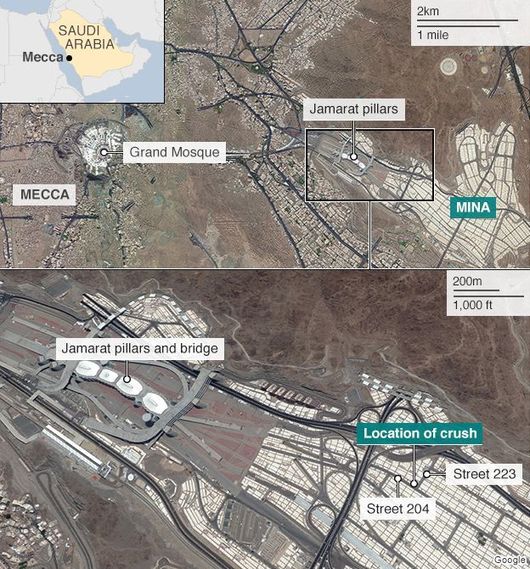
Iran leads growing criticism of Saudi Arabia after the deaths of at least 717 people in a stampede during the Hajj pilgrimage.

Tagstourism, Islam, Saudi Arabiaculture, religion, Middle East.

Source: www.bbc.com

Looking back at the Millennium Development Goals

“In which John examines the progress of the UN’s Millennium Development Goals over the last 15 years and looks ahead to the Global Goals. Can we live in a world where extreme poverty and undernourishment are rare? Are we closer to gender equality? How have infant mortality rates and maternal mortality rates changed in the last 25 years? And how will we ensure that the astonishing progress since 1990 continues?”

Source: www.youtube.com

The world isn’t perfect, but it is getting better.  The UN Millennium Goals were ambitious and overall have been a huge success (click here to see more from the Bill Gates videos the were referenced in the video above).  Today, world leaders are setting a new batch of developmental goals to work on for the next 15 years.  These Global Goals are even more ambitious and can give the global community direction and purpose.   


Tags: development, worldwide.


Product of Mexico: Hardship on Mexico’s farms, a bounty for U.S. tables

“Farm exports to the U.S. from Mexico have tripled to $7.6 billion in the last decade, enriching agribusinesses, distributors and retailers.
American consumers get all the salsa, squash and melons they can eat at affordable prices. And top U.S. brands — Wal-Mart, Whole Foods, Subway and Safeway, among many others — profit from produce they have come to depend on.These corporations say their Mexican suppliers have committed to decent treatment and living conditions for workers.  But a Los Angeles Times investigation found that for thousands of farm laborers south of the border, the export boom is a story of exploitation and extreme hardship.”

Source: graphics.latimes.com

This is a hard read, but it is important to understand that there is a dark underbelly to many of the economic systems that are reshaping the world today.  Sometimes we ask all the wrong questions, like “why is organic, local, or fair trade food so expensive?”  We should really be asking why the other options are so cheap. 


This, unfortunately is part of the answer.  This is a 4-part series (I-camps, II-labor, III-Company Stores, IV-Child Labor) from the LA Times that has excellent pictures, videos, and interviews highlighting the working conditions of farm workers in Mexico.  For an audio version, here is an NPR podcast interviewing Richard Marosi, the investigator behind the story.    


Tagsfoodeconomic, laborglobalizationfood production, agribusiness, agriculture, unit 5 agriculture, indigenous.

Fiddler on the Roof

Source: www.youtube.com

Folk cultures are often described as regionally based, nearly homogeneous, rural cultures.  These societies are typically dominated by the older generation, traditional, family-based and slow to change.  This is an audio-visually rich collage showing a classic example of a folk culture being confronted by the forces of a changing world. 

Tsunami Animation

“The largest earthquake ever recorded by instruments struck southern Chile on May 22, 1960. This 9.5 magnitude earthquake generated a tsunami that crossed the Pacific Ocean, killing as many as 2000 people in Chile and Peru, 61 people in Hilo, Hawaii, and 142 people in Japan as well as causing damage in the Marquesas Islands (Fr. Polynesia), Samoa, New Zealand, Australia, the Philippines, and in Alaska’s Aleutian Islands.  To see how this tsunami compares with two recent tsunamis from Chile, please watch http://youtu.be/qoxTC3vIF1U

Tags: physical, geomorphologywater, tectonics, disasters, video.

Source: www.youtube.com

“Why don’t we just bomb them?”

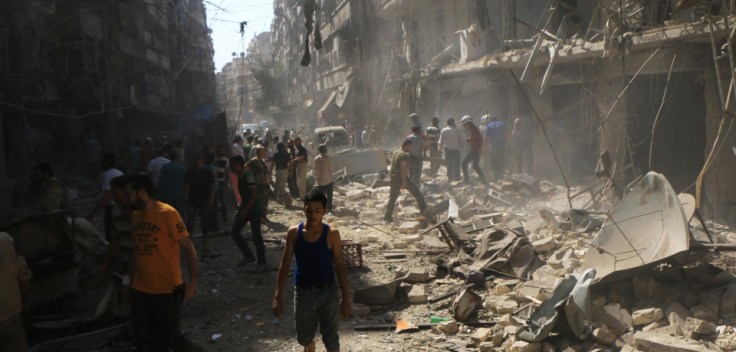
“The west’s failure has already fueled Syria’s dirty war. Now it needs to address how we got here, the endgame, the legality and the global implications before it asks for permission to shoot.”

Source: www.theguardian.com

I think we’ve all heard someone say something along the lines of “why doesn’t someone just take them out/bomb them?” about ISIS or Syria’s leader, Bashar al-Assad.  As is often the case, it’s not that simple to remove a thorn as actions can have reverberating consequences.  Here are three articles to consider when discussing the merits/feasibility of military intervention in Syria:


TagsSyria, war, conflict, political, geopolitics.

Blog at WordPress.com.

Up ↑