Search

GEOGRAPHY EDUCATION

Supporting geography educators everywhere with current digital resources.

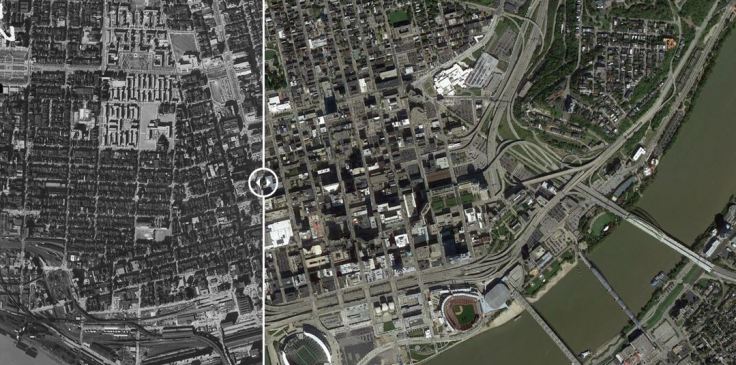
Visualizing Urban Change

“60 years has made a big difference in the urban form of American cities. The most rapid change occurred during the mid-century urban renewal period that cleared large tracts of urban land for new highways, parking, and public facilities or housing projects. Fine-grained networks of streets and buildings on small lots were replaced with superblocks and megastructures. While the period did make way for impressive new projects in many cities, many of the scars are still unhealed.  We put together these sliders to show how cities have changed over half a century. In this post, we look at Midwestern cities such as [pictured above] Cincinnati, Ohio.”

Source: iqc.ou.edu

It’s ironic that I feel more accustomed to exploring Cincinnati, OH on foot than I do Providence, RI.  Although I drive in downtown Providence regularly, I seldom have a reason to walk and explore it.  In my yearly visits to Cincinnati to score the AP Human Geography exams, I’m outside my hometown and away from my typical routine. That helps me feel more like a flâneur, to stroll the streets and explore the urban landscape.  This set of 7 before and after images shows Midwestern cities (Cincinnati, Detroit, St. Louis, Minneapolis, Milwaukee, Indianapolis, Cleveland, and Columbus) lets you digitally analyze the last 70 years of urban morphology.  Click here for a gallery 7 of cities in Texas and Oklahoma


Questions to Ponder: What are the biggest changes you see for the 1950 to today?  How are the land uses difference?  Has the density changed?  Do any of urban models help us understand these cities?

Tags: urban, planning, industry, economichistorical, geospatial, urban models, APHG.

Who Owns The North Pole?

“Though uninhabited and full of melting ice caps, the Arctic is surprisingly an appealing piece of real estate. Many countries have already claimed parts of the region. So who technically owns the North Pole? And why do these nations want it so bad?”

Source: www.youtube.com

Denmark is now being more assertive in their claimsWhy is this happening now?  As climate change threatens polar ice caps, some see the receding ice as an economic and political opportunity.  Canada, Russia, Denmark (Greenland) and the U.S. are all seeking to expand their maritime claims in the Arctic.  When trapped under ice, extracting resources is cost prohibitive, but the melting sea ice will make the Arctic’s resources all the more valuable (including the expanded shipping lanes).  Even a global disaster like climate change can make countries behave like jackals, ready to feast on a dead carcass.  For more, read this National Geographic blogpost.  


TagsArctic, economic, environment, political, resources, water, sovereignty, coastal, environment depend, territoriality, unit 4 politicalclimate change, political ecology.

Why Does Earth Have Deserts?

Source: www.youtube.com

The very short answer–Hadley Cells.  This Minute Earth video nicely explains why the Earth has tropical rainforests near the equator and deserts just to the north (and south) of them.  For another physics video that shows more of the science of swirling fluid dynamics, check this video out.   

Forget Midwest. We Are North: Repositioning Minnesota’s National Identity for the 21st Century

“The Midwest is this big nebulous part of the country and it’s kind of what’s left over after all the other regions of the country are defined. Those regions have much stronger identities if you think of the East Coast or maybe New England or the Pacific Northwest or certainly the South. The Midwest is kind of the catchall for what’s left.  We [Minnesota] should be called the North.”

Source: www.thelinemedia.com

Whether I agree or not with the ideas being discussed, I simply love that this discussion is taking place and how intensely geographical the ideas and evidences being brought forward are.  

Questions to Ponder: So what region do you live in?  What defines that region?  Are there other regions that you can claim to be a part of also?  How would you divide the United States into various regions?  How come?

Tagsplaceregions, culture

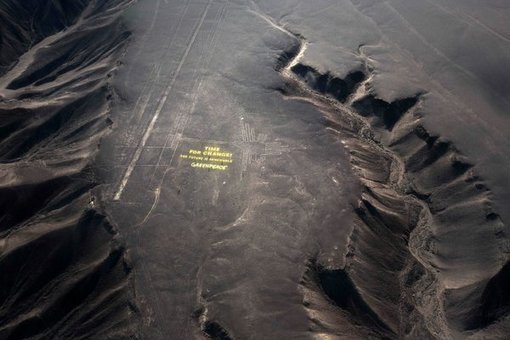
Peru Is Indignant After Greenpeace Makes Its Mark on Ancient Site

A sign urging environmental action during a United Nations summit meeting on climate change was placed near a 1,000-year-old geoglyph that is a cultural treasure in Peru. Officials are outraged over the trespassing and the disturbance of the ancient grounds.

Source: www.nytimes.com

Greenpeace is falling for some of the same social media fails as the selfie generation.  Peruvian authorities are angry that Greenpeace activists damaged a forbidden archeological site that is both a national symbol and sacred site.  UN climate talks are taking place in Peru right now, so this Greenpeace publicity stunt becomes all the more ironic.  The Peruvian government is accusing them of irrevocably damaging the environment at this site.  


TagsreligionSouth AmericaPeru, environment.

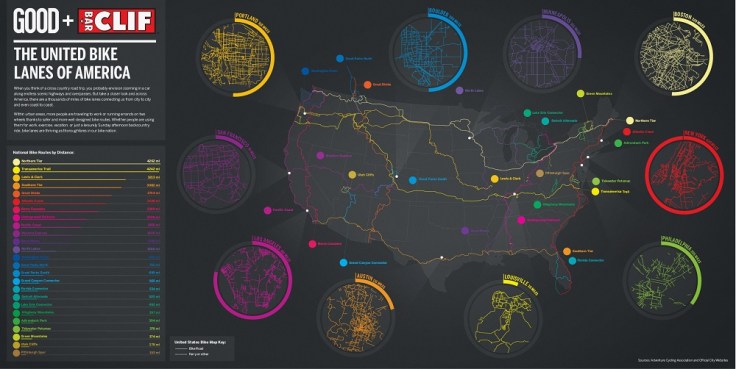
The United Bike Lanes of America

What do America’s bike paths look like from coast coast and how do bike lanes in cities stack up?

Tags: transportation, planning.

Source: magazine.good.is

The Historical Geography of Whaling

“Summer 2014 brought a sight that had not been seen since 1941: the Charles W. Morgan leaving the Mystic River for the Atlantic Ocean, stopping at several New England harbors before eventually arriving in New Bedford, Massachusetts where the ship was built in 1841. The Charles W. Morgan is the last remaining wooden whaling ship in the world, and a National Historic Landmark.”

Source: maps101blog.com

Only two countries today are stilling whaling (Japan and Norway), but the whaling industry was a critical component to the settling of New England.  Check out this Maps 101 podcast for short introduction to the historical geography of New England whaling.  

Tagspodcast, Maps 101, historicalbiogeography.

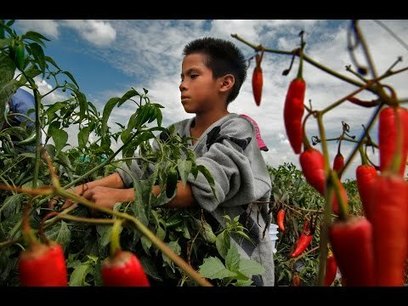
Product of Mexico – Harsh Harvest

“Farm exports to the U.S. from Mexico have tripled to $7.6 billion in the last decade, enriching agribusinesses, distributors and retailers.
American consumers get all the salsa, squash and melons they can eat at affordable prices. And top U.S. brands — Wal-Mart, Whole Foods, Subway and Safeway, among many others — profit from produce they have come to depend on.These corporations say their Mexican suppliers have committed to decent treatment and living conditions for workers.  But a Los Angeles Times investigation found that for thousands of farm laborers south of the border, the export boom is a story of exploitation and extreme hardship.”

This is a hard read, but it is important to understand that there is a dark underbelly to many of the economic systems that are reshaping the world today.  Sometimes we ask all the wrong questions, like “why is organic, local, or fair trade food so expensive?”  We should really be asking why the other options are so cheap. 

This, unfortunately is part of the answer.  The video above is a snippet from a 4-part series (I-camps, II-labor, III-Company Stores , IV-Child Labor) from the LA Times that has excellent pictures, videos, and interviews highlighting the working conditions of farm workers in Mexico.  For an audio version, here is an NPR podcast interviewing Richard Marosi, the investigator behind the story.    

Tagsfoodeconomic, laborglobalizationfood production, agribusiness, agriculture, unit 5 agriculture, indigenous.

The Data-Driven Farm

“Mr. Tom is as much a chief technology officer as he is a farmer. Where his great-great-grandfather hitched a mule, ‘we’ve got sensors on the combine, GPS data from satellites, cellular modems on self-driving tractors, apps for irrigation on iPhones,’ he said.

The demise of the small family farm has been a long time coming. But for farmers like Mr. Tom, technology offers a lifeline, a way to navigate the boom-and-bust cycles of making a living from the land. It is also helping them grow to compete with giant agribusinesses.”

Source: www.youtube.com

The New York Times article associated with the video above offers a great glimpse into the inner works of how agribusiness technologies have transformed the American family farm.  

Tags: agriculture, food production, agribusiness, unit 5 agriculture.

Blog at WordPress.com.

Up ↑