Search

GEOGRAPHY EDUCATION

Supporting geography educators everywhere with current digital resources.

For the Love of Maps

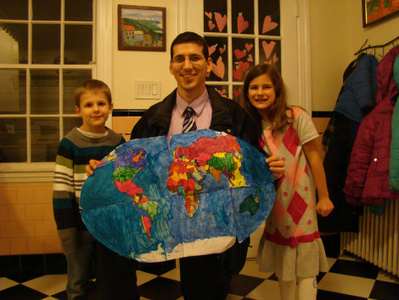
I have a confession to make; I’m a map geek. Even as a kid watching Raiders of the Lost Ark, I was fascinated by the map they used to segue between scenes to show Indiana Jones’ travels.

Source: blog.education.nationalgeographic.com

I hope you enjoy this article; I enjoyed writing it.  I write about my map geekiness (does that surprise anyone out there?), share my place-based videos StoryMap with over 60 of my favorite classroom videos, and why teaching kids to appreciate the value of maps is important.  All of my future articles for National Geographic Education will be archived here at this link.

Tags: National Geographicmapping, edtech.

The surprising math of cities and corporations

“Physicist Geoffrey West has found that simple, mathematical laws govern the properties of cities — that wealth, crime rate, walking speed and many other aspects of a city can be deduced from a single number: the city’s population. In this mind-bending talk from TEDGlobal he shows how it works and how similar laws hold for organisms and corporations.”

Source: www.youtube.com

While corporations rise and fall, it is quite rare for a city to entirely fail as an economic system.  Huge cities have some negative consequences, but the networks that operate in the city function more efficiently on economies of scale in a way that offsets the negatives.  Increasing a city’s population will continue to improve the economies of scale (larger cities have higher wages per capita, more creative employment per capita, etc.).  However, this growth requires major technological innovations to sustain long-term growth.  


Tagsurban, planningmegacities, industry, economic, scaleTED, video.

Vote for your Favorite Image

“Please join us in voting for DigitalGlobe’s fourth annual Top Image contest. From the trillions of pixels captured by our satellites this year, we need your help to decide which image showcases DigitalGlobe’s unique ability to solve important problems from space. Just follow these three easy steps:
Step 1: To vote, simply go to DigitalGlobe’s Facebook page to see the Top Image 2014 album.
Step 2: Click through the images to learn about the different applications and industries we serve, and ‘like’ the images that you think best showcase the value of satellite imagery.”

Source: www.digitalglobeblog.com

Detroit by Air

The stark contrast between the haves and have-nots is apparent from above, so too is the city’s rebound.

Source: www.nytimes.com

In the 1950s, Detroit was the 4th largest city in the U.S. with a booming population around 2 million as seen in some vintage footage of Detroit.  As the de-industrialization process restructured the US economy, globalization restructured the world’s economy, and Detroit’s local economic strategy crumbledDetroit was $18-20 million in debt with a population around 700,000 and is unable to pull out of this nosedive. The tax base shrunk, city services were spread thin and in 2013, Detroit filed for bankruptcy.  Today, some parts of Detroit are rebounding well while others are in absolute disarray.  These differences can, in part, be understood by using aerial photography and a spatial perspective.  

Tags: urban, economic, industry, Detroit

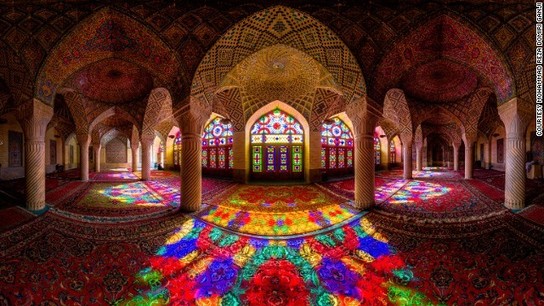
Incredible images capture dazzling symmetry of Iran’s mosques

“Self-taught Iranian photographer gains rare access to shoot religious buildings as they’ve never been seen.  It’s a side of Iran the rest of the world doesn’t normally get to see — the kaleidoscopically brilliant interiors of the country’s intricately designed mosques.With beautiful mosaics and stained glass framed by powerful architecture, the buildings are astounding.”


Tagsreligion, culture, IslamIran, Middle East.

Source: edition.cnn.com

Why Do Rivers Curve?

Source: www.youtube.com

While this Minute Earth video might make geomorphology experts cringe at some of the vocabulary in this, it still is a good introduction to the absolute basics of fluvial geomorphology, or how and why rivers reshape the Earth. 

Tagsphysical, fluvial, geomorphology, erosion, landscape.


Conflict Kitchen serves up controversy

Conflict Kitchen is an art project based in the centre of Pittsburgh which serves food from countries with which the US is ‘in conflict’.  The founders get to define what conflict means – it can range from outright war to economic sanctions – and since opening in 2010 they have prepared food from Afghanistan, Iran, North Korea, Venezuela and Cuba.  But the restaurant’s latest choice of cuisine, Palestinian food, has caused controversy in the city and even led to a death threat which temporarily closed the venue.  Critics pointed out that the US is not in conflict with the Palestinian people. They claimed that the pamphlets served with the dishes included ‘anti-Israel’ propaganda. But Conflict Kitchen’s founders said the project was designed to encourage debate among Americans.”

Source: www.bbc.com

Questions to Ponder: What do you think the purpose of Conflict Kitchen is for the restaurant owners?  Many people choose restaurants for a cultural experience; what type of cultural experiences are these patrons searching for by eating at Conflict Kitchen?  What political overtones are there to these cultural encounters?  Is this a form of ‘gastro-diplomacy?’ 

Tags: foodpolitical, culture.

Why Do Rivers Curve?

Source: www.youtube.com

While this Minute Earth video might make geomorphology experts cringe at some of the vocabulary in this, it still is a good introduction to the absolute basics of fluvial geomorphology, or how and why rivers reshape the Earth. 

Tagsphysical, fluvial, geomorphology, erosion, landscape.


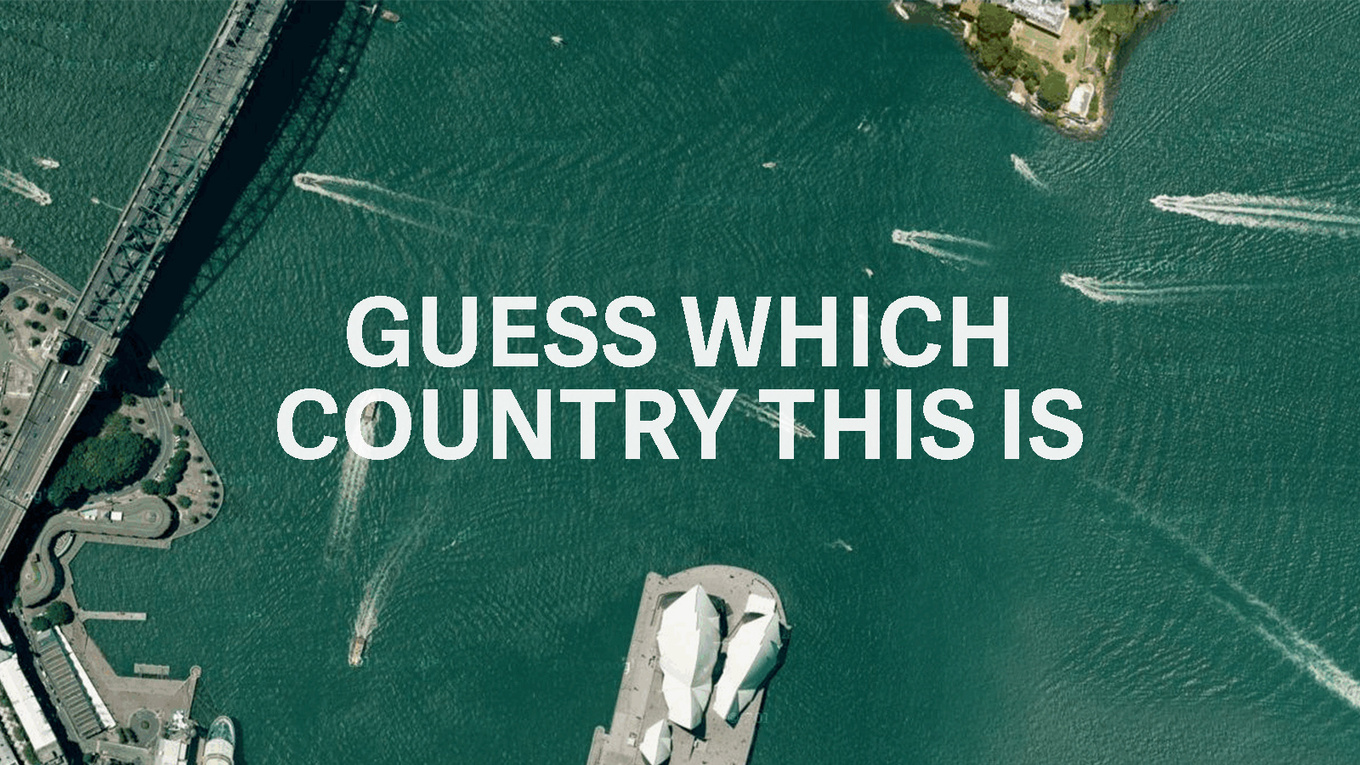
Where in the World?

There are some beautiful images and places to be discovered through this quiz.  This set of aerial photographs challenges the reader to guess the country where the image was taken; even with two options, it’s quite challenging.  This forces the reader to use context clues in the physical and human landscapes to make an education guess.  If you are looking for more, here is an additional quiz.  To explore more Google Earth images, Stratocam is a great place to start.   

Source: qz.com

Tags: landscape, remote sensing, geospatial, trivia, games.

Create a free website or blog at WordPress.com.

Up ↑