Search

GEOGRAPHY EDUCATION

Supporting geography educators everywhere with current digital resources.

California’s Drought

See on Scoop.itGeography Education

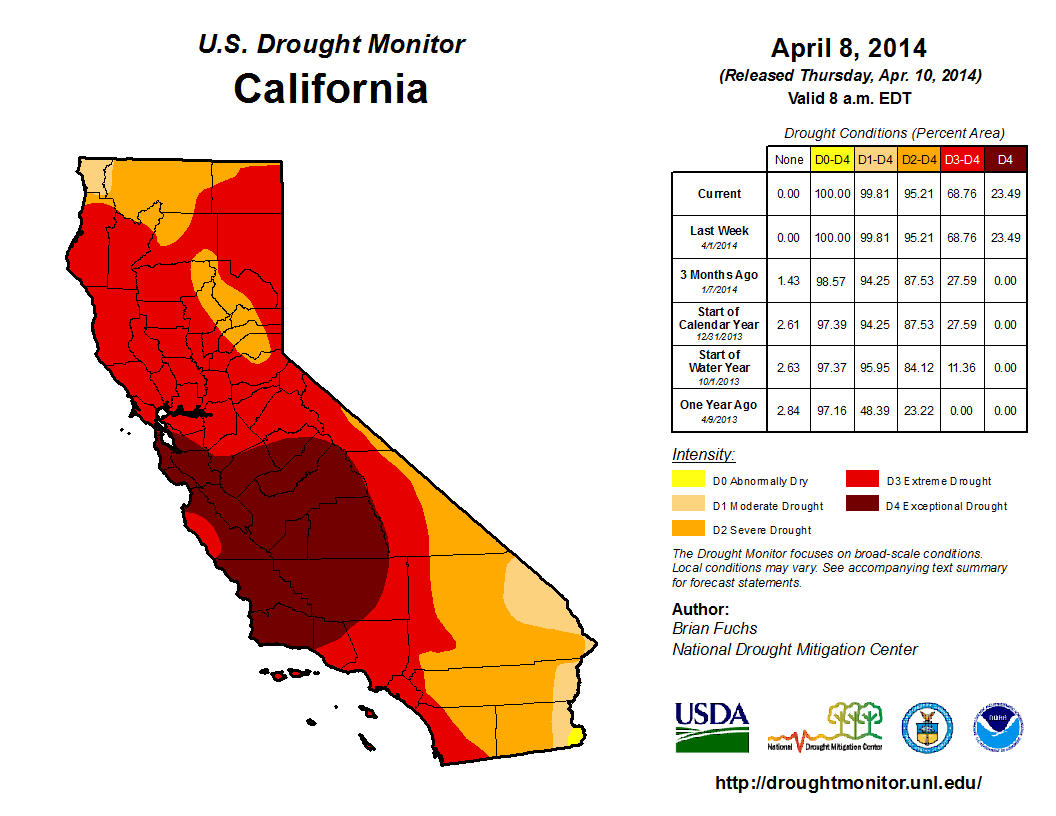
“California has had three consecutive years of below average rainfall and most reservoirs are far below their designed capacity; for a state with a growing population with limited water resources this is alarming news that has many politicians, officials and residents worried. This winter was especially mild; nice for bragging to friend back East about how gorgeous the weather is during a polar vortex spell, but horrible for the snow pack and accumulation.”

Seth Dixon‘s insight:

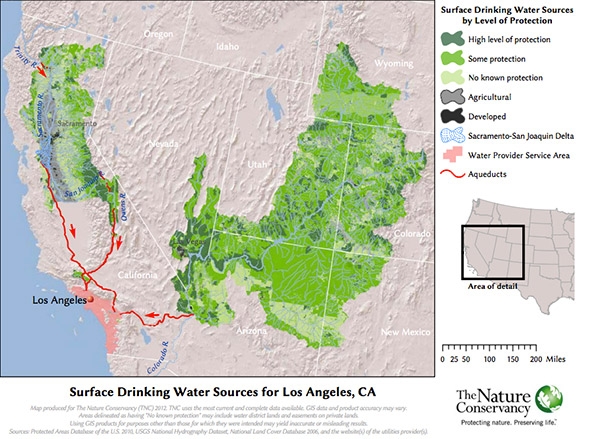
Most of California’s water originates for the snow pack in Western mountains ranges so this drought is expected to get worse this summer. The major urban areas have limited local water resources so they draw water from large area to bring in sufficient water for these burgeoning metropolitan regions.
20140408_CA_trd

Questions to Consider: What are some reasons (both from human and physical geography) for this severe drought? What can be done in the short-term to lessen the problem? What can be done to make California’s water situation better for the next 50 years?

Tags: physical, weather and climate, consumptionCaliforniaLos Angeles, water, environment, resources, environment dependurban ecology.

See on geographyeducation.org
LA water

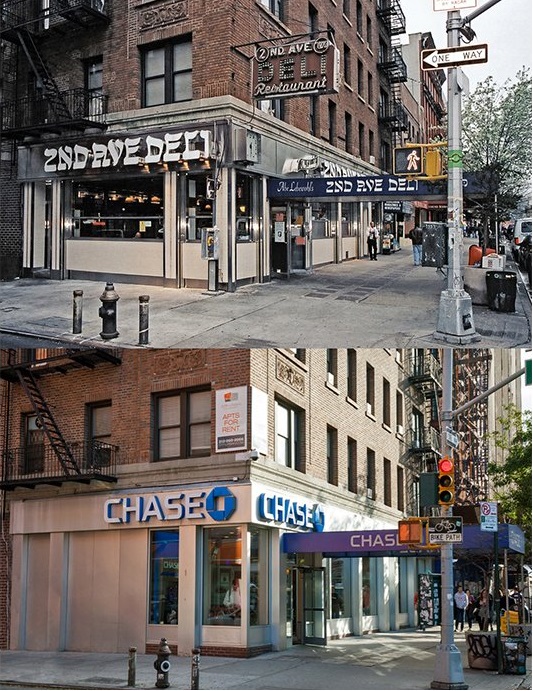
New York City’s Disappearing Mom-and-Pop Storefronts

See on Scoop.itGeography Education

unknown-white.jpg__1072x0_q85_upscale

Two photographers set out to see what happened to small family businesses in New York City in a decade.

Seth Dixon‘s insight:

The cultural landscapes of neighborhoods can change quickly as larger global economic forces restructure the places.  This is a great gallery of photos from the Smithsonian to document these changes in New York City.  Many mourn the passing of what once was as the landscape continues to be made and remade but subsequent generations.

Tags: culture, landscape, NYCeconomic, urban place, neighborhood.

See on www.smithsonian.com


Culture Ministry Affirms ‘Russia is not Europe’

“A state commission working on a much-discussed report titled ‘Foundations of State Cultural Politics’ will release their findings in two weeks, presidential advisor Vladimir Tolstoi announced last week, adding that the basic formula of the report could be summarized as ‘Russia is not Europe.

At times Russia has sought to be perceived as a part of Europe only to be excluded in the minds (and institutions) of Western Europe.  Now, in a discursive way to protect itself, it is reaffirming and building a cultural buffer zone between Europe and Russia.  What are the borders of Europe as you think of it?  Can world regions change over time?  Any examples of regions having their borders redrawn?  

Tags: RussiaEurope, regions.

See on www.themoscowtimes.com

How architectural innovations migrate across borders

See on Scoop.itGeography Education

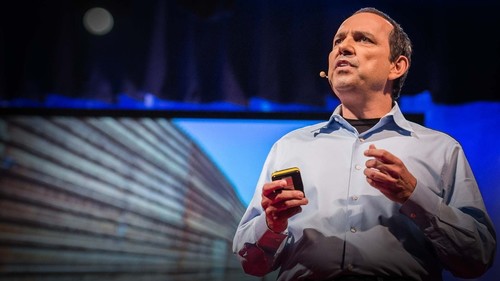
“As the world’s cities undergo explosive growth, inequality is intensifying. Wealthy neighborhoods and impoverished slums grow side by side, the gap between them widening. In this eye-opening talk, architect Teddy Cruz asks us to rethink urban development from the bottom up. Sharing lessons from the slums of Tijuana, Cruz explores the creative intelligence of the city’s residents and offers a fresh perspective on what we can learn from places of scarcity.”

Seth Dixon‘s insight:

As a geographer native to the San Diego region with family on both sides of the border, I found this TED talk very compelling personally, but also rich in geographic themes (city planning, diffusion, governance of space, socioeconomic differences in land use patterns, etc.).  Relations across the border are economic, cultural and political in nature, and the merger of those varied interests have led to an uneven history of both cooperation and separation.  San Diego and Tijuana have more to offer each other than economic markets–the ideas born out of distinct socioeconomic and political contexts can be just what is needed on the other side of the border.

Tagsurban, unit 7 cities, housing, economic, sprawlneighborhood, borders. planning, urban ecology, densityplanning, TED

See on www.youtube.com

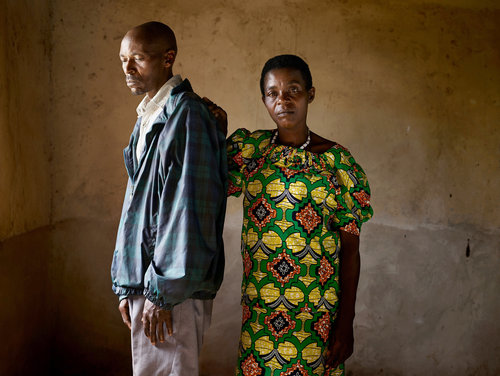
Portraits of Reconciliation

See on Scoop.itGeography Education

20 years after the genocide in Rwanda, these perpetrators and survivors are standing for forgiveness.

Seth Dixon‘s insight:

The idea behind these images is incredibly powerful and heartbreaking.  The horrific genocide turned neighbor against neighbor and tore communities and a country apart.  I can only imagine the pain for the individuals, but also the trauma inflicted on the national psyche. See also the White House’s official statement on the 20th anniversary of the genocide. 

Tags: Rwanda, political, conflict, refugees, Africa.

See on www.nytimes.com

The less Americans know about Ukraine’s location, the more they want U.S. to intervene

See on Scoop.itGeography Education

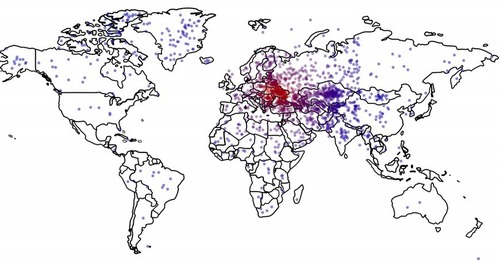
84% of Americans are unable to locate Ukraine on a world map; those that can’t are more likely to support military intervention.

Seth Dixon‘s insight:

As I’ve said before, a more informed, geo-literate citizenry helps to strengthen U.S. foreign policy and diplomatic efforts because they have a spatial framework within which to organize political, environmental, cultural and economic information.  National Geographic recently also produced a video showing how geo-education is important for business professionals as a part of their geo-education community (if you haven’t already, join!).

See on www.washingtonpost.com

Aerial Photographs Catalogue the Life and Death of Volcanic Islands

See on Scoop.itGeography Education

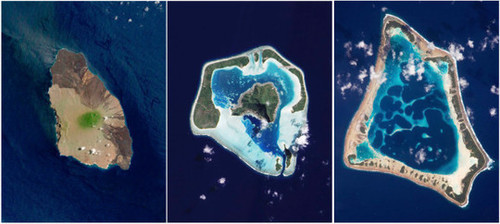
Volcanic islands can seem to appear out of nowhere, emerging from the ocean like breaching monsters of the deep. Below, Mika McKinnon explains how these odd geological formations are born, how they evolve, and how they eventually vanish back beneath the waves.

Seth Dixon‘s insight:

Where an island is along this developmental continuum says much about the human populations that may inhabit said island.  If the island is tall and young with rich volcanic soil, the mountain will attract rainfall and the soil could support agriculture, making the island able to sustain a higher population density.  On the other hand, an old, eroding island with little rainfall and depleted soils will need human inhabitants to rely on the ocean’s resources for food and would thus support a more minimal population.  These islands are changing, even if the time scale is slow–but just recently two disconnected islands ‘merged’ as growing volcanic island has expanded in the Pacific.

Tags: Oceania, physical, geomorphology, landforms.

See on space.io9.com

Soviet Bus Stops

An obsession – brutal, beautiful bus stop design of the former Soviet states from Bushtaxi on Vimeo.

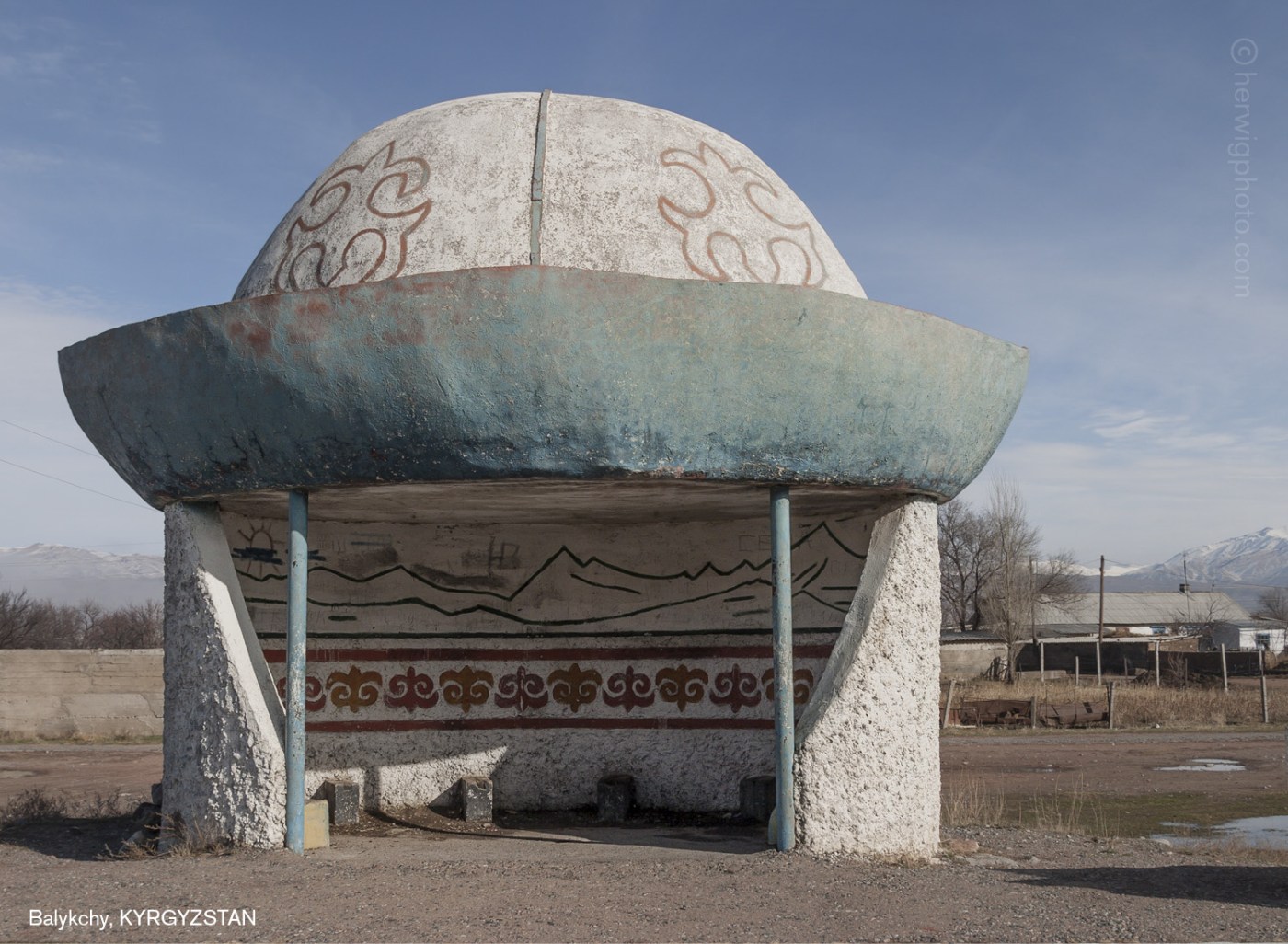
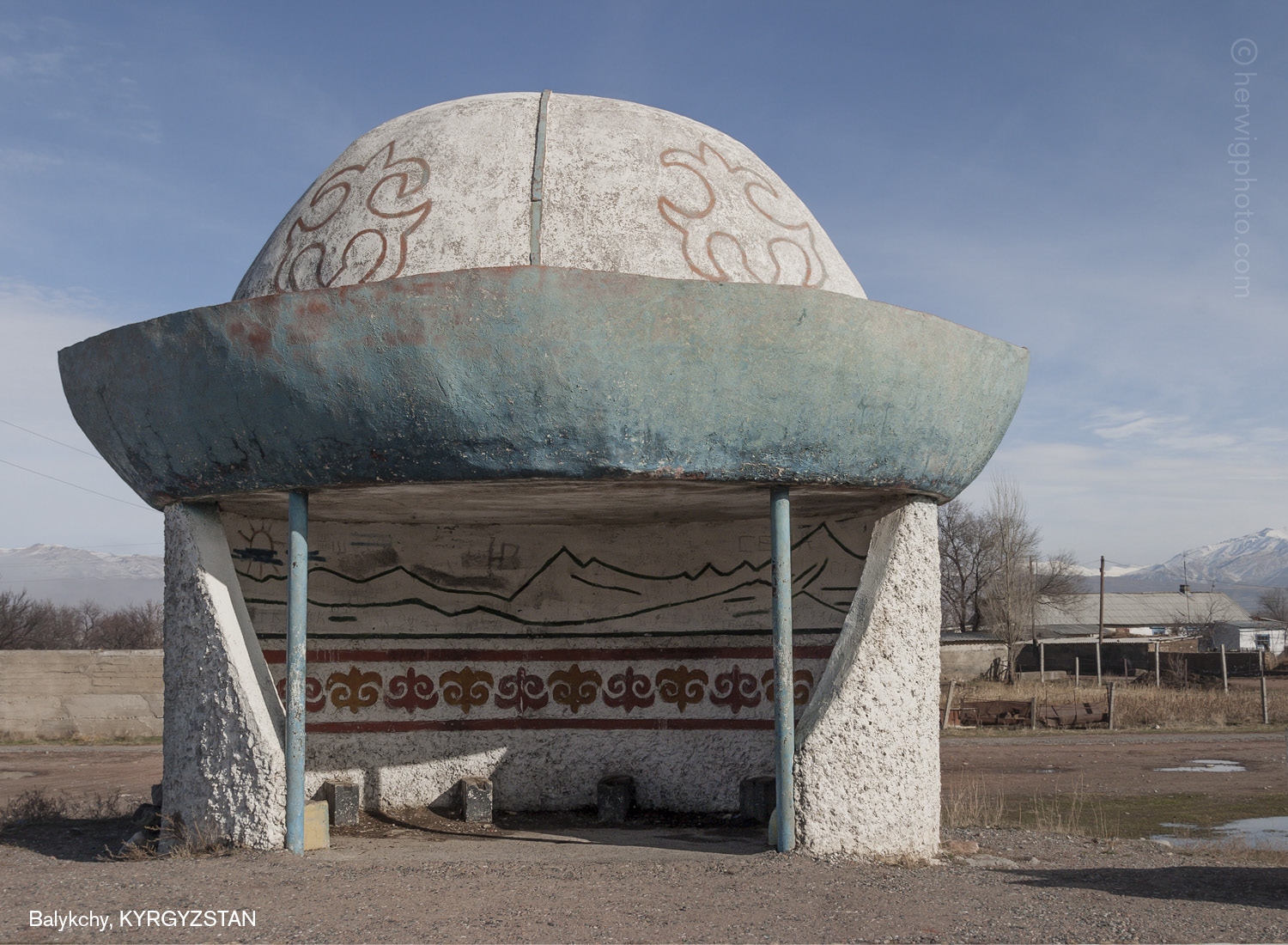
“Photographer Christopher Herwig has covered more than 30,000 km by car, bike, bus and taxi in 13 countries discovering and documenting these unexpected treasures of modern art. From the shores of the Black Sea to the endless Kazakh steppe, the bus stops show the range of public art from the Soviet era and give a rare glimpse into the creative minds of the time.”

Seth Dixon‘s insight:

This is a delightful glimpse into a time gone by, and what makes it even more surprising is that few would expect such creative architecture to dot the cultural landscape of the old Soviet Union.  I was recently looking at a photo gallery of old Russian Orthodox churches and just like these Soviet bus stops, they are perfect subjects for classic cultural landscape studies.  Geography students can analyze and interpret the cultural, political and economic material landscape as this photographer has.  What do these elements of the landscape mean?  How does it make us re-evaluate the society that created them?   

Tags: Russia, culture, landscape.

See on herwigphoto.com

Hat

Bye-Bye, Baby

See on Scoop.itGeography Education

Birthrates are falling around the world. And that’s O.K.


Why do commentators, like Chicken Little, treat this worldwide trend as a disaster, even collective suicide? It could be because declines in fertility rates stir anxieties about power: national, military and economic, as well as sexual. In reality, slower population growth creates enormous possibilities for human flourishing. In an era of irreversible climate change and the lingering threat from nuclear weapons, it is simply not the case that population equals power, as so many leaders have believed throughout history. Lower fertility isn’t entirely a function of rising prosperity and secularism; it is nearly universal.

Seth Dixon‘s insight:

This op-ed from the New York Times provides excellent material for discussing demographic issues, especially regarding declining populations.  Many countries do fear the demographic uncertainty and are actively encouraging pro-natalist policies (with salacious ads such as Singapore’s National Night and a Travel agency’s ‘Do it for Denmark‘ campaign).  The author of this article though, seeks to quell those fears.    

Tag: declining populations, population, demographic transition model.

See on www.nytimes.com

Blog at WordPress.com.

Up ↑