See on Scoop.it – Geography Education

Got the audio here – http://www.bbc.co.uk/programmes/p01slnp5 The person doing the voice is Andrew Jack who is a dialect coach.
Tags: language, culture, English, UK.
See on www.youtube.com
See on Scoop.it – Geography Education
Got the audio here – http://www.bbc.co.uk/programmes/p01slnp5 The person doing the voice is Andrew Jack who is a dialect coach.
Tags: language, culture, English, UK.
See on www.youtube.com
See on Scoop.it – Geography Education
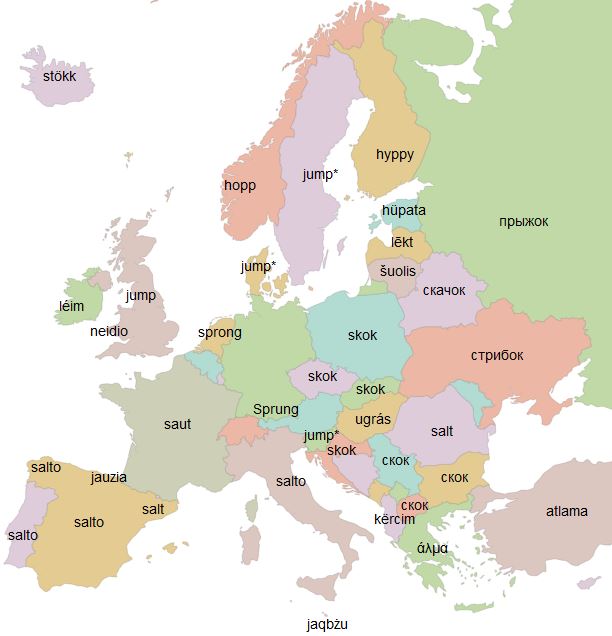
Translate any word from English to more than 30 other European languages, on a map
This is an incredible resource to visualize the linguistic similarities between European languages all on one interactive map. Just type in a word or phrase as it will translate it for you and place the results on the map. I just found this, but I think it still belongs on my list of favorite resources.
Questions to Ponder: Do you see any regions forming? How does language impact the diffusion of people, ideas and goods? Hoe do you think these languages diffused?
See on ukdataexplorer.com
See on Scoop.it – Geography Education
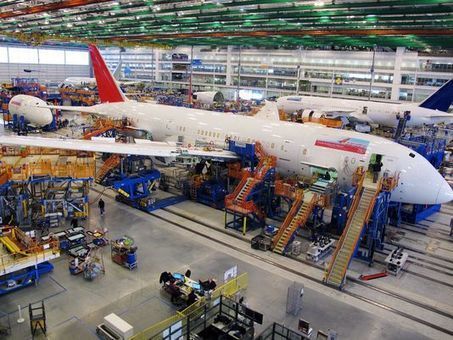
Region attracting some of the biggest names in aviation, including Boeing and Airbus.
The South is home to auto giants Mercedes-Benz, Volkswagen and Nissan Motor Co. It is increasingly attracting some of the biggest names in aviation, including Boeing Co. in South Carolina, Airbus in Alabama, Gulfstream Aerospace Corp. in Georgia and GE Aviation in North Carolina.
Aerospace companies are taking a cue from the auto industry and moving their manufacturing operations to Southern states. The region’s lower costs, generous state incentive packages and right-to-work laws that make it hard for unions to organize are motivating these companies to choose the South.
See on www.usatoday.com
See on Scoop.it – Geography Education
“The following is not a futuristic scenario. It is not science fiction. It is a demonstration of the results of an extremely unlikely, yet intellectually fascinating query: What would happen if the earth stopped spinning? ArcGIS was used to perform complex raster analysis and volumetric computations and generate maps that visualize these results.
I love a good “what if?” question and this one (including the GIS model-based analysis) is fascinating.
See on www.esri.com
See on Scoop.it – Geography Education
“American Makeover is a web series on new urbanism, the antidote to sprawl.”
American Makeover only produced two segments in the series, but they are excellent examples that show the planning ethos of new urbanism. In this episode, they lay out the argument against urban sprawl. In Episode 2, they show the ideas that guided the planning of Seaside, Florida. For a map of some of my favorite place based videos, which will include these, click here.
tags: suburbs, transportation, planning, sprawl, urban, land use, unit 7 cities.
See on www.youtube.com
See on Scoop.it – Geography Education
“Tracking changes in the shape of American cities over 10 years reveals which cities pack the most into a small space, but don’t worry, sprawlers: Los Angeles shows you can change your fate.”
Today’s nearly 314 million U.S. residents will expand to 401 million in less than 40 years. Wherever you fall on the cultural spectrum between country and city mouse, the fact remains that we simply won’t be able to use up resources the way we do now in sprawling suburbs shaped by car culture.
Tags: density, sustainability, housing, urban, planning, unit 7 cities.
See on www.fastcoexist.com
See on Scoop.it – Geography Education
The Brazilian government’s ‘pacification’ initiative has led to drug busts and shootouts in Rio’s favelas.
Just a few months before Rio de Janeiro welcomes visitors for the World Cup, and two years before it hosts the Olympics, security within the city remains a major issue. The government currently promotes the policy of “pacification”, where security forces engage in raids, drug busts, and even gunfights with suspected gang members. This pacification policy is supposed to pave the way for the development of long-neglected favelas in Rio, Brazil’s second-biggest city and home to 11 million people. However, many of the favelas remain in the hands of an army of drug dealers and criminals who are not willing to step down or be pacified.
Tags: Brazil, urban, squatter, narcotics, socioeconomic, neighborhood.
See on www.aljazeera.com
See on Scoop.it – Geography Education
I woke up this morning to news of a large earthquake in Chile (security camera video footage). IRIS (Incorporated Research Institutions for Seismology) creates teaching resources for teachers who want to use the current events such as yesterdays’ earthquake in Chile as an opportunity to discuss earth’s physical systems and how they impact humanity. They’ve produces slides, animations and PDFs for classroom use all while you were sleeping last night.
Tags: visualization, disasters, physical, Chile.
See on www.youtube.com
See on Scoop.it – Geography Education
“The United Kingdom’s relationship with the EU – or, in political parlance, ‘Europe’ – has long been one of the most divisive, emotive issues in British politics.”
The beginnings of the European Union are rooted in the aftermath of WW II, with Europe exhausted from war many politicians wanted to unite European countries in a way that would make war with each other impossible. The United Kingdom, though has had a complicated with the EU, sometimes (and for certain issues) wanting greater European integration to strengthen their regional position and at other times have resisted regional collaboration for fear of losing national autonomy. This is very over-generalized, but this BBC article gives a nice historical perspective on the rocky relationship of between the two.
Tags: Europe, supranationalism, currency, economic, historical, sovereignty, UK.
See on www.bbc.com





 GEOGRAPHY EDUCATION